
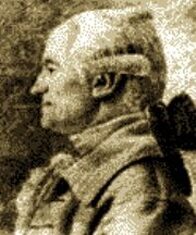
Johann Friedrich Fasch
Johann Friedrich Fasch was a German violinist and composer. Born April 15, 1688, in Buttelstedt. Died December 5, 1758, in Zerbst. Positions held include court chapel master and chapelmaster. Educated at Thomasschule zu Leipzig.
Facts
17 facts · 2 confirmed by two sources · 15 cited · 0 from one source
Where this comes from
Papalocal keeps its own record. It started from these sources; what each one said is kept here as it was copied, so a change on their side never changes this page by itself. Tap one to read its version.
What Wikidata says · copied November 18, 2026 · revision 2569156552
- Described as
- German violinist and composer
- Other names
- Johannes Friedrich Fasch
- Born
- April 15, 1688 · 9 references
- Died
- December 5, 1758 · 10 references
- Born in
- Buttelstedt · 2 references
- Died in
- Zerbst · 2 references
- Citizen of
- Principality of Anhalt-Zerbst · 1 reference
- Occupation
- composer · 1 reference; organist · 1 reference
- Positions held
- court chapel master · 1 reference; chapelmaster · 1 reference
- Education
- Thomasschule zu Leipzig · 1 reference
- Genre
- opera · 1 reference; cantata · 1 reference; mass · 1 reference; sonata · 1 reference
- Instrument
- violin · 1 reference; boy soprano · 1 reference
- Children
- Carl Friedrich Christian Fasch · 3 references
- Wikipedias with a page
- 21
Wikidata item Q77236 (wikidata.org/wiki/Q77236), public domain (CC0). Copied November 18, 2026.
What Wikipedia says · copied November 18, 2026 · revision 1381487195
Johann Friedrich Fasch (15 April 1688 – 5 December 1758) was a German violinist and composer. Much of his music is in the Baroque-Classical transitional style known as galant.
- Born, in its opening lines
- April 15, 1688
- Died, in its opening lines
- December 5, 1758
From the Wikipedia article “Johann Friedrich Fasch” (en.wikipedia.org/wiki/Johann_Friedrich_Fasch), by its contributors, under CC BY-SA 4.0 (creativecommons.org/licenses/by-sa/4.0/). Copied November 18, 2026; not changed.
Confirmed Two sources agree. Cited One source, and it names where it got it. One source One source, without a reference of its own. Sources disagree The sources disagree. We show the best-supported value and keep theirs below.
