
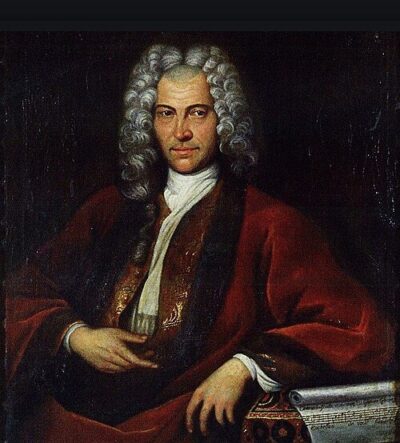
Johann Joseph Fux
Johann Joseph Fux was an Austrian composer. Born 1660, in Langegg bei Graz. Died February 13, 1741, in Vienna. Positions held include chapelmaster (1712–) and court chapel master (1715–).
Facts
18 facts · 2 confirmed by two sources · 10 cited · 6 from one source
Where this comes from
Papalocal keeps its own record. It started from these sources; what each one said is kept here as it was copied, so a change on their side never changes this page by itself. Tap one to read its version.
What Wikidata says · copied November 16, 2026 · revision 2568750941
- Described as
- Austrian composer
- Other names
- Johann Fux, Johann Fuchs
- Born
- 1660 · 28 references
- Died
- February 13, 1741 · 9 references
- Born in
- Langegg bei Graz
- Died in
- Vienna · 3 references
- Buried in
- St. Stephen's Cathedral · 1 reference
- Citizen of
- Germany · 1 reference
- Occupation
- organist · 1 reference; conductor · 1 reference; composer · 3 references; musicologist · 2 references; music theorist; chapelmaster · 1 reference
- Positions held
- chapelmaster (1712–); court chapel master (1715–)
- Genre
- opera
- Instrument
- pipe organ
- Field
- music · 1 reference; music theory · 1 reference
- Wikipedias with a page
- 30
Wikidata item Q311378 (wikidata.org/wiki/Q311378), public domain (CC0). Copied November 16, 2026.
What Wikipedia says · copied November 16, 2026 · revision 1385567138
Johann Joseph Fux (German: [ˈjoːhan ˈjoːzɛf ˈfʊks]; c. 1660 – 13 February 1741) was an Austrian composer, music theorist and pedagogue of the late Baroque era. His most enduring work is not a musical composition but his treatise on counterpoint, Gradus ad Parnassum, which has become the single most influential book on the Palestrinian style of Renaissance polyphony.
- Born, in its opening lines
- c. 1660
- Died, in its opening lines
- February 13, 1741
From the Wikipedia article “Johann Joseph Fux” (en.wikipedia.org/wiki/Johann_Joseph_Fux), by its contributors, under CC BY-SA 4.0 (creativecommons.org/licenses/by-sa/4.0/). Copied November 16, 2026; not changed.
Confirmed Two sources agree. Cited One source, and it names where it got it. One source One source, without a reference of its own. Sources disagree The sources disagree. We show the best-supported value and keep theirs below.
