
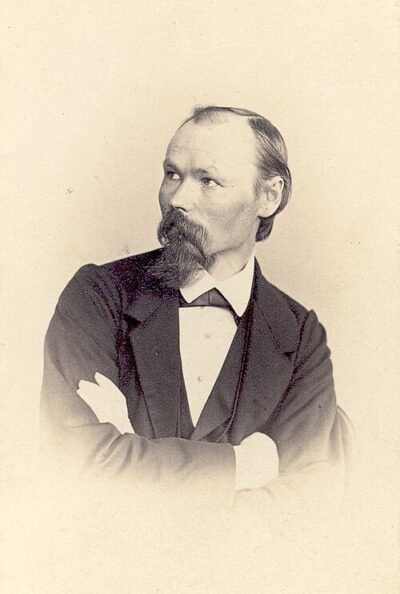
Johann Köler
Johann Köler was an Estonian artist. Born March 8, 1826, in Ivaski. Died April 22, 1899, in Saint Petersburg. Educated at Imperial Academy of Arts. Awards include Large gold medal of the Imperial Academy of Arts.
Facts
11 facts · 2 confirmed by two sources · 2 cited · 7 from one source
Where this comes from
Papalocal keeps its own record. It started from these sources; what each one said is kept here as it was copied, so a change on their side never changes this page by itself. Tap one to read its version.
What Wikidata says · copied November 18, 2026 · revision 2570897337
- Described as
- Estonian artist (1826-1899)
- Other names
- Ivan Petrovich Köler-Viliandi, Johann Köhler, Johann Köhler-Wiljandi, Johan Köler
- Born
- March 8, 1826 · 1 reference
- Died
- April 22, 1899 · 2 references
- Born in
- Ivaski
- Died in
- Saint Petersburg · 1 reference
- Citizen of
- Russian Empire
- Occupation
- painter · 1 reference; university teacher
- Worked for
- Imperial Academy of Arts
- Education
- Imperial Academy of Arts (–1857)
- Awards
- Large gold medal of the Imperial Academy of Arts (1857)
- Field
- painting · 1 reference
- Wikipedias with a page
- 21
Wikidata item Q724444 (wikidata.org/wiki/Q724444), public domain (CC0). Copied November 18, 2026.
What Wikipedia says · copied November 18, 2026 · revision 1385211927
Johann Köler (8 March 1826 – 22 April 1899) was a leader of the Estonian national awakening and a painter. He is considered as the first professional painter of the emerging nation. He distinguished himself primarily by his portraiture and to a lesser extent by his landscape paintings. Some of his most notable pictures depict the Estonian rural life in the second half of the 19th century.
- Born, in its opening lines
- March 8, 1826
- Died, in its opening lines
- April 22, 1899
From the Wikipedia article “Johann Köler” (en.wikipedia.org/wiki/Johann_Köler), by its contributors, under CC BY-SA 4.0 (creativecommons.org/licenses/by-sa/4.0/). Copied November 18, 2026; not changed.
Confirmed Two sources agree. Cited One source, and it names where it got it. One source One source, without a reference of its own. Sources disagree The sources disagree. We show the best-supported value and keep theirs below.
