
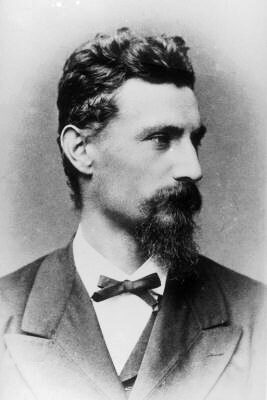
Johann Palisa
Johann Palisa was an Austrian astronomist. Born December 6, 1848, in Opava. Died May 2, 1925, in Vienna. Known for discoverer of asteroids. Educated at University of Vienna. Awards include Lalande Prize.
Facts
22 facts · 2 confirmed by two sources · 3 cited · 17 from one source
What’s different
- Born: we show December 6, 1848 (Confirmed). Wikidata also lists December 7, 1848
Where this comes from
Papalocal keeps its own record. It started from these sources; what each one said is kept here as it was copied, so a change on their side never changes this page by itself. Tap one to read its version.
What Wikidata says · copied November 16, 2026 · revision 2569140041
- Described as
- Austrian astronomist (1848–1925)
- Born
- December 6, 1848 · 4 references; December 7, 1848 · 1 reference
- Died
- May 2, 1925 · 5 references
- Born in
- Opava · 2 references
- Died in
- Vienna · 1 reference
- Buried in
- Vienna Central Cemetery
- Cause of death
- myocardial infarction
- Citizen of
- Austrian Empire; Cisleithania; Austria
- Occupation
- astronomer · 2 references; university teacher; military officer
- Worked for
- University of Vienna
- Education
- University of Vienna
- Member of
- German Academy of Sciences Leopoldina
- Known for
- discoverer of asteroids
- Awards
- Lalande Prize (1876)
- Field
- astronomy · 1 reference
- Spouse
- Florentine Wlaka
- Children
- Florentine
- Mother
- Katharina Pohl
- Military rank
- military officer
- Wikipedias with a page
- 52
Wikidata item Q78486 (wikidata.org/wiki/Q78486), public domain (CC0). Copied November 16, 2026.
What Wikipedia says · copied November 16, 2026 · revision 1372021427
Johann Palisa (6 December 1848 – 2 May 1925) was an Austrian astronomer. He was a prolific discoverer of asteroids, discovering 122 in all, from 136 Austria in 1874 to 1073 Gellivara in 1923. Some of his notable discoveries include 153 Hilda, 216 Kleopatra, 243 Ida, 253 Mathilde, 324 Bamberga, and the near-Earth asteroid 719 Albert. Palisa made his discoveries without the aid of photography, and he remains the most successful visual (non-photographic) asteroid discoverer of all time. He was awarded the Valz Prize from the French Academy of Sciences in 1906. The asteroid 914 Palisana, discovered by Max Wolf in 1919, and the lunar crater Palisa were named in his honour.
- Born, in its opening lines
- December 6, 1848
- Died, in its opening lines
- May 2, 1925
From the Wikipedia article “Johann Palisa” (en.wikipedia.org/wiki/Johann_Palisa), by its contributors, under CC BY-SA 4.0 (creativecommons.org/licenses/by-sa/4.0/). Copied November 16, 2026; not changed.
Confirmed Two sources agree. Cited One source, and it names where it got it. One source One source, without a reference of its own. Sources disagree The sources disagree. We show the best-supported value and keep theirs below.
