
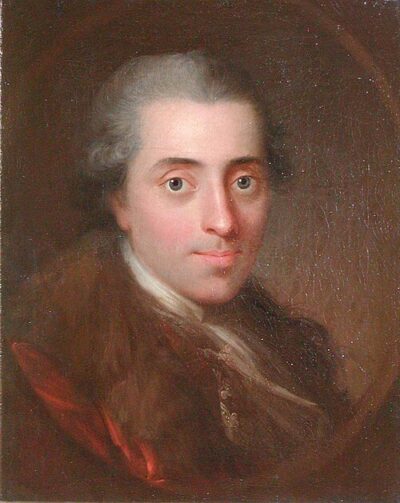
Johannes Ewald
Johannes Ewald was a Danish dramatist and poet. Born November 18, 1743, in Copenhagen. Died March 17, 1781, in Copenhagen. Known for Fiskerne and Kong Christian stod ved højen mast. Educated at University of Copenhagen.
Facts
12 facts · 2 confirmed by two sources · 4 cited · 6 from one source
Where this comes from
Papalocal keeps its own record. It started from these sources; what each one said is kept here as it was copied, so a change on their side never changes this page by itself. Tap one to read its version.
What Wikidata says · copied November 17, 2026 · revision 2557976207
- Described as
- Danish dramatist and poet (1743–1781)
- Born
- November 18, 1743 · 6 references
- Died
- March 17, 1781 · 6 references
- Born in
- Copenhagen · 2 references
- Died in
- Copenhagen · 1 reference
- Citizen of
- Kingdom of Denmark
- Occupation
- poet · 1 reference; playwright; writer · 2 references
- Education
- University of Copenhagen
- Known for
- Fiskerne; Kong Christian stod ved højen mast
- Father
- Enevold Ewald
- Wikipedias with a page
- 24
Wikidata item Q553844 (wikidata.org/wiki/Q553844), public domain (CC0). Copied November 17, 2026.
What Wikipedia says · copied November 17, 2026 · revision 1376898711
Johannes Ewald (18 November 1743 – 17 March 1781) was a Danish national dramatist, psalm writer and poet. The lyrics of a song from one of his plays are used for one of the Danish national anthems, Kong Christian stod ved højen mast which has equal status of national anthem together with Der er et yndigt land. Quite until the days of romanticism, Ewald was considered the unsurpassed Danish poet. Today he is probably more lauded than read; though considered classics, only few of his works have become popular.
- Born, in its opening lines
- November 18, 1743
- Died, in its opening lines
- March 17, 1781
From the Wikipedia article “Johannes Ewald” (en.wikipedia.org/wiki/Johannes_Ewald), by its contributors, under CC BY-SA 4.0 (creativecommons.org/licenses/by-sa/4.0/). Copied November 17, 2026; not changed.
Confirmed Two sources agree. Cited One source, and it names where it got it. One source One source, without a reference of its own. Sources disagree The sources disagree. We show the best-supported value and keep theirs below.
