
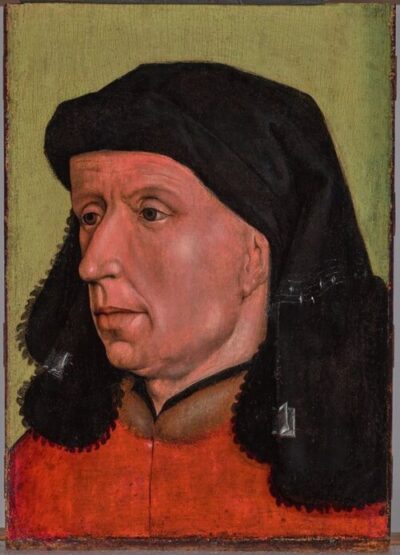
Johannes Ockeghem
Johannes Ockeghem was a Franco-Flemish composer. Born 1410, in Saint-Ghislain. Died February 6, 1497, in Tours. Positions held include court chapel master and treasurer (1456–1459). Known for music for the Requiem Mass, Masses and Motets.
Facts
14 facts · 2 confirmed by two sources · 2 cited · 10 from one source
Where this comes from
Papalocal keeps its own record. It started from these sources; what each one said is kept here as it was copied, so a change on their side never changes this page by itself. Tap one to read its version.
What Wikidata says · copied November 16, 2026 · revision 2568283040
- Described as
- Franco-Flemish composer
- Other names
- Jean de Ockeghem
- Born
- 1410 · 7 references
- Died
- February 6, 1497
- Born in
- Saint-Ghislain
- Died in
- Tours · 1 reference
- Citizen of
- Kingdom of France
- Occupation
- composer · 1 reference
- Positions held
- court chapel master; treasurer (1456–1459)
- Genre
- cantus firmus
- Known for
- music for the Requiem Mass; Masses; Motets; Songs
- Religion
- Catholic Church
- Wikipedias with a page
- 45
Wikidata item Q143059 (wikidata.org/wiki/Q143059), public domain (CC0). Copied November 16, 2026.
What Wikipedia says · copied November 16, 2026 · revision 1382054736
Johannes Ockeghem (c. 1410 – 6 February 1497) was a Franco-Flemish composer and singer of early Renaissance music. Ockeghem was the leading European composer in the period between Guillaume Du Fay and Josquin des Prez, and he was—with his colleague Antoine Busnois—a prominent European composer in the second half of the 15th century. He was an important proponent of the early Franco-Flemish School.
Ockeghem was well associated with other prominent composers of the time, and spent most of his career serving the French royal court under Charles VII, Louis XI and Charles VIII. Numerous poets and musicians lamented his death, including Erasmus, Guillaume Crétin, Jean Molinet and Josquin, who composed the well-known Nymphes des bois for him.
It is thought that Ockeghem's extant works represent only a small part of his entire oeuvre, including around 14 masses, 20 chansons and fewer than 10 motets—though the exact numbers vary due to attribution uncertainties. His better-known works include the canon-based Missa prolationum; the Missa cuiusvis toni, which can be sung in any mode; the chanson Fors seulement; and the earliest surviving polyphonic Requiem.
- Born, in its opening lines
- c. 1410
- Died, in its opening lines
- February 6, 1497
From the Wikipedia article “Johannes Ockeghem” (en.wikipedia.org/wiki/Johannes_Ockeghem), by its contributors, under CC BY-SA 4.0 (creativecommons.org/licenses/by-sa/4.0/). Copied November 16, 2026; not changed.
Confirmed Two sources agree. Cited One source, and it names where it got it. One source One source, without a reference of its own. Sources disagree The sources disagree. We show the best-supported value and keep theirs below.
