
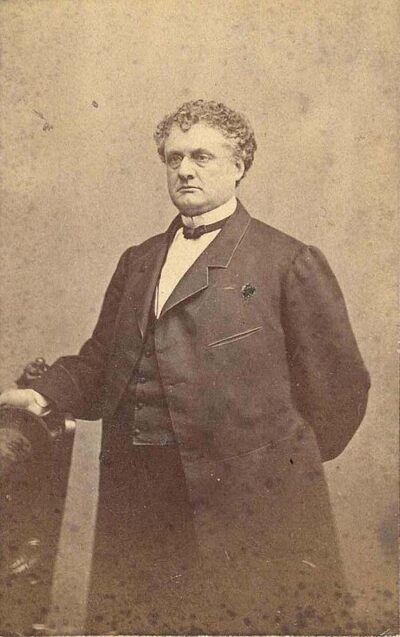
John Albion Andrew
John Albion Andrew was a Massachusetts governor during the Civil War. Born May 31, 1818, in Windham. Died October 30, 1867, in Boston. Positions held include Governor of Massachusetts (1861–1866) and member of the Massachusetts House of Representatives. Educated at Bowdoin College and North Yarmouth Academy.
Facts
18 facts · 2 confirmed by two sources · 9 cited · 7 from one source
Where this comes from
Papalocal keeps its own record. It started from these sources; what each one said is kept here as it was copied, so a change on their side never changes this page by itself. Tap one to read its version.
What Wikidata says · copied November 18, 2026 · revision 2567804212
- Described as
- Massachusetts governor during the Civil War (1818-1867)
- Other names
- John Andrew, John A. Andrew, J. A. Andrew
- Born
- May 31, 1818 · 6 references
- Died
- October 30, 1867 · 6 references
- Born in
- Windham · 1 reference
- Died in
- Boston · 1 reference
- Buried in
- Hingham Cemetery · 1 reference
- Cause of death
- stroke · 1 reference
- Citizen of
- United States
- Occupation
- politician · 1 reference; lawyer · 1 reference
- Positions held
- Governor of Massachusetts (1861–1866); member of the Massachusetts House of Representatives
- Political party
- Republican Party · 1 reference
- Education
- Bowdoin College · 1 reference; North Yarmouth Academy · 1 reference; Gorham Academy
- Children
- John F. Andrew
- Father
- Jonathan Andrew · 2 references
- Lived in
- Massachusetts
- Wikipedias with a page
- 16
Wikidata item Q880970 (wikidata.org/wiki/Q880970), public domain (CC0). Copied November 18, 2026.
What Wikipedia says · copied November 18, 2026 · revision 1364389872
John Albion Andrew (May 31, 1818 – October 30, 1867) was an American lawyer and politician from Massachusetts. He was elected in 1860 as the 25th governor of Massachusetts, serving between 1861 and 1866, and led the state's contributions to the Union cause during the American Civil War (1861–1865). He was a guiding force behind the creation of some of the first African-American units in the United States Army, including the 54th Massachusetts Infantry. He belonged to the Whig, Free Soil, and Republican parties during his career.
Educated at Bowdoin College, Andrew was a radical abolitionist of slavery from an early age, engaged in the legal defense of fugitive slaves against owners seeking their return. He provided legal support to John Brown after his 1859 raid on Harpers Ferry, Virginia, raising his profile and propelling him to the Massachusetts governor's chair. Andrew was a persistent voice criticizing President Abraham Lincoln's conduct of the war, and pressing him to end slavery. By the end of the war, his politics had moderated, and he came to support the Reconstruction policies of Lincoln's successor, Andrew Johnson.
In Massachusetts, Andrew opposed the Know Nothing movement of the 1850s and the state's strict alcohol prohibition laws, and oversaw the state takeover of the Hoosac Tunnel construction project. In 1865, he signed legislation establishing the Massachusetts State Police, the first statewide police force of its type in the nation. He died early of apoplexy at the age of 49.
- Born, in its opening lines
- May 31, 1818
- Died, in its opening lines
- October 30, 1867
From the Wikipedia article “John Albion Andrew” (en.wikipedia.org/wiki/John_Albion_Andrew), by its contributors, under CC BY-SA 4.0 (creativecommons.org/licenses/by-sa/4.0/). Copied November 18, 2026; not changed.
Confirmed Two sources agree. Cited One source, and it names where it got it. One source One source, without a reference of its own. Sources disagree The sources disagree. We show the best-supported value and keep theirs below.
