
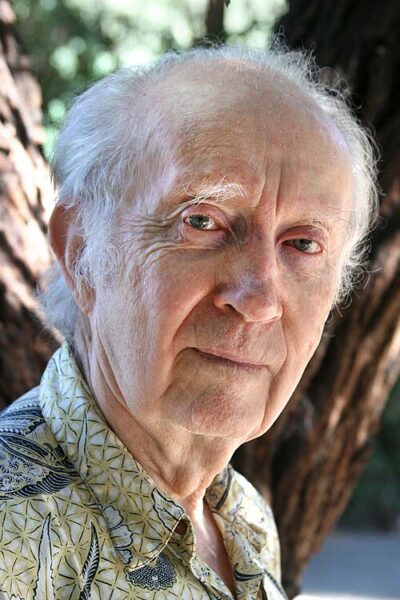
John B. Cobb
John B. Cobb was an American theologian. Born February 9, 1925, in Kobe. Died December 26, 2024. Educated at University of Chicago and Oxford College of Emory University. Awards include Grawemeyer Awards, honorary doctor of Johannes Gutenberg University Mainz and Grawemeyer Award for Ideas Improving World Order.
Facts
21 facts · 2 confirmed by two sources · 5 cited · 14 from one source
Where this comes from
Papalocal keeps its own record. It started from these sources; what each one said is kept here as it was copied, so a change on their side never changes this page by itself. Tap one to read its version.
What Wikidata says · copied November 18, 2026 · revision 2542738501
- Described as
- American theologian (1925–2024)
- Born
- February 9, 1925
- Died
- December 26, 2024 · 1 reference
- Born in
- Kobe
- Citizen of
- United States · 1 reference
- Occupation
- theologian · 1 reference; university teacher; philosopher · 1 reference
- Worked for
- Emory University
- Education
- University of Chicago; Oxford College of Emory University
- Member of
- American Academy of Arts and Sciences
- Awards
- Grawemeyer Awards (1992); honorary doctor of Johannes Gutenberg University Mainz (1968); Grawemeyer Award for Ideas Improving World Order (1992) · 1 reference
- Field
- metaphysics; environmental ethics; process philosophy; process theology; theology · 1 reference; philosophy · 1 reference
- Religion
- Methodism
- Wikipedias with a page
- 14
Wikidata item Q980727 (wikidata.org/wiki/Q980727), public domain (CC0). Copied November 18, 2026.
What Wikipedia says · copied November 18, 2026 · revision 1382295293
John Boswell Cobb Jr. (9 February 1925 – 26 December 2024) was an American theologian, philosopher, and environmentalist. He is often regarded as the preeminent scholar in the field of process philosophy and process theology, the school of thought associated with the philosophy of Alfred North Whitehead. Cobb is the author of more than fifty books. In 2014, Cobb was elected to the American Academy of Arts and Sciences.
A unifying theme of Cobb's work was his emphasis on ecological interdependence—the idea that every part of the ecosystem is reliant on all the other parts. Cobb argued that humanity's most urgent task is to preserve the world on which it lives and depends, an idea which his primary influence, Whitehead, described as "world-loyalty".
Cobb is well known for his transdisciplinary approach, integrating insights from many different areas of study and bringing different specialized disciplines into fruitful communication. Because of his broad-minded interest and approach, Cobb has been influential in a wide range of disciplines, including theology, ecology, economics, biology, and social ethics.
In 1971, he wrote the first single-author book in environmental ethics, Is It Too Late? A Theology of Ecology, which argued for the relevance of religious thought in approaching the ecological crisis. In 1989, he co-authored the book For the Common Good: Redirecting the Economy Toward Community, Environment, and a Sustainable Future, which critiqued global economics and advocated for a sustainable, ecology-based economics. He wrote extensively on religious pluralism and interfaith dialogue, particularly between Buddhism and Christianity, as well as the need to reconcile religion and science.
Cobb was the co-founder and co-director of the Center for Process Studies in Claremont, California. The Center for Process Studies remains the leading Whitehead-related institute, and has witnessed the launch of more than thirty related centers at academic institutions throughout the world, including twenty-three centers in China.
- Born, in its opening lines
- February 9, 1925
- Died, in its opening lines
- December 26, 2024
From the Wikipedia article “John B. Cobb” (en.wikipedia.org/wiki/John_B._Cobb), by its contributors, under CC BY-SA 4.0 (creativecommons.org/licenses/by-sa/4.0/). Copied November 18, 2026; not changed.
Confirmed Two sources agree. Cited One source, and it names where it got it. One source One source, without a reference of its own. Sources disagree The sources disagree. We show the best-supported value and keep theirs below.
