
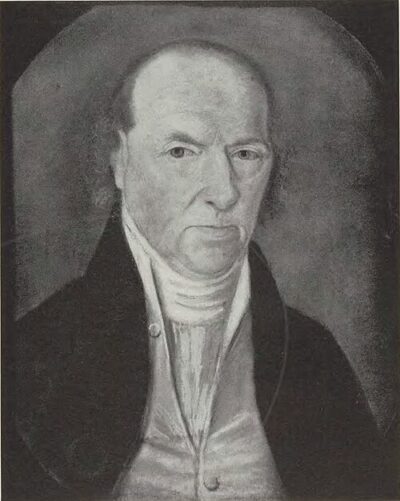
John Blair Jr.
John Blair Jr. was an American politician, Founding Father and jurist. Born April 17, 1732, in Williamsburg. Died August 31, 1800, in Williamsburg. Positions held include Associate Justice of the Supreme Court of the United States (1789–1795) and Delegate to the United States Constitutional Convention (1787). Educated at College of William & Mary.
Facts
17 facts · 2 confirmed by two sources · 2 cited · 13 from one source
Where this comes from
Papalocal keeps its own record. It started from these sources; what each one said is kept here as it was copied, so a change on their side never changes this page by itself. Tap one to read its version.
What Wikidata says · copied November 16, 2026 · revision 2556043674
- Described as
- American politician, Founding Father and jurist
- Other names
- John Blair, Jr.
- Born
- April 17, 1732 · 2 references
- Died
- August 31, 1800 · 2 references
- Born in
- Williamsburg
- Died in
- Williamsburg
- Buried in
- Bruton Parish Episcopal Church Cemetery · 1 reference
- Citizen of
- United States
- Occupation
- lawyer; judge
- Positions held
- Associate Justice of the Supreme Court of the United States (1789–1795); Delegate to the United States Constitutional Convention (1787) · 1 reference
- Political party
- Federalist Party
- Worked for
- College of William & Mary
- Education
- College of William & Mary
- Member of
- Grand Lodge of Virginia
- Children
- Mary Blair Andrews
- Father
- John Blair, Sr.
- Mother
- Mary Munro
- Wikipedias with a page
- 20
Wikidata item Q778866 (wikidata.org/wiki/Q778866), public domain (CC0). Copied November 16, 2026.
What Wikipedia says · copied November 16, 2026 · revision 1384349225
John Blair Jr. (April 17, 1732 – August 31, 1800) was an American Founding Father, who signed the United States Constitution as a delegate from Virginia and was appointed an Associate Justice on the first U.S. Supreme Court by George Washington.
A Virginia lawyer since 1757, Blair represented the College of William and Mary in the House of Burgesses (while his father served on the Governor's Council) and served in various colonial offices after giving up his local law practice. In the prelude to the American Revolutionary War, Blair had served as a commissioner of admiralty to enforce regulations promulgated by the Virginia Revolutionary Conventions, then on the committee that prepared the Virginia Declaration of Rights and the Virginia Constitution of 1776. He served for over a year on the Council of State before being appointed as one of the judges of the General Court, the new Commonwealth's first appellate court. He also served on the High Court of Chancery, which was a predecessor of the Virginia Court of Appeals (now the Virginia Supreme Court).
Blair was one of the best-trained jurists of his day. A widely respected legal scholar, he avoided the tumult of state politics, preferring to work behind the scenes. He was devoted to the idea of a permanent union of the newly independent states and was a loyal supporter of fellow Virginians James Madison and at the Constitutional Convention. While serving on the Supreme Court, he influenced the interpretation of the Constitution in a number of important decisions. Contemporaries praised Blair for his ability to penetrate to the heart of legal questions, as well as his gentleness and benevolence.
- Born, in its opening lines
- April 17, 1732
- Died, in its opening lines
- August 31, 1800
From the Wikipedia article “John Blair Jr.” (en.wikipedia.org/wiki/John_Blair_Jr.), by its contributors, under CC BY-SA 4.0 (creativecommons.org/licenses/by-sa/4.0/). Copied November 16, 2026; not changed.
Confirmed Two sources agree. Cited One source, and it names where it got it. One source One source, without a reference of its own. Sources disagree The sources disagree. We show the best-supported value and keep theirs below.
