
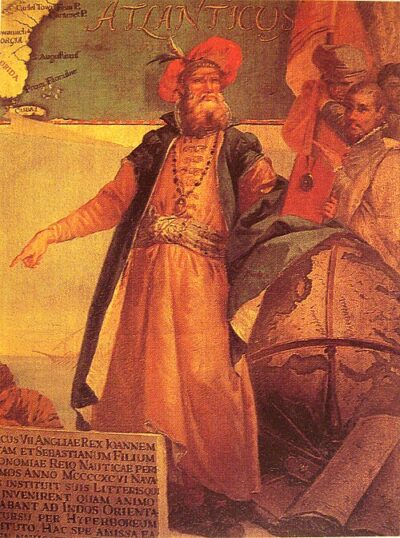
John Cabot
John Cabot was an Italian navigator and explorer (c. 1450 – c. 1499). Born 1450, in Gaeta. Died 1498, in North Atlantic Ocean.
Facts
10 facts · 0 confirmed by two sources · 3 cited · 7 from one source
Where this comes from
Papalocal keeps its own record. It started from these sources; what each one said is kept here as it was copied, so a change on their side never changes this page by itself. Tap one to read its version.
What Wikidata says · copied November 16, 2026 · revision 2569058438
- Described as
- Italian navigator and explorer (c. 1450 – c. 1499)
- Other names
- Giovanni Cabot, Giovanni Chabotto, Zuan Chabotto, Zuan Cabotto, Giovanni Caboto
- Born
- 1450 · 2 references
- Died
- 1498 · 1 reference
- Born in
- Gaeta · 1 reference
- Died in
- North Atlantic Ocean
- Citizen of
- Republic of Venice · 1 reference
- Occupation
- gestor; sailor; slave trader · 1 reference
- Children
- Sebastian Cabot
- Father
- Giulio Caboto · 1 reference
- Wikipedias with a page
- 70
Wikidata item Q85642 (wikidata.org/wiki/Q85642), public domain (CC0). Copied November 16, 2026.
What Wikipedia says · copied November 16, 2026 · revision 1375440445
Giovanni Caboto (Italian: Giovanni Caboto [dʒoˈvanni kaˈbɔːto]; c. 1450 – c. 1499), traditionally known in English as John Cabot (English: ), was an Italian navigator and explorer. His 1497 voyage to the coast of North America under the commission of Henry VII, King of England is the earliest known European exploration of coastal North America since the Norse visits to Vinland in the eleventh century.
To mark the celebration of the 500th anniversary of Cabot's expedition, both the Canadian and British governments declared Cape Bonavista, Newfoundland as representing Cabot's first landing site. However, alternative locations have also been proposed.
From the Wikipedia article “John Cabot” (en.wikipedia.org/wiki/John_Cabot), by its contributors, under CC BY-SA 4.0 (creativecommons.org/licenses/by-sa/4.0/). Copied November 16, 2026; not changed.
Confirmed Two sources agree. Cited One source, and it names where it got it. One source One source, without a reference of its own. Sources disagree The sources disagree. We show the best-supported value and keep theirs below.
