
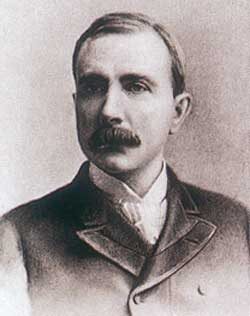
John D. Rockefeller
John D. Rockefeller was an American industrialist and philanthropist. Born July 8, 1839, in Richford. Died May 23, 1937, in Ormond Beach. Known for Riverside Church and Kykuit. Educated at Chancellor University and Bryant & Stratton College. Awards include Dr. Nathan Davis Award for United States Senators.

Facts
29 facts · 2 confirmed by two sources · 11 cited · 16 from one source
Where this comes from
Papalocal keeps its own record. It started from these sources; what each one said is kept here as it was copied, so a change on their side never changes this page by itself. Tap one to read its version.
What Wikidata says · copied November 13, 2026 · revision 2565542595
- Described as
- American industrialist and philanthropist (1839–1937)
- Other names
- John D. Rockefeller Sr., John Davison Rockefeller, J. D. Rockefeller, John Davison Rockefeller Sr., J.D. Rockefeller
- Born
- July 8, 1839 · 7 references
- Died
- May 23, 1937 · 7 references
- Born in
- Richford · 1 reference
- Died in
- Ormond Beach · 3 references
- Buried in
- Lake View Cemetery
- Cause of death
- arteriosclerotic heart disease
- Name at birth
- John Davison Rockefeller sr.
- Citizen of
- United States · 3 references
- Occupation
- entrepreneur · 1 reference; accountant; banker; philanthropist · 1 reference
- Political party
- Republican Party
- Education
- Chancellor University; Bryant & Stratton College
- Known for
- Riverside Church; Kykuit
- Awards
- Dr. Nathan Davis Award for United States Senators (1991)
- Spouse
- Laura Spelman Rockefeller (1864–1915) · 1 reference
- Children
- John D. Rockefeller Jr. · 1 reference; Elizabeth Rockefeller Strong; Alta Rockefeller Prentice · 1 reference; Edith Rockefeller McCormick
- Father
- William Rockefeller Sr. · 1 reference
- Mother
- Eliza Davison · 1 reference
- Siblings
- Frank Rockefeller; William Rockefeller · 1 reference
- Religion
- Baptists
- Lived in
- Cleveland
- Wikipedias with a page
- 105
Wikidata item Q160278 (wikidata.org/wiki/Q160278), public domain (CC0). Copied November 13, 2026.
What Wikipedia says · copied November 13, 2026 · revision 1385487833
John Davison Rockefeller Sr. (July 8, 1839 – May 23, 1937) was an American businessman and philanthropist. He was one of the wealthiest Americans of all time and one of the richest people in history. Rockefeller was born into a large family in Upstate New York who moved several times before eventually settling in Cleveland, Ohio. He became an assistant bookkeeper at age 16 and went into several business partnerships beginning at age 20, concentrating his business on oil refining. Rockefeller founded the Standard Oil Company in 1870. He ran it until 1897 and remained its largest shareholder. In his retirement, he focused his energy and wealth on philanthropy, especially regarding education, medicine, higher education, and modernizing the Southern United States.
Rockefeller's wealth grew substantially as kerosene and gasoline became increasingly important commodities, eventually making him the richest person in the United States. By 1900, Standard Oil controlled about 90% of the nation's oil production. The company lowered production costs and expanded oil distribution through corporate and technological innovations, but it also benefited from a legal environment that enabled consolidation. Critics argue that regulatory capture played a role in facilitating its monopoly power–a view reinforced by Rockefeller's reputed remark, "Competition is a sin."
Rockefeller's company and business practices came under criticism, particularly in the writings of author Ida Tarbell. The Supreme Court ruled in 1911 that Standard Oil must be dismantled for violation of federal antitrust laws. It was broken up into 34 separate entities, which included companies that became ExxonMobil, Chevron Corporation, and others—some of which remain among the largest companies by revenue worldwide. His personal wealth in 1913 was estimated at $900 million, which was 2.3% of the US gross domestic product (GDP). Rockefeller became the country's first billionaire on 28 September 1916.
Rockefeller spent much of the last 40 years of his life in retirement at Kykuit, his estate in Westchester County, New York, defining the structure of philanthropy, along with other key industrialists such as Andrew Carnegie. His fortune was used chiefly to create the modern systematic approach of targeted philanthropy through the creation of foundations that supported medicine, education, and scientific research. His foundations pioneered developments in medical research and were instrumental in the near-eradication of hookworm in the American South, and yellow fever in the United States. He and Carnegie gave form and impetus through their charities to the work of Abraham Flexner, who in his essay "Medical Education in America" emphatically endowed empiricism as the basis for the US medical system of the 20th century.
Rockefeller was the founder of the University of Chicago and Rockefeller University, and funded the establishment of Central Philippine University in the Philippines. He was a devout mainline Baptist Christian and supported many church-based institutions. He adhered to total abstinence from alcohol and tobacco throughout his life. For advice, he relied closely on his wife, Laura Spelman Rockefeller; they had four daughters and a son together. He was a faithful congregant of the Erie Street Baptist Mission Church, taught Sunday school, and served as a trustee, clerk, and occasional janitor. Religion was a guiding force throughout his life, and he believed it to be the source of his success. Rockefeller was also considered a supporter of capitalism based on a perspective of social Darwinism, and he was quoted often as saying, "The growth of a large business is merely a survival of the fittest."
- Born, in its opening lines
- July 8, 1839
- Died, in its opening lines
- May 23, 1937
From the Wikipedia article “John D. Rockefeller” (en.wikipedia.org/wiki/John_D._Rockefeller), by its contributors, under CC BY-SA 4.0 (creativecommons.org/licenses/by-sa/4.0/). Copied November 13, 2026; not changed.
Confirmed Two sources agree. Cited One source, and it names where it got it. One source One source, without a reference of its own. Sources disagree The sources disagree. We show the best-supported value and keep theirs below.
