
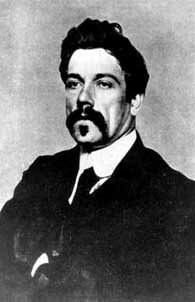
John Millington Synge
John Millington Synge was an Irish playwright, poet, prose writer, and collector of folklore. Born April 16, 1871, in Rathfarnham. Died March 24, 1909, in Dublin. Known for Riders to the Sea and The Playboy of the Western World. Educated at University of Paris and Royal Irish Academy of Music.
Facts
19 facts · 2 confirmed by two sources · 9 cited · 8 from one source
Where this comes from
Papalocal keeps its own record. It started from these sources; what each one said is kept here as it was copied, so a change on their side never changes this page by itself. Tap one to read its version.
What Wikidata says · copied November 16, 2026 · revision 2565596463
- Described as
- Irish playwright, poet, prose writer, and collector of folklore (1871-1909)
- Other names
- J. M. Synge, Edmund John Millington Synge, John M. Synge
- Born
- April 16, 1871 · 16 references
- Died
- March 24, 1909 · 16 references
- Born in
- Rathfarnham · 2 references
- Died in
- Dublin · 4 references
- Buried in
- Mount Jerome Cemetery
- Cause of death
- lymphoma
- Occupation
- playwright · 4 references; poet; writer · 4 references; librettist; prose writer · 1 reference; collector · 1 reference
- Education
- University of Paris; Royal Irish Academy of Music
- Known for
- Riders to the Sea; The Playboy of the Western World
- Father
- John Hatch Synge · 2 references
- Mother
- Kathleen Trail · 2 references
- Siblings
- Annie Isabella Synge · 1 reference
- Wikipedias with a page
- 57
Wikidata item Q213447 (wikidata.org/wiki/Q213447), public domain (CC0). Copied November 16, 2026.
What Wikipedia says · copied November 16, 2026 · revision 1382175349
Edmund John Millington Synge (; 16 April 1871 – 24 March 1909), popularly known as J. M. Synge, was an Irish playwright, poet, and collector of folklore. As a key figure of the Irish Literary Revival and credited with reviving Irish literature during the early 20th century, he is widely regarded by scholars to be among the most prolific playwrights of the Edwardian era. Several of his plays continue to be performed at the Abbey Theatre in Dublin.
His play The Playboy of the Western World (1907), one of his best-known works, was initially poorly received, due to its bleak ending, crude depiction of poor Irish peasants, and the idealisation of patricide, leading to hostile audience reactions and street riots in Dublin during its opening run at the Abbey Theatre, which he had co-founded with William Butler Yeats and Lady Gregory. His other major works include In the Shadow of the Glen (1903), Riders to the Sea (1904), The Well of the Saints (1905), and The Tinker's Wedding (1909). Most of his plays were known for their highly realistic depictions of Irish society and culture, and included plots, themes, landscapes, and settings drawn from places he visited during his travels.
Synge came from a wealthy Anglo-Irish background, and mainly wrote about working-class Catholics in rural Ireland, and what he saw as their pagan worldview. Owing to his ill health, he was schooled at home. His early interest in music led to a scholarship and a degree at Trinity College Dublin, and he went to Germany in 1893 to study music. In 1894, he moved to Paris, where he took up poetry and literary criticism and met Yeats, and later returned to Ireland.
Synge had a relatively short career (c. 1903–1909), but his works continue to be held in high regard due to their cultural and literary significance. He was also one of the co-founders of the Abbey Theatre in Dublin, along with W. B. Yeats and Lady Gregory. He suffered from Hodgkin's disease, and died aged 37 from Hodgkin's-related cancer while writing what became Deirdre of the Sorrows (1910), considered by some as his masterpiece, though it was unfinished during his lifetime. Since his death, Synge has become one of Ireland's most popular and significant playwrights, and his works continue to be studied and discussed in Irish literary circles. He was held in high regard by several of his peers, among them W. B. Yeats, and he had a direct influence on later Irish writers such as Samuel Beckett and Brinsley MacNamara.
- Born, in its opening lines
- April 16, 1871
- Died, in its opening lines
- March 24, 1909
From the Wikipedia article “John Millington Synge” (en.wikipedia.org/wiki/John_Millington_Synge), by its contributors, under CC BY-SA 4.0 (creativecommons.org/licenses/by-sa/4.0/). Copied November 16, 2026; not changed.
Confirmed Two sources agree. Cited One source, and it names where it got it. One source One source, without a reference of its own. Sources disagree The sources disagree. We show the best-supported value and keep theirs below.
