
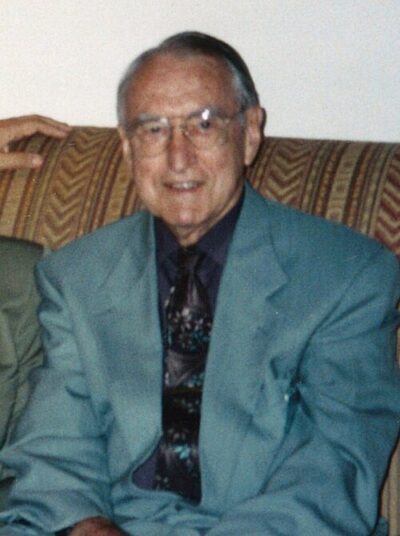
John Money
John Money was a New Zealand-US psychologist and sexologist. Born July 8, 1921, in Morrinsville. Died July 7, 2006, in University of Maryland St. Joseph Medical Center. Known for optimum gender of rearing model. Educated at Harvard University and Victoria University of Wellington. Awards include Magnus Hirschfeld Medal, James McKeen Cattell Fellow Award and honorary doctor of the Hofstra University.
Facts
29 facts · 2 confirmed by two sources · 21 cited · 5 from one source · 1 where the sources disagree
What’s different
- Cause of death: we show Parkinson's disease (Sources disagree). Wikidata also lists falling
Where this comes from
Papalocal keeps its own record. It started from these sources; what each one said is kept here as it was copied, so a change on their side never changes this page by itself. Tap one to read its version.
What Wikidata says · copied November 15, 2026 · revision 2562738307
- Described as
- New Zealand-US psychologist and sexologist (1921–2006)
- Other names
- John William Money, John W. Money
- Born
- July 8, 1921 · 4 references
- Died
- July 7, 2006 · 6 references
- Born in
- Morrinsville · 3 references
- Died in
- University of Maryland St. Joseph Medical Center · 1 reference
- Cause of death
- Parkinson's disease · 2 references; falling · 1 reference
- Name at birth
- John William Money · 2 references
- Citizen of
- United States · 1 reference; New Zealand · 1 reference
- Occupation
- psychologist · 2 references; university teacher; sexologist · 1 reference
- Worked for
- Johns Hopkins School of Medicine (1951–2006) · 3 references; University of Otago (–1947) · 3 references
- Education
- Harvard University (–1952) · 3 references; Victoria University of Wellington (–1944) · 4 references; University of Pittsburgh · 2 references; Hutt Valley High School · 1 reference; University of Otago · 2 references
- Known for
- optimum gender of rearing model
- Awards
- Magnus Hirschfeld Medal (2002); James McKeen Cattell Fellow Award (1992) · 1 reference; honorary doctor of the Hofstra University; APA Distinguished Scientific Award for the Applications of Psychology (1985) · 1 reference
- Field
- sexology · 1 reference; psychology · 1 reference; gender identity · 1 reference; gender role · 1 reference; intersex · 1 reference
- Lived in
- United States (1947–) · 1 reference
- Wikipedias with a page
- 33
Wikidata item Q625794 (wikidata.org/wiki/Q625794), public domain (CC0). Copied November 15, 2026.
What Wikipedia says · copied November 15, 2026 · revision 1385284526
John William Money (8 July 1921 – 7 July 2006) was a New Zealand American psychologist, sexologist and professor at Johns Hopkins University known for his research on human sexual behavior and gender. Money researched paraphilia, including pedophilia, and pioneered the use of drug treatment to extinguish the libido of sex offenders. He advanced the use of new terminology in sex research, coining the terms gender role and sexual orientation. Despite popular belief, Money did not coin the term gender identity, but he did coin the term gender role.
Money was a proponent of genital surgeries for children with intersex conditions, believing that gender was malleable during the first two years of life and it was harmful to rear children as neither boys nor girls. The practice proved controversial when many intersex people later rejected the gender assigned to them. Money also applied the protocol to David Reimer, who had lost his penis in a botched circumcision, and advised his parents to raise him as a girl. Reimer struggled to adapt, feeling confused and exhibiting masculine behavior in childhood, and reverted to living as a male as a teenager when he became aware of the treatment. He died by suicide at age 38 following his twin brother's suicide, separation from his wife, and financial stress.
Money believed transgender people had an idée fixe, and he established the Johns Hopkins Gender Identity Clinic in 1965. Money screened adult patients for two years prior to granting them a medical transition, and believed sex roles should be de-stereotyped so that masculine women would be less likely to desire transition. His views have been criticized by transgender scholars and activists.
Today, Money is a subject of academic scrutiny among psychologists, ethicists, and intersex rights activists for his handling of the Reimer case, and his views continue to generate significant controversy. Critics allege he overlooked or misinterpreted evidence which contradicted his thesis, and more seriously accuse him of outright fraud or malpractice. Money was defended by his colleague Richard Green, who believed Money aimed to help rather than "experiment" on Reimer and operated under accepted medical knowledge of the time. Money's writing has been translated into many languages and includes around 2,000 articles, books, chapters and reviews. He received around 65 honors, awards and degrees in his lifetime.
- Born, in its opening lines
- July 8, 1921
- Died, in its opening lines
- July 7, 2006
From the Wikipedia article “John Money” (en.wikipedia.org/wiki/John_Money), by its contributors, under CC BY-SA 4.0 (creativecommons.org/licenses/by-sa/4.0/). Copied November 15, 2026; not changed.
Confirmed Two sources agree. Cited One source, and it names where it got it. One source One source, without a reference of its own. Sources disagree The sources disagree. We show the best-supported value and keep theirs below.
