
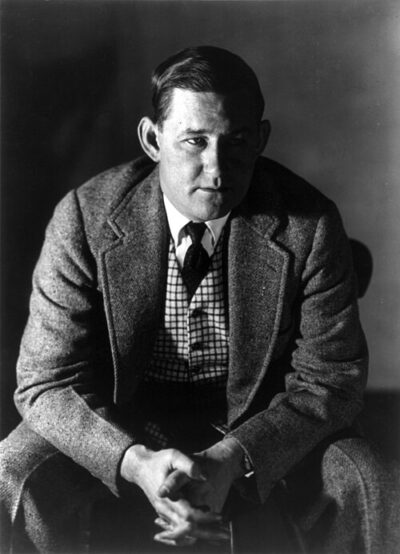
John O'Hara
John O'Hara was an American journalist and writer. Born January 31, 1905, in Pottsville. Died April 11, 1970, in Princeton. Educated at Niagara University. Awards include National Book Award.
Facts
25 facts · 2 confirmed by two sources · 18 cited · 5 from one source
Where this comes from
Papalocal keeps its own record. It started from these sources; what each one said is kept here as it was copied, so a change on their side never changes this page by itself. Tap one to read its version.
What Wikidata says · copied November 15, 2026 · revision 2562769308
- Described as
- American journalist and writer (1905–1970)
- Other names
- John Henry O'Hara
- Born
- January 31, 1905 · 10 references
- Died
- April 11, 1970 · 11 references
- Born in
- Pottsville · 2 references
- Died in
- Princeton · 3 references
- Buried in
- Princeton Cemetery · 1 reference
- Cause of death
- myocardial infarction · 1 reference
- Name at birth
- John Henry O'Hara
- Citizen of
- United States · 1 reference
- Occupation
- columnist; screenwriter · 1 reference; novelist · 1 reference; journalist · 1 reference; writer · 3 references; prose writer · 1 reference; film screenwriter · 1 reference
- Education
- Niagara University
- Member of
- American Academy of Arts and Letters
- Awards
- National Book Award (1956) · 1 reference
- Field
- creative and professional writing · 1 reference; prose · 1 reference; screenplay · 1 reference; journalism · 1 reference; film screenwriting · 1 reference
- Spouse
- Katharine Lansing Barnes (1955–) · 1 reference
- Children
- C. D. B. Bryan
- Wikipedias with a page
- 34
Wikidata item Q548345 (wikidata.org/wiki/Q548345), public domain (CC0). Copied November 15, 2026.
What Wikipedia says · copied November 15, 2026 · revision 1385105580
John Henry O'Hara (January 31, 1905 – April 11, 1970) was an American writer. He was one of America's most prolific writers of short stories, credited with helping to invent The New Yorker magazine short story style. He became a best-selling novelist before the age of 30 with Appointment in Samarra and BUtterfield 8. While O'Hara's legacy as a writer is debated, his work was praised by such contemporaries as Ernest Hemingway and F. Scott Fitzgerald, and his champions rank him highly among the major under-appreciated American writers of the 20th century. Few college students educated after O'Hara's death in 1970 have discovered him, chiefly because he refused to allow his work to be reprinted in anthologies used to teach literature at the college level.
"O’Hara may not have been the best story writer of the twentieth century, but he is the most addictive," wrote Lorin Stein, then editor-in-chief of The Paris Review, in a 2013 appreciation of O'Hara's work. Stein added, "You can binge on his collections the way some people binge on Mad Men, and for some of the same reasons. On the topics of class, sex, and alcohol—that is, the topics that mattered to him—his novels amount to a secret history of American life."
O'Hara achieved substantial commercial success in the years after World War II, when his fiction repeatedly appeared in Publishers Weekly's annual list of the top ten best-selling fiction works in the United States. These best sellers included A Rage to Live (1949), Ten North Frederick (1955), From the Terrace (1959), Ourselves to Know (1960), Sermons and Soda Water (1960) and Elizabeth Appleton (1963). Five of his works were adapted into popular films in the 1950s and 1960s.
Despite the popularity of these books, O'Hara accumulated detractors due to his outsized and easily bruised ego, alcoholic irascibility, long-held resentments and politically conservative views that were unfashionable in literary circles in the 1960s. After O'Hara's death, John Updike, an admirer of O'Hara's writing, said that the prolific author "out-produced our capacity for appreciation; maybe now we can settle down and marvel at him all over again."
- Born, in its opening lines
- January 31, 1905
- Died, in its opening lines
- April 11, 1970
From the Wikipedia article “John O'Hara” (en.wikipedia.org/wiki/John_O'Hara), by its contributors, under CC BY-SA 4.0 (creativecommons.org/licenses/by-sa/4.0/). Copied November 15, 2026; not changed.
Confirmed Two sources agree. Cited One source, and it names where it got it. One source One source, without a reference of its own. Sources disagree The sources disagree. We show the best-supported value and keep theirs below.
