
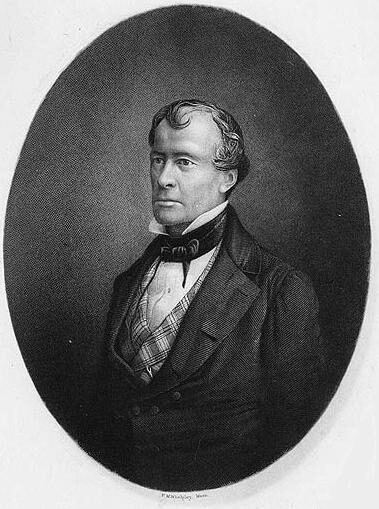
John P. Kennedy
John P. Kennedy was a Novelist, politician. Born October 25, 1795, in Baltimore. Died August 18, 1870, in Newport. Positions held include United States representative (1838–1839), United States Secretary of the Navy (1852–1853) and member of the Maryland House of Delegates. Educated at Baltimore College.
Facts
25 facts · 2 confirmed by two sources · 7 cited · 16 from one source
What’s different
- Died: we show August 18, 1870 (Confirmed). Wikidata also lists August 10, 1870
Where this comes from
Papalocal keeps its own record. It started from these sources; what each one said is kept here as it was copied, so a change on their side never changes this page by itself. Tap one to read its version.
What Wikidata says · copied November 18, 2026 · revision 2557996690
- Described as
- Novelist, politician (1795-1870)
- Other names
- John Pendleton Kennedy
- Born
- October 25, 1795 · 5 references
- Died
- August 18, 1870 · 5 references; August 10, 1870 · 2 references
- Born in
- Baltimore · 2 references
- Died in
- Newport · 2 references
- Buried in
- Green Mount Cemetery
- Citizen of
- United States
- Occupation
- politician · 1 reference; lawyer; novelist; writer · 1 reference; poet · 1 reference; slave driver; jurist · 1 reference; author · 1 reference
- Positions held
- United States representative (1838–1839); United States Secretary of the Navy (1852–1853); member of the Maryland House of Delegates
- Political party
- Whig Party; Unconditional Union Party
- Education
- Baltimore College
- Member of
- American Academy of Arts and Sciences
- Mother
- Anne Clayton Pendleton
- Siblings
- Philip Pendleton Kennedy · 3 references; Anthony Kennedy
- Religion
- Episcopal Church
- Wikipedias with a page
- 19
Wikidata item Q938005 (wikidata.org/wiki/Q938005), public domain (CC0). Copied November 18, 2026.
What Wikipedia says · copied November 18, 2026 · revision 1380171309
John Pendleton Kennedy (October 25, 1795 – August 18, 1870) was an American novelist, lawyer and Whig politician who served as United States Secretary of the Navy from July 26, 1852, to March 4, 1853, during the administration of President Millard Fillmore, and as a U.S. representative from Maryland's 4th congressional district, during which he encouraged the United States government's study, adoption and implementation of the telegraph. A lawyer who became a lobbyist for and director of the Baltimore and Ohio Railroad, Kennedy also served several terms in the Maryland General Assembly and became its speaker in 1847.
Kennedy later helped lead the effort to end slavery in Maryland, which, as a non-Confederate state, was not affected by the Emancipation Proclamation and required a state law to free slaves within its borders and to outlaw the furtherance of the practice.
Kennedy also advocated religious tolerance, and furthered studies of Maryland history. He helped preserve or found Historic St. Mary's City (site of the colonial founding of Maryland and the birthplace of religious freedom in America), St. Mary's College of Maryland (then St. Mary's Female seminary), the Peabody Library (now a part of Johns Hopkins University) and the Peabody Conservatory of Music (also now a part of Johns Hopkins).
- Born, in its opening lines
- October 25, 1795
- Died, in its opening lines
- August 18, 1870
From the Wikipedia article “John P. Kennedy” (en.wikipedia.org/wiki/John_P._Kennedy), by its contributors, under CC BY-SA 4.0 (creativecommons.org/licenses/by-sa/4.0/). Copied November 18, 2026; not changed.
Confirmed Two sources agree. Cited One source, and it names where it got it. One source One source, without a reference of its own. Sources disagree The sources disagree. We show the best-supported value and keep theirs below.
