
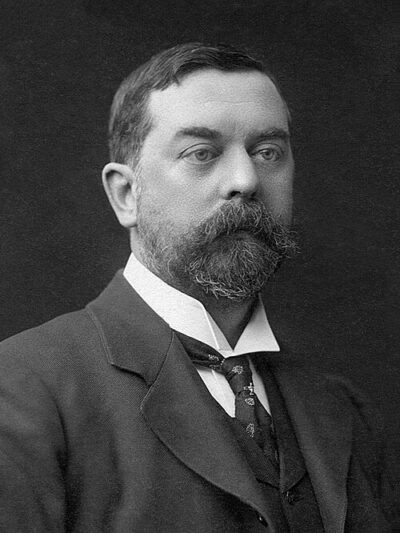
John Singer Sargent
John Singer Sargent was an American painter. Born January 12, 1856, in Florence. Died April 14, 1925, in London. Known for Madame X, El Jaleo and The Daughters of Edward Darley Boit. Educated at Académie Julian and Beaux-Arts de Paris. Awards include Pour le Mérite for Sciences and Arts order and Pour le Mérite.
Facts
40 facts · 1 confirmed by two sources · 12 cited · 26 from one source · 1 where the sources disagree
What’s different
- Died: we show April 14, 1925 (Sources disagree). Wikipedia says April 15, 1925
Where this comes from
Papalocal keeps its own record. It started from these sources; what each one said is kept here as it was copied, so a change on their side never changes this page by itself. Tap one to read its version.
What Wikidata says · copied November 13, 2026 · revision 2568752375
- Described as
- American painter (1856–1925)
- Other names
- John-Singer Sargent, J.S. Sargent, John Sargent, J. Singer Sargent, J. Sargent, J. S. Sargent, John S. Sargent, JS Sargent
- Born
- January 12, 1856 · 7 references
- Died
- April 14, 1925 · 4 references
- Born in
- Florence · 5 references
- Died in
- London · 5 references
- Buried in
- Brookwood Cemetery · 1 reference
- Cause of death
- cardiovascular disease
- Citizen of
- United States; Kingdom of Italy
- Occupation
- painter · 3 references; architectural drafter · 1 reference; architect · 1 reference; artist · 1 reference
- Education
- Académie Julian; Beaux-Arts de Paris (1874–1877) · 1 reference; Accademia delle Arti del Disegno
- Member of
- Royal Academy of Arts; American Academy of Arts and Sciences; American Academy of Arts and Letters; Accademia delle Arti del Disegno; Académie des beaux-arts
- Genre
- portrait painting; portrait · 1 reference; landscape painting · 1 reference
- Known for
- Madame X; El Jaleo; The Daughters of Edward Darley Boit; Carnation, Lily, Lily and Rose; Gassed; The Misses Vickers; Street in Venice; Lady Agnew of Lochnaw; Cashmere; The Wyndham Sisters: Lady Elcho, Mrs. Adeane, and Mrs. Tennant
- Awards
- Pour le Mérite for Sciences and Arts order; Pour le Mérite · 1 reference
- Field
- painting
- Father
- FitzWilliam Sargent · 1 reference
- Mother
- Mary Newbold Sargent
- Siblings
- Violet Ormond · 1 reference; Emily Sargent · 1 reference
- Wikipedias with a page
- 62
Wikidata item Q155626 (wikidata.org/wiki/Q155626), public domain (CC0). Copied November 13, 2026.
What Wikipedia says · copied November 13, 2026 · revision 1384722672
John Singer Sargent (; January 12, 1856 – April 15, 1925) was an American expatriate artist, considered the "leading portrait painter of his generation" for his evocations of Belle Époque and Edwardian-era luxury. He made roughly 900 oil paintings and more than 2,000 watercolors, as well as countless sketches and charcoal drawings. His oeuvre documents worldwide travel, from Venice to the Tyrol, Corfu, Capri, Spain, the Middle East, Montana, Maine, and Florida.
Born in Florence to American parents, he was trained there and in Paris before moving to London, living most of his life in Europe. He enjoyed international acclaim as a portrait painter. An early submission to the Paris Salon in the 1880s, his Portrait of Madame X, was intended to consolidate his position as a society painter in Paris but instead resulted in scandal. During the year following the scandal, Sargent departed for England, where he continued a successful career as a portrait artist.
From the beginning, Sargent's work is characterized by remarkable technical facility, particularly in his ability to draw with a brush, which in later years inspired admiration as well as criticism for its supposed superficiality. His commissioned works were consistent with the grand manner of portraiture, while his informal studies and landscape paintings displayed a familiarity with Impressionism. In later life, Sargent expressed ambivalence about the restrictions of formal portrait work and devoted much of his energy to mural painting and working en plein air. Art historians generally ignored society artists such as Sargent until the late 20th century.
The exhibition in the 1980s of Sargent's previously hidden male nudes served to spark a reevaluation of his life and work, and its psychological complexity. In addition to the beauty, sensation and innovation of his oeuvre, his same-sex interests, unconventional friendships with women and engagement with race, gender nonconformity, and emerging globalism are now viewed as socially and aesthetically progressive and radical.
- Born, in its opening lines
- January 12, 1856
- Died, in its opening lines
- April 15, 1925
From the Wikipedia article “John Singer Sargent” (en.wikipedia.org/wiki/John_Singer_Sargent), by its contributors, under CC BY-SA 4.0 (creativecommons.org/licenses/by-sa/4.0/). Copied November 13, 2026; not changed.
Confirmed Two sources agree. Cited One source, and it names where it got it. One source One source, without a reference of its own. Sources disagree The sources disagree. We show the best-supported value and keep theirs below.
