
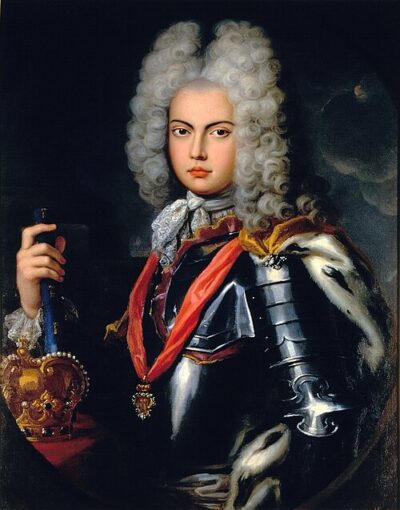
John V of Portugal
John V of Portugal was a King of Portugal from 1707 to 1750. Born October 22, 1689, in Lisbon. Died July 31, 1750, in Lisbon. Positions held include Monarch of Portugal (1706–1750) and Grand Master of the Order of the Tower and Sword.
Facts
33 facts · 2 confirmed by two sources · 7 cited · 24 from one source
Where this comes from
Papalocal keeps its own record. It started from these sources; what each one said is kept here as it was copied, so a change on their side never changes this page by itself. Tap one to read its version.
What Wikidata says · copied November 16, 2026 · revision 2564798934
- Described as
- King of Portugal from 1707 to 1750
- Other names
- João V of Portugal, John V the Magnanimous, João V the Magnanimous
- Born
- October 22, 1689 · 5 references
- Died
- July 31, 1750 · 5 references
- Born in
- Lisbon · 1 reference
- Died in
- Lisbon · 1 reference
- Buried in
- Monastery of São Vicente de Fora
- Cause of death
- stroke
- Citizen of
- Kingdom of Portugal
- Occupation
- sovereign
- Positions held
- Monarch of Portugal (1706–1750); Grand Master of the Order of the Tower and Sword
- Member of
- Arcadian Academy
- Spouse
- Maria Anna of Austria (1708–) · 1 reference
- Children
- Barbara of Portugal, Queen of Spain · 1 reference; José I of Portugal · 1 reference; Pedro III of Portugal; Infante Alexandre of Portugal · 1 reference; José de Bragança; Gaspar de Bragança; António de Bragança; Maria Rita de Bragança; Pedro, Prince of Brazil · 1 reference; Infante Carlos of Portugal · 1 reference
- Father
- Peter II of Portugal
- Mother
- Maria Sofia of Neuburg
- Siblings
- Francisca Josefa of Portugal; Luísa, Duchess of Cadaval; Infanta Isabel Luísa of Portugal; Infante Francisco, Duke of Beja; Infante António of Portugal; Joseph, Archbishop of Braga; João of Braganza, Prince of Brazil; Infante Manuel, Count of Ourém
- Religion
- Catholic Church
- Wikipedias with a page
- 47
Wikidata item Q299650 (wikidata.org/wiki/Q299650), public domain (CC0). Copied November 16, 2026.
What Wikipedia says · copied November 16, 2026 · revision 1383586808
Dom John V (22 October 1689 – 31 July 1750), known as the Magnanimous and the Portuguese Sun King, was King of Portugal from 9 December 1706 until his death in 1750. His reign saw the rise of Portugal and the Portuguese Empire to new levels of prosperity, wealth, and prestige among European courts.
John V's reign saw an increased influx of gold into the royal treasury, supplied largely by the royal fifth (a tax on precious metals) that was received from the colonies of Brazil and Maranhão. John spent lavishly on ambitious architectural works, most notably Mafra Palace, and on acquisitions for his sizeable art and literary collections. In order to boost Portugal's diplomatic standing, he expended large sums on embassies to the courts of Europe, most famous being those sent to Paris in 1715 and Rome in 1716.
Disregarding traditional Portuguese institutions of governance, John V ruled as an absolute monarch. As with previous monarchs from the House of Braganza, his reign was marked by numerous interventions into the affairs of other European states, most notably during the War of the Spanish Succession. On the imperial front, John V pursued an expansionist policy, with significant territorial gains in Portuguese India and Portuguese America.
A deeply religious man, John returned support from Pope Benedict XIV with a fervent devotion to the Catholic Church and significant donations. He received the title "Most Faithful Majesty" in return, although his relationship with the papacy varied depending on its holders.
- Born, in its opening lines
- October 22, 1689
- Died, in its opening lines
- July 31, 1750
From the Wikipedia article “John V of Portugal” (en.wikipedia.org/wiki/John_V_of_Portugal), by its contributors, under CC BY-SA 4.0 (creativecommons.org/licenses/by-sa/4.0/). Copied November 16, 2026; not changed.
Confirmed Two sources agree. Cited One source, and it names where it got it. One source One source, without a reference of its own. Sources disagree The sources disagree. We show the best-supported value and keep theirs below.
