
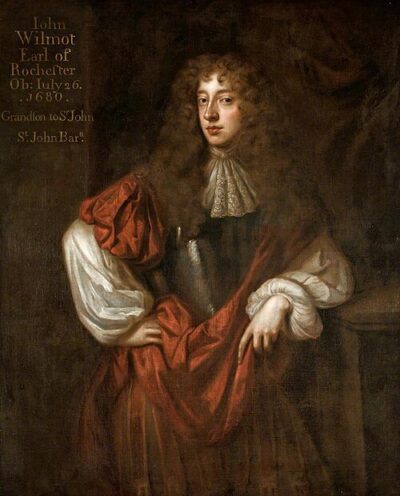
John Wilmot, 2nd Earl of Rochester
John Wilmot, 2nd Earl of Rochester was an English poet, and peer of the realm. Born April 1, 1647, in Ditchley. Died July 26, 1680, in Woodstock. Positions held include member of the House of Lords. Educated at Wadham College.
Facts
22 facts · 1 confirmed by two sources · 11 cited · 9 from one source · 1 where the sources disagree
What’s different
- Born: we show April 1, 1647 (Sources disagree). Wikipedia says April 2, 1647
Where this comes from
Papalocal keeps its own record. It started from these sources; what each one said is kept here as it was copied, so a change on their side never changes this page by itself. Tap one to read its version.
What Wikidata says · copied November 16, 2026 · revision 2568740559
- Described as
- English poet, and peer of the realm (1647-1680)
- Other names
- John Wilmot, Earl of Rochester
- Born
- April 1, 1647 · 2 references
- Died
- July 26, 1680 · 2 references
- Born in
- Ditchley
- Died in
- Woodstock · 2 references
- Buried in
- Church of All Saints, Spelsbury · 1 reference
- Cause of death
- syphilis
- Citizen of
- Kingdom of England
- Occupation
- poet · 1 reference; writer · 1 reference; playwright
- Positions held
- member of the House of Lords
- Education
- Wadham College
- Spouse
- Elizabeth Wilmot, Countess of Rochester · 1 reference
- Children
- Charles Wilmot, 3rd Earl of Rochester · 1 reference; Anne Wilmot of Rochester · 2 references; Elizabeth Wilmot · 2 references; Malet Wilmot · 1 reference
- Father
- Henry Wilmot, 1st Earl of Rochester · 1 reference
- Mother
- Anne St John, Countess of Rochester · 1 reference
- Military branch
- Royal Navy
- Lived in
- Paris (1653–1654); Ditchley (2 times) (1647–)
- Wikipedias with a page
- 33
Wikidata item Q358912 (wikidata.org/wiki/Q358912), public domain (CC0). Copied November 16, 2026.
What Wikipedia says · copied November 16, 2026 · revision 1380759022
John Wilmot, 2nd Earl of Rochester (2 April 1647 (O.S.) – 26 July 1680 (O.S.)) was an English poet and courtier of King Charles II's Restoration court, who reacted against the "spiritual authoritarianism" of the Puritan era. Rochester embodied a novel rebellion against the puritan programme, and he became as well known for his rakish lifestyle as for his poetry, although the two were often interlinked. He died as a result of a sexually transmitted infection at the age of 33.
Rochester was described by his contemporary Andrew Marvell as "the best English satirist", and he is generally considered to be the most considerable poet and the most learned among the Restoration wits. His poetry was widely censored during the Victorian era, but enjoyed a revival from the 1920s onwards, with reappraisals from noted literary figures such as Graham Greene and Ezra Pound. The critic Vivian de Sola Pinto linked Rochester's libertinism to Hobbesian materialism.
During his lifetime Rochester was best known for A Satyr Against Reason and Mankind and it remains among his best-known works today.
- Born, in its opening lines
- April 2, 1647
- Died, in its opening lines
- July 26, 1680
From the Wikipedia article “John Wilmot, 2nd Earl of Rochester” (en.wikipedia.org/wiki/John_Wilmot,_2nd_Earl_of_Rochester), by its contributors, under CC BY-SA 4.0 (creativecommons.org/licenses/by-sa/4.0/). Copied November 16, 2026; not changed.
Confirmed Two sources agree. Cited One source, and it names where it got it. One source One source, without a reference of its own. Sources disagree The sources disagree. We show the best-supported value and keep theirs below.
