
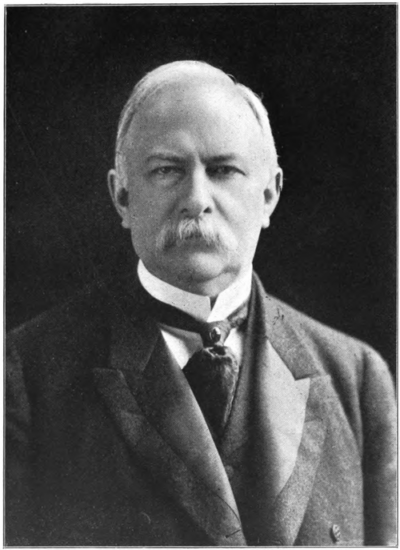
Joseph B. Foraker
Joseph B. Foraker was an American politician from Ohio. Born July 5, 1846, in Highland County. Died May 10, 1917, in Cincinnati. Positions held include Governor of Ohio (1886–1890), United States senator (1897–1909) and senator. Educated at Ohio Wesleyan University and Cornell University.
Facts
18 facts · 2 confirmed by two sources · 9 cited · 7 from one source
Where this comes from
Papalocal keeps its own record. It started from these sources; what each one said is kept here as it was copied, so a change on their side never changes this page by itself. Tap one to read its version.
What Wikidata says · copied November 16, 2026 · revision 2568705351
- Described as
- American politician from Ohio (1846-1917)
- Other names
- Joseph Benson Foraker
- Born
- July 5, 1846 · 3 references
- Died
- May 10, 1917 · 3 references
- Born in
- Highland County
- Died in
- Cincinnati · 1 reference
- Buried in
- Spring Grove Cemetery · 1 reference
- Citizen of
- United States
- Occupation
- politician · 1 reference; lawyer · 1 reference; judge · 1 reference; governor · 1 reference; jurist · 1 reference
- Positions held
- Governor of Ohio (1886–1890); United States senator (1897–1909) · 1 reference; senator · 1 reference
- Political party
- Republican Party
- Education
- Ohio Wesleyan University; Cornell University
- Spouse
- Julia Foraker
- Wikipedias with a page
- 22
Wikidata item Q881341 (wikidata.org/wiki/Q881341), public domain (CC0). Copied November 16, 2026.
What Wikipedia says · copied November 16, 2026 · revision 1384418565
Joseph Benson Foraker (July 5, 1846 – May 10, 1917) was an American politician of the Republican Party who served as the 37th governor of Ohio from 1886 to 1890 and as a United States senator from Ohio from 1897 until 1909.
Foraker was born in rural Ohio; he enlisted at age 16 in the Union Army during the American Civil War. He fought for almost three years, attaining the rank of captain. After the war, he was a member of Cornell University's first graduating class, and became a lawyer. He was elected a judge in 1879 and became known as a political speaker. He was defeated in his first run for the governorship in 1883, but was elected two years later. As Ohio governor, he built an alliance with the Republican Party "boss" Mark Hanna, but fell out with him in 1888. Foraker was defeated for reelection in 1889, but was elected U.S. senator by the Ohio General Assembly in 1896, after an unsuccessful bid for that office in 1892.
In the Senate, he supported the Spanish–American War and the annexation of the Philippines and Puerto Rico; the Foraker Act gave Puerto Rico its first civil government under American rule. He came to differ with President Theodore Roosevelt over railroad regulation and political patronage. Their largest disagreement was over the Brownsville Affair, in which black soldiers were accused of terrorizing a Texas town, and Roosevelt dismissed the entire battalion. Foraker zealously opposed Roosevelt's actions as unfair, and fought for the soldiers' reinstatement. The two men's disagreement broke out into an angry confrontation at the 1907 Gridiron Dinner, after which Roosevelt worked to defeat Foraker's re-election bid. Foraker died in 1917; in 1972, the Army reversed the dismissals and cleared the soldiers. Mount Foraker, the second highest peak in the Alaska Range, and the third highest peak in the United States, was named for him in 1899.
- Born, in its opening lines
- July 5, 1846
- Died, in its opening lines
- May 10, 1917
From the Wikipedia article “Joseph B. Foraker” (en.wikipedia.org/wiki/Joseph_B._Foraker), by its contributors, under CC BY-SA 4.0 (creativecommons.org/licenses/by-sa/4.0/). Copied November 16, 2026; not changed.
Confirmed Two sources agree. Cited One source, and it names where it got it. One source One source, without a reference of its own. Sources disagree The sources disagree. We show the best-supported value and keep theirs below.
