
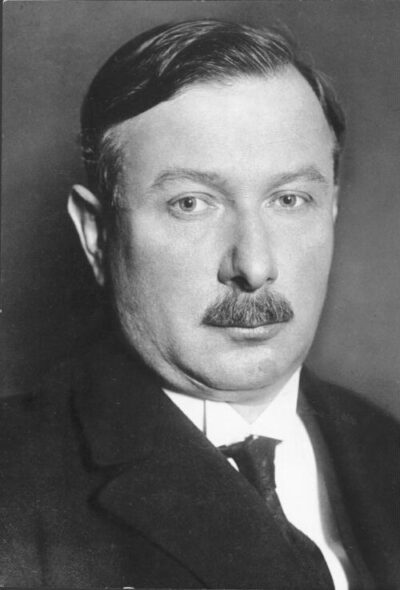
Joseph Wirth
Joseph Wirth was a German chancellor. Born September 6, 1879, in Freiburg im Breisgau. Died January 3, 1956, in Freiburg im Breisgau. Positions held include member of the Reichstag of the Weimar Republic, member of the Reichstag of the German Empire and State Minister. Educated at University of Freiburg. Awards include International Stalin Prize for Peace.
Facts
23 facts · 2 confirmed by two sources · 4 cited · 17 from one source
Where this comes from
Papalocal keeps its own record. It started from these sources; what each one said is kept here as it was copied, so a change on their side never changes this page by itself. Tap one to read its version.
What Wikidata says · copied November 16, 2026 · revision 2569136926
- Described as
- German chancellor (1879-1956)
- Other names
- Karl Joseph Wirth
- Born
- September 6, 1879 · 8 references
- Died
- January 3, 1956 · 7 references
- Born in
- Freiburg im Breisgau · 2 references
- Died in
- Freiburg im Breisgau · 2 references
- Buried in
- Hauptfriedhof Freiburg
- Citizen of
- Weimar Republic; Republic of Baden
- Occupation
- politician · 1 reference
- Positions held
- member of the Reichstag of the Weimar Republic; member of the Reichstag of the German Empire; State Minister; Reich Chancellor in the Weimar Republic (1921–1922); Member of the Second Chamber of the Diet of the Grand Duchy of Baden; Chancellor of Germany (1921–1922); Reichsminister des Innern (1930–1931); Reich Minister of Finance (1920–1921); Federal Minister for Foreign Affairs (1921–1922) · 1 reference
- Political party
- Centre Party; Bund der Deutschen
- Education
- University of Freiburg
- Awards
- International Stalin Prize for Peace · 1 reference
- Religion
- Catholic Church; Catholicism · 1 reference
- Wikipedias with a page
- 53
Wikidata item Q60150 (wikidata.org/wiki/Q60150), public domain (CC0). Copied November 16, 2026.
What Wikipedia says · copied November 16, 2026 · revision 1381935672
Karl Joseph Wirth (German pronunciation: [kaʁl ˈjoːzɛf ˈvɪʁt]; 6 September 1879 – 3 January 1956) was a German politician of the Catholic Centre Party who was chancellor of Germany from May 1921 to November 1922, during the early years of the Weimar Republic. He was also minister of four government departments between 1920 and 1931 (Foreign Affairs, Finance, Interior, and Occupied Territories). Wirth was strongly influenced by Christian social teaching throughout his political career.
He was named chancellor in May 1921 when Germany was facing difficult negotiations with the Allies of World War I over German war reparations. Wirth accepted the Allies' conditions and began a policy of fulfilment – an attempt to show that Germany was unable to afford the reparations payments by making the effort to meet them. He resigned after less than six months in protest against the partition of Upper Silesia by the League of Nations and formed a second, minority cabinet a few days later. Following the assassination of Foreign Minister Walther Rathenau by members of a right-wing terrorist group in April 1922, his government attempted to confront political violence with the Law for the Protection of the Republic. Wirth's second government resigned after just over a year when it was unable to expand its political base.
After his two terms as chancellor, Wirth continued to fight right-wing political forces as a Reichstag member and government minister. During the Nazi era, he went into exile and worked with several anti-Nazi groups. Following the end of World War II, he opposed Konrad Adenauer's policy of integration with the West. Although he lived in West Germany, he had contacts with the Soviet Union and East Germany, the latter of which awarded him two prestigious honours. He died in his hometown of Freiburg in 1956.
- Born, in its opening lines
- September 6, 1879
- Died, in its opening lines
- January 3, 1956
From the Wikipedia article “Joseph Wirth” (en.wikipedia.org/wiki/Joseph_Wirth), by its contributors, under CC BY-SA 4.0 (creativecommons.org/licenses/by-sa/4.0/). Copied November 16, 2026; not changed.
Confirmed Two sources agree. Cited One source, and it names where it got it. One source One source, without a reference of its own. Sources disagree The sources disagree. We show the best-supported value and keep theirs below.
