
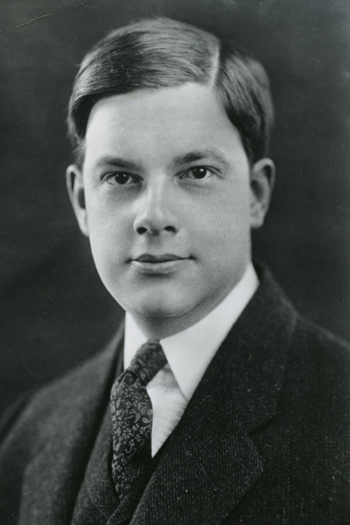
Joyce Kilmer
Joyce Kilmer was an American poet, editor, literary critic, soldier. Born December 6, 1886, in New Brunswick. Died July 30, 1918, in Seringes-et-Nesles. Educated at Columbia University and Rutgers University. Awards include Purple Heart and New Jersey Hall of Fame.
Facts
20 facts · 2 confirmed by two sources · 4 cited · 14 from one source
Where this comes from
Papalocal keeps its own record. It started from these sources; what each one said is kept here as it was copied, so a change on their side never changes this page by itself. Tap one to read its version.
What Wikidata says · copied November 18, 2026 · revision 2555581212
- Described as
- American poet, editor, literary critic, soldier (1886–1918)
- Other names
- Alfred Joyce Kilmer
- Born
- December 6, 1886
- Died
- July 30, 1918 · 6 references
- Born in
- New Brunswick
- Died in
- Seringes-et-Nesles
- Buried in
- Hauts-de-France
- Citizen of
- United States
- Occupation
- journalist; poet · 1 reference; soldier; writer · 1 reference
- Education
- Columbia University; Rutgers University; Rutgers Preparatory School · 2 references
- Awards
- Purple Heart; New Jersey Hall of Fame (2019) · 1 reference
- Spouse
- Aline Murray Kilmer
- Father
- Frederick Barnett Kilmer
- Mother
- Annie Kilburn Kilmer · 1 reference
- Religion
- Catholic Church
- Military branch
- United States Army
- Wikipedias with a page
- 18
Wikidata item Q762223 (wikidata.org/wiki/Q762223), public domain (CC0). Copied November 18, 2026.
What Wikipedia says · copied November 18, 2026 · revision 1384898450
Alfred Joyce Kilmer (December 6, 1886 – July 30, 1918) was an American writer and poet mainly remembered for a short poem titled "Trees" (1913), which was published in the collection Trees and Other Poems in 1914. Though a prolific poet whose works celebrated the common beauty of the natural world as well as his Catholic faith, Kilmer was also a journalist, literary critic, lecturer, and editor. At the time of his deployment to Europe during World War I, Kilmer was considered the leading American Catholic poet and lecturer of his generation, whom critics often compared to British contemporaries G. K. Chesterton (1874–1936) and Hilaire Belloc (1870–1953). He enlisted in the New York National Guard and was deployed to France with the 69th Infantry Regiment (the "Fighting 69th") in 1917. He was killed by a sniper's bullet at the Second Battle of the Marne in 1918 at the age of 31. He was married to Aline Murray, also an accomplished poet and author, with whom he had five children.
While most of his works are largely unknown today, a select few of his poems remain popular and are published frequently in anthologies. Several critics—including both Kilmer's contemporaries and modern scholars—have dismissed Kilmer's work as being too simple and overly sentimental, and suggested that his style was far too traditional, even archaic. Many writers, including notably Ogden Nash, have parodied Kilmer's work and style—as attested by the many imitations of "Trees."
- Born, in its opening lines
- December 6, 1886
- Died, in its opening lines
- July 30, 1918
From the Wikipedia article “Joyce Kilmer” (en.wikipedia.org/wiki/Joyce_Kilmer), by its contributors, under CC BY-SA 4.0 (creativecommons.org/licenses/by-sa/4.0/). Copied November 18, 2026; not changed.
Confirmed Two sources agree. Cited One source, and it names where it got it. One source One source, without a reference of its own. Sources disagree The sources disagree. We show the best-supported value and keep theirs below.
