
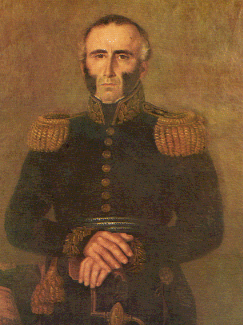
Juan Antonio Lavalleja
Juan Antonio Lavalleja was an Uruguayan politician. Born June 24, 1784, in Minas. Died October 22, 1853, in Montevideo. Positions held include President of Uruguay (1853).
Facts
16 facts · 2 confirmed by two sources · 4 cited · 10 from one source
Where this comes from
Papalocal keeps its own record. It started from these sources; what each one said is kept here as it was copied, so a change on their side never changes this page by itself. Tap one to read its version.
What Wikidata says · copied November 17, 2026 · revision 2567806442
- Described as
- Uruguayan politician (1784-1853)
- Born
- June 24, 1784 · 3 references
- Died
- October 22, 1853 · 3 references
- Born in
- Minas
- Died in
- Montevideo · 1 reference
- Buried in
- Metropolitan Basilica Cathedral of the Immaculate Conception and San Felipe and Santiago
- Citizen of
- Uruguay · 1 reference
- Occupation
- diplomat; politician; military personnel; revolutionary · 1 reference
- Positions held
- President of Uruguay (1853) · 1 reference
- Political party
- National Party; Federalist Party
- Member of
- triumvirate of 1853
- Spouse
- Ana Monterroso de Lavalleja · 1 reference
- Military rank
- general
- Wikipedias with a page
- 24
Wikidata item Q649615 (wikidata.org/wiki/Q649615), public domain (CC0). Copied November 17, 2026.
What Wikipedia says · copied November 17, 2026 · revision 1375634369
Juan Antonio Lavalleja y de la Torre (June 24, 1784 – October 22, 1853) was a Uruguayan libertador, revolutionary, military general, and political figure. He was born in Minas, in a region now named after him as the Lavalleja Department of Uruguay.
- Born, in its opening lines
- June 24, 1784
- Died, in its opening lines
- October 22, 1853
From the Wikipedia article “Juan Antonio Lavalleja” (en.wikipedia.org/wiki/Juan_Antonio_Lavalleja), by its contributors, under CC BY-SA 4.0 (creativecommons.org/licenses/by-sa/4.0/). Copied November 17, 2026; not changed.
Confirmed Two sources agree. Cited One source, and it names where it got it. One source One source, without a reference of its own. Sources disagree The sources disagree. We show the best-supported value and keep theirs below.
