
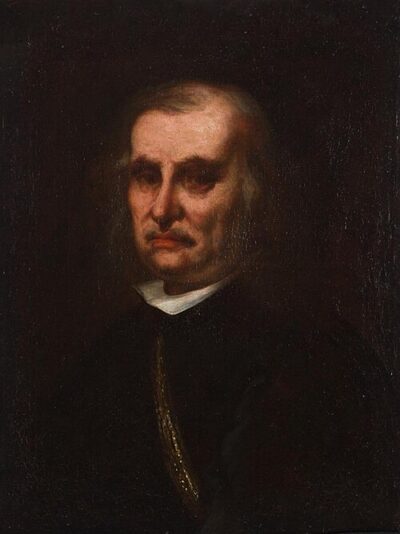
Juan Carreño de Miranda
Juan Carreño de Miranda was a Spanish artist. Born March 25, 1614, in Avilés. Died October 3, 1685, in Madrid. Positions held include court painter. Known for Saint Sebastian, Eugenia Martinez Valleji, called La Monstrua and Eugenia Martínez Vallejo, desnuda.
Facts
15 facts · 2 confirmed by two sources · 8 cited · 5 from one source
Where this comes from
Papalocal keeps its own record. It started from these sources; what each one said is kept here as it was copied, so a change on their side never changes this page by itself. Tap one to read its version.
What Wikidata says · copied November 16, 2026 · revision 2564818016
- Described as
- Spanish artist (1614-1685)
- Other names
- Carreño de Miranda, Juan Carreno de Miranda, Juan Carreño, Juan Carreno De Miranda, Carreña, Juan Miranda Carreño, Juan Carreno di Miranda, Juan Carreno, Juan de Carreno, Juan Carreño De Miranda, Juan Miranda Carreno, Carreno
- Born
- March 25, 1614 · 8 references
- Died
- October 3, 1685 · 8 references
- Born in
- Avilés · 3 references
- Died in
- Madrid · 3 references
- Name at birth
- Juan Carreño de Miranda
- Citizen of
- Spain · 1 reference
- Occupation
- painter · 2 references; draftsperson · 1 reference; architectural drafter · 1 reference
- Positions held
- court painter
- Genre
- portrait · 1 reference
- Known for
- Saint Sebastian; Eugenia Martinez Valleji, called La Monstrua; Eugenia Martínez Vallejo, desnuda
- Field
- painting · 1 reference
- Wikipedias with a page
- 28
Wikidata item Q833224 (wikidata.org/wiki/Q833224), public domain (CC0). Copied November 16, 2026.
What Wikipedia says · copied November 16, 2026 · revision 1372407854
Juan Carreño de Miranda (25 March 1614 — 3 October 1685) was a Spanish painter of the Baroque period.
- Born, in its opening lines
- March 25, 1614
- Died, in its opening lines
- October 3, 1685
From the Wikipedia article “Juan Carreño de Miranda” (en.wikipedia.org/wiki/Juan_Carreño_de_Miranda), by its contributors, under CC BY-SA 4.0 (creativecommons.org/licenses/by-sa/4.0/). Copied November 16, 2026; not changed.
Confirmed Two sources agree. Cited One source, and it names where it got it. One source One source, without a reference of its own. Sources disagree The sources disagree. We show the best-supported value and keep theirs below.
