
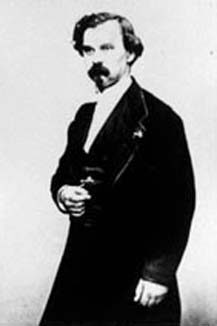
Jules Antoine Lissajous
Jules Antoine Lissajous was a French physicist. Born March 4, 1822, in Versailles. Died June 24, 1880, in Plombières-lès-Dijon. Positions held include rector (1875–1879). Known for Lissajous curve, Lissajous orbit and Lissajous knot. Educated at École Normale Supérieure and Lycée Hoche. Awards include Officer of the Legion of Honour.
Facts
19 facts · 2 confirmed by two sources · 7 cited · 10 from one source
Where this comes from
Papalocal keeps its own record. It started from these sources; what each one said is kept here as it was copied, so a change on their side never changes this page by itself. Tap one to read its version.
What Wikidata says · copied November 17, 2026 · revision 2523632110
- Described as
- French physicist (1822-1880)
- Born
- March 4, 1822 · 7 references
- Died
- June 24, 1880 · 5 references
- Born in
- Versailles · 1 reference
- Died in
- Plombières-lès-Dijon · 1 reference
- Name at birth
- Jules Antoine Lissajous · 1 reference
- Citizen of
- France
- Occupation
- physicist · 1 reference
- Positions held
- rector (1875–1879) · 3 references
- Worked for
- Lycée Saint-Louis (1847–1874) · 1 reference
- Education
- École Normale Supérieure (1841–1844) · 1 reference; Lycée Hoche (–1841); Science Faculty of Paris (–1850)
- Known for
- Lissajous curve; Lissajous orbit; Lissajous knot; Lissajous-toric knot
- Awards
- Officer of the Legion of Honour (1872)
- Field
- mathematics · 1 reference; mathematical physics
- Wikipedias with a page
- 26
Wikidata item Q385440 (wikidata.org/wiki/Q385440), public domain (CC0). Copied November 17, 2026.
What Wikipedia says · copied November 17, 2026 · revision 1342194329
Jules Antoine Lissajous (French pronunciation: [ʒyl ɑ̃twan lisaʒu]; 4 March 1822 in Versailles – 24 June 1880 in Plombières-les-Dijon) was a French physicist, after whom Lissajous figures are named. Among other innovations, Lissajous invented the Lissajous apparatus, a device that creates the figures that bear his name. In it, a beam of light is bounced off a mirror attached to a vibrating tuning fork, and then reflected off a second mirror attached to a perpendicularly oriented vibrating tuning fork (usually of a different pitch, creating a specific harmonic interval), onto a wall, resulting in a Lissajous figure. This led to the invention of other apparatus such as the harmonograph.
- Born, in its opening lines
- March 4, 1822
- Died, in its opening lines
- June 24, 1880
From the Wikipedia article “Jules Antoine Lissajous” (en.wikipedia.org/wiki/Jules_Antoine_Lissajous), by its contributors, under CC BY-SA 4.0 (creativecommons.org/licenses/by-sa/4.0/). Copied November 17, 2026; not changed.
Confirmed Two sources agree. Cited One source, and it names where it got it. One source One source, without a reference of its own. Sources disagree The sources disagree. We show the best-supported value and keep theirs below.
