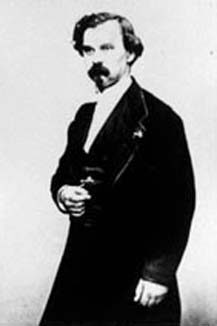
Lissajous orbit
Lissajous orbit is a quasi-periodic orbital trajectory.
All 1 facts, and where they come from
Facts
1 facts · 0 confirmed by two sources · 0 cited · 1 from one source
Where this comes from
Papalocal keeps its own record. It started from these sources; what each one said is kept here as it was copied, so a change on their side never changes this page by itself. Tap one to read its version.
What Wikidata says · copied November 18, 2026 · revision 2535242513
- Described as
- quasi-periodic orbital trajectory
- Named after
- Jules Antoine Lissajous
- Wikipedias with a page
- 19
Wikidata item Q1436769 (wikidata.org/wiki/Q1436769), public domain (CC0). Copied 2026-11-18.
What Wikipedia says · copied November 18, 2026 · revision 1364225090
In orbital mechanics, a Lissajous orbit (pronounced [li.sa.ʒu]), named after Jules Antoine Lissajous, is a quasi-periodic orbital trajectory that an object can follow around a Lagrangian point of a three-body system with minimal propulsion, tracing a Lissajous curve. Lyapunov orbits around a Lagrangian point are plane curves that lie entirely in the plane of the two primary bodies. In contrast, Lissajous orbits are space curves and include components in this plane and perpendicular to it. Halo orbits also include components perpendicular to the plane, but they are periodic, while Lissajous orbits are usually not.
In practice, any orbits around Lagrangian points L1, L2, or L3 are dynamically unstable, meaning small departures from equilibrium grow over time. As a result, spacecraft in these Lagrangian point orbits must use their propulsion systems to perform orbital station-keeping. Although they are not perfectly stable, a modest effort of station keeping keeps a spacecraft in a desired Lissajous orbit for a long time.
In the absence of other influences, orbits about Lagrangian points L4 and L5 are dynamically stable so long as the ratio of the masses of the two main objects is greater than about 24.96. The natural dynamics keep the spacecraft (or natural celestial body) in the vicinity of the Lagrangian point without use of a propulsion system, even when slightly perturbed from equilibrium. These orbits can however be destabilized by other nearby massive objects. For example, orbits around the L4 and L5 points in the Earth–Moon system can last only a few million years instead of billions because of perturbations by the other planets in the Solar System.
From the Wikipedia article “Lissajous orbit” (en.wikipedia.org/wiki/Lissajous_orbit), by its contributors, under CC BY-SA 4.0 (creativecommons.org/licenses/by-sa/4.0/). Copied 2026-11-18; not changed.
Confirmed Two sources agree. Cited One source, and it names where it got it. One source One source, without a reference of its own. Sources disagree The sources disagree. We show the best-supported value and keep theirs below.
Picture: Wikimedia Commons: Lissajous orbit l2.jpg · See Commons file page