
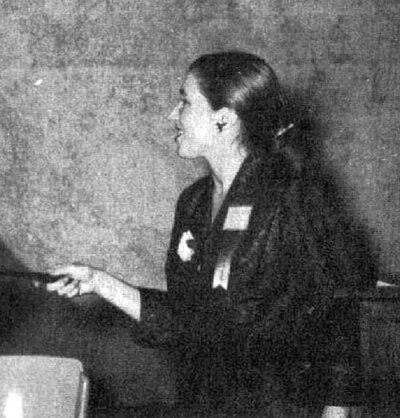
Julian May
Julian May was an American science fiction, fantasy, horror, science and children's writer. Born July 10, 1931, in Chicago. Died October 17, 2017, in Bellevue. Awards include Locus Award for Best Science Fiction Novel.
Facts
13 facts · 2 confirmed by two sources · 2 cited · 9 from one source
Where this comes from
Papalocal keeps its own record. It started from these sources; what each one said is kept here as it was copied, so a change on their side never changes this page by itself. Tap one to read its version.
What Wikidata says · copied November 18, 2026 · revision 2571562928
- Described as
- American science fiction, fantasy, horror, science and children's writer (1931–2017)
- Other names
- Bob Cunningham, Judy Dikty, Lee N. Falconer, John Feilen, Wolfgang Amadeus Futslogg, Matthew G. Grant, Granny Roseboro, Ian Thorne, Jean Wright Thorne, George Zanderbergen, The Editors of Creative, J. C. May
- Born
- July 10, 1931 · 3 references
- Died
- October 17, 2017 · 3 references
- Born in
- Chicago
- Died in
- Bellevue
- Citizen of
- United States
- Occupation
- writer · 1 reference; novelist; biographer; science fiction writer; children's writer
- Awards
- Locus Award for Best Science Fiction Novel (1982) · 1 reference
- Spouse
- T. E. Dikty
- Religion
- Catholic Church
- Wikipedias with a page
- 17
Wikidata item Q443306 (wikidata.org/wiki/Q443306), public domain (CC0). Copied November 18, 2026.
What Wikipedia says · copied November 18, 2026 · revision 1379494128
Julian Clare May (July 10, 1931 – October 17, 2017) was an American science fiction, fantasy, horror, science and children's writer who also used several literary pseudonyms. She is best known for her Saga of Pliocene Exile (Saga of the Exiles in the United Kingdom) and Galactic Milieu Series books.
- Born, in its opening lines
- July 10, 1931
- Died, in its opening lines
- October 17, 2017
From the Wikipedia article “Julian May” (en.wikipedia.org/wiki/Julian_May), by its contributors, under CC BY-SA 4.0 (creativecommons.org/licenses/by-sa/4.0/). Copied November 18, 2026; not changed.
Confirmed Two sources agree. Cited One source, and it names where it got it. One source One source, without a reference of its own. Sources disagree The sources disagree. We show the best-supported value and keep theirs below.
