
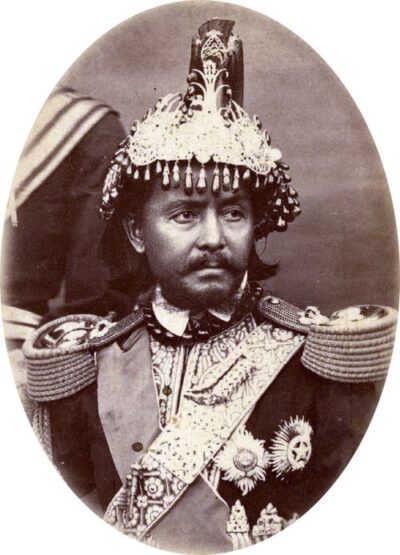
Jung Bahadur Rana
Jung Bahadur Rana was a Nepalese prime minister and Maharaja of Lamjung and Kaski. Born June 18, 1817, in Kathmandu. Died February 25, 1877, in Borlang. Positions held include prime minister. Awards include Knight Grand Cross of the Order of the Bath.
Facts
20 facts · 2 confirmed by two sources · 0 cited · 18 from one source
Where this comes from
Papalocal keeps its own record. It started from these sources; what each one said is kept here as it was copied, so a change on their side never changes this page by itself. Tap one to read its version.
What Wikidata says · copied November 17, 2026 · revision 2562795945
- Described as
- Nepalese prime minister and Maharaja of Lamjung and Kaski (1817–1877)
- Other names
- Jang Bahadur Kunwar, Bir Narsingh Kunwar, Jang Bahadur Kunwar Ranaji, Jung Bahadur Kunwar Ranaji
- Born
- June 18, 1817
- Died
- February 25, 1877
- Born in
- Kathmandu
- Died in
- Borlang
- Cause of death
- disease
- Citizen of
- Nepal
- Occupation
- military officer
- Positions held
- prime minister
- Awards
- Knight Grand Cross of the Order of the Bath
- Children
- Jagat Jung Rana; Lalit Rajeshwari Rajya Lakshmi Devi; Jit Jung Rana
- Father
- Bal Narsingh Kunwar
- Mother
- Ganesh Kumari Thapa
- Siblings
- Bam Bahadur Rana; Krishna Bahadur Kunwar Rana; Ranodip Singh Kunwar; Dhir Shumsher Rana
- Religion
- Hinduism
- Military rank
- general
- Wikipedias with a page
- 27
Wikidata item Q2355896 (wikidata.org/wiki/Q2355896), public domain (CC0). Copied November 17, 2026.
What Wikipedia says · copied November 17, 2026 · revision 1384662870
Jung Bahadur Rana, , was the Prime Minister of Nepal and the 1st Maharaja of Lamjung and Kaski. He was born Bir Narsingh Kunwar (1817–1877). His mother, Ganesh Kumari, was the daughter of Kaji Nain Singh Thapa, the brother of Mukhtiyar Bhimsen Thapa from the prominent Thapa dynasty of Chhetri clan. During his lifetime, Jung Bahadur eliminated factional fighting at court, removed his family's rivals such as the Pandes and Basnyats, introduced innovations in the bureaucracy and judiciary, and made efforts to modernize Nepal.
He is considered a significant figure in Nepalese history. Some modern historians blame Jung Bahadur for initiating a dark period in Nepalese history marked by an oppressive dictatorship that lasted 104 years, while others attribute this period to his nephews, the Shumsher Ranas. Rana's rule is often associated with tyranny, debauchery, economic exploitation, and religious persecution.
His original name was Bir Narsingh Kunwar, but he was commonly known as Jung Bahadur, a name given to him by his maternal uncle, Mathabar Singh Thapa.
- Born, in its opening lines
- 1817
- Died, in its opening lines
- 1877
From the Wikipedia article “Jung Bahadur Rana” (en.wikipedia.org/wiki/Jung_Bahadur_Rana), by its contributors, under CC BY-SA 4.0 (creativecommons.org/licenses/by-sa/4.0/). Copied November 17, 2026; not changed.
Confirmed Two sources agree. Cited One source, and it names where it got it. One source One source, without a reference of its own. Sources disagree The sources disagree. We show the best-supported value and keep theirs below.
