
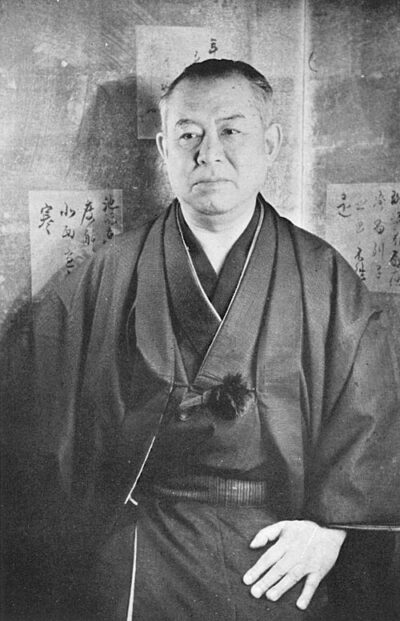
Jun'ichirō Tanizaki
Jun'ichirō Tanizaki was a Japanese author. Born July 24, 1886, in Nihonbashi-ku. Died July 30, 1965, in Atami. Known for The Makioka Sisters, Naomi and Quicksand. Educated at University of Tokyo. Awards include Mainichi Publication Culture Award (2 times), Asahi Prize and Order of Culture.
Facts
22 facts · 2 confirmed by two sources · 3 cited · 17 from one source
Where this comes from
Papalocal keeps its own record. It started from these sources; what each one said is kept here as it was copied, so a change on their side never changes this page by itself. Tap one to read its version.
What Wikidata says · copied November 16, 2026 · revision 2567319590
- Described as
- Japanese author (1886–1965)
- Other names
- Tanizaki Jun'ichirō, Junichiro Tanizaki, Tanizaki Junichiro, Tanizaki, Jun'ichiro Tanizaki, Jun'ichirou Tanizaki
- Born
- July 24, 1886 · 9 references
- Died
- July 30, 1965 · 9 references
- Born in
- Nihonbashi-ku · 1 reference
- Died in
- Atami
- Cause of death
- myocardial infarction
- Citizen of
- Japan; Empire of Japan (–1947)
- Occupation
- writer · 1 reference; novelist · 1 reference; screenwriter
- Education
- University of Tokyo
- Known for
- The Makioka Sisters; Naomi; Quicksand; The Tattooer; Some Prefer Nettles; In Praise of Shadows
- Awards
- Mainichi Publication Culture Award (2 times) (1947, 1962); Asahi Prize (1948); Order of Culture (1949); Person of Cultural Merit (1951)
- Spouse
- Matsuko Tanizaki
- Wikipedias with a page
- 47
Wikidata item Q316213 (wikidata.org/wiki/Q316213), public domain (CC0). Copied November 16, 2026.
What Wikipedia says · copied November 16, 2026 · revision 1381751150
Jun'ichirō Tanizaki (谷崎 潤一郎, Tanizaki Jun'ichirō; 24 July 1886 – 30 July 1965) was a Japanese author who is considered to be one of the most prominent figures in modern Japanese literature. The tone and subject matter of his work range from shocking depictions of sexuality and destructive erotic obsessions to subtle portrayals of the dynamics of family life within the context of the rapid changes in 20th-century Japanese society. Frequently, his stories are narrated in the context of a search for cultural identity in which the West and Japanese tradition are juxtaposed.
He was one of six authors on the final shortlist for the Nobel Prize in Literature in 1964, the year before his death.
- Born, in its opening lines
- July 24, 1886
- Died, in its opening lines
- July 30, 1965
From the Wikipedia article “Jun'ichirō Tanizaki” (en.wikipedia.org/wiki/Jun'ichirō_Tanizaki), by its contributors, under CC BY-SA 4.0 (creativecommons.org/licenses/by-sa/4.0/). Copied November 16, 2026; not changed.
Confirmed Two sources agree. Cited One source, and it names where it got it. One source One source, without a reference of its own. Sources disagree The sources disagree. We show the best-supported value and keep theirs below.
