
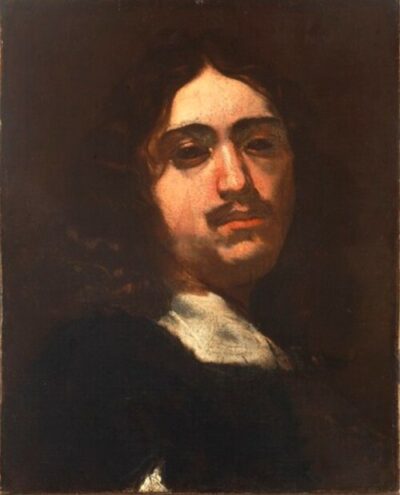
Jusepe de Ribera
Jusepe de Ribera was a Spanish painter. Born January 12, 1591, in Xàtiva. Died September 3, 1652, in Naples. Positions held include court painter. Known for Saint Bartholomew, Philosopher with Mirror and Communion of the Apostle.
Facts
23 facts · 0 confirmed by two sources · 10 cited · 11 from one source · 2 where the sources disagree
What’s different
- Born: we show January 12, 1591 (Sources disagree). Wikipedia says February 17, 1591
- Died: we show September 3, 1652 (Sources disagree). Wikipedia says November 3, 1652
Where this comes from
Papalocal keeps its own record. It started from these sources; what each one said is kept here as it was copied, so a change on their side never changes this page by itself. Tap one to read its version.
What Wikidata says · copied November 16, 2026 · revision 2564785444
- Described as
- Spanish painter (1591–1652)
- Other names
- Jose de Ribera, Joseph Ribera, Jusepe Ribera, Lo Spagnoletto, Ribera
- Born
- January 12, 1591 · 5 references
- Died
- September 3, 1652 · 3 references
- Born in
- Xàtiva · 4 references
- Died in
- Naples · 2 references
- Buried in
- Santa Maria del Parto a Mergellina, Naples
- Citizen of
- Crown of Aragon
- Occupation
- painter · 3 references; printmaker · 2 references; graphic artist · 1 reference; draftsperson · 1 reference; architectural drafter · 1 reference; visual artist · 1 reference
- Positions held
- court painter
- Genre
- religious art · 1 reference; mythological painting · 1 reference
- Known for
- Saint Bartholomew; Philosopher with Mirror; Communion of the Apostle · 1 reference; Prophets and Patriarchs · 1 reference; Saint Andrew · 1 reference; Saint Francis receives the Seven Privileges from the Angel · 1 reference
- Field
- painting · 1 reference
- Spouse
- Caterina Azzolino
- Wikipedias with a page
- 68
Wikidata item Q297838 (wikidata.org/wiki/Q297838), public domain (CC0). Copied November 16, 2026.
What Wikipedia says · copied November 16, 2026 · revision 1381894332
Jusepe de Ribera (Valencian: [josep ðe riˈβeɾa]; baptised 17 February 1591 – 3 November 1652) was a Spanish painter and printmaker. Ribera, Francisco de Zurbarán, Bartolomé Esteban Murillo, and Diego Velázquez, are regarded as the major artists of Spanish Baroque painting. Referring to a series of Ribera exhibitions held in the late 20th century, Philippe de Montebello wrote "If Ribera's status as the undisputed protagonist of Neapolitan painting had ever been in doubt, it was no longer. Indeed, to many it seemed that Ribera emerged from these exhibitions as not simply the greatest Neapolitan artist of his age but one of the outstanding European masters of the seventeenth century." Jusepe de Ribera has also been referred to as José de Ribera (usual in Spanish and French), and was called Lo Spagnoletto (Italian for "the Little Spaniard") by his contemporaries and early historians.
Ribera created history paintings, including traditional Biblical subjects and episodes from Greek mythology. He is perhaps best known for his numerous views of martyrdom, which at times are brutal scenes depicting bound saints and satyrs as they are flayed or crucified in agony. Less familiar are his occasional, but accomplished portraits, still lifes and landscapes. Nearly half of his surviving work consist of half length portraits of workers and beggars, often older individuals in ragged clothes, posing as various philosophers, saints, apostles and allegorical figures. Ribera's paintings, particularly his early work, are characterized by stark realism using a chiaroscuro or tenebrist style. His later work embraced a greater use of color, softer light, and more complex compositions, although he never entirely abandoned his Caravaggisti leanings.
Very little is known about the first 20 years of his life and there are many gaps concerning his later life and career. He was baptized on 17 February 1591, in Játiva, Spain, his father identified as a shoemaker. He is not recorded again until 1611, when records show he was paid for a painting (now lost) for a church in Parma, Italy. Documents show he was a member of the Accademia di San Luca in Rome by October 1613 and living in a house in the Via Margutta in 1615–16, at that time known as "the foreigner's quarter", apparently living a bohemian life with his brothers and other artists. Anecdotal accounts written at the time indicate he quickly earned a reputation as an outstanding painter after arriving in Rome and was earning great profits, but also noted his laziness and extravagant spending.
Ribera moved to Naples in late 1616, under Spanish rule at that time, and in November married Caterina Azzolino, the daughter of Sicilian painter Giovanni Bernardino Azzolini. There he remained for the rest of his life, setting up a workshop with many pupils, securing commissions, and establishing an international reputation. In 1626 he received the Cross of the Order of Christ from Pope Urban VIII. His health began to deteriorate in 1643 and his productivity declined from that time on, and by 1649 he was experiencing financial hardships as well. However, when his health permitted, he continued to produce several acclaimed paintings into the last year of his life.
- Born, in its opening lines
- February 17, 1591
- Died, in its opening lines
- November 3, 1652
From the Wikipedia article “Jusepe de Ribera” (en.wikipedia.org/wiki/Jusepe_de_Ribera), by its contributors, under CC BY-SA 4.0 (creativecommons.org/licenses/by-sa/4.0/). Copied November 16, 2026; not changed.
Confirmed Two sources agree. Cited One source, and it names where it got it. One source One source, without a reference of its own. Sources disagree The sources disagree. We show the best-supported value and keep theirs below.
