
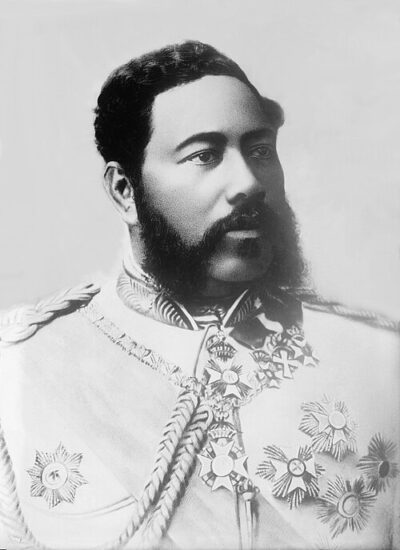
Kalākaua
Kalākaua was a last reigning king of the Kingdom of Hawaii. Born November 16, 1836, in Honolulu. Died January 20, 1891, in San Francisco. Positions held include king (1874–1891). Educated at Royal School. Awards include Grand Cross of the Legion of Honour, Knight Grand Cross of the Order of St Michael and St George and Collar of the Supreme Order of the Chrysanthemum.
Facts
28 facts · 2 confirmed by two sources · 1 cited · 25 from one source
Where this comes from
Papalocal keeps its own record. It started from these sources; what each one said is kept here as it was copied, so a change on their side never changes this page by itself. Tap one to read its version.
What Wikidata says · copied November 16, 2026 · revision 2551345935
- Described as
- last reigning king of the Kingdom of Hawaii (1836–1891)
- Other names
- King David Kalakaua, David Laʻamea Kamanakapuʻu Māhinulani Nālaʻiaʻehuokalani Lumialani Kalākaua, King Kalakaua
- Born
- November 16, 1836 · 4 references
- Died
- January 20, 1891 · 3 references
- Born in
- Honolulu
- Died in
- San Francisco
- Buried in
- Royal Mausoleum of Hawaii
- Cause of death
- kidney disease
- Citizen of
- Kingdom of Hawaiʻi
- Occupation
- monarch; composer · 1 reference
- Positions held
- king (1874–1891)
- Political party
- Hawaiian National Party
- Education
- Royal School
- Awards
- Grand Cross of the Legion of Honour; Knight Grand Cross of the Order of St Michael and St George; Collar of the Supreme Order of the Chrysanthemum; Order of the Rising Sun · 1 reference; Grand Cross of the Order of the Dannebrog (1880) · 1 reference
- Spouse
- Kapiolani
- Father
- Kapaakea
- Mother
- Keohokālole
- Siblings
- Leleiohoku II; Liliʻuokalani; Likelike; Anna Kaiulani; Kaʻiminaʻauao · 1 reference; Kaliokalani · 1 reference
- Religion
- Church of Hawaii
- Lived in
- ʻIolani Palace · 1 reference
- Wikipedias with a page
- 43
Wikidata item Q163080 (wikidata.org/wiki/Q163080), public domain (CC0). Copied November 16, 2026.
What Wikipedia says · copied November 16, 2026 · revision 1386091411
Kalākaua (David Laʻamea Kamanakapuʻu Māhinulani Nālaʻiaʻehuokalani Lumialani Kalākaua; November 16, 1836 – January 20, 1891) was the last king and penultimate monarch of the Kingdom of Hawaiʻi, reigning from February 12, 1874, until his death in 1891. Succeeding Lunalilo, he was elected to the vacant throne of Hawaiʻi against Queen Emma. Kalākaua was known as the Merrie Monarch for his convivial personality—he enjoyed entertaining guests with his singing and ukulele playing. At his coronation and his birthday jubilee, the hula, which had hitherto been banned in public in the kingdom, became a celebration of Hawaiian culture.
During Kalākaua's reign, the Reciprocity Treaty of 1875 brought great prosperity to the kingdom. Its renewal continued the prosperity but allowed the United States exclusive use of Pearl Harbor. In 1881, Kalākaua took a trip around the world to encourage the immigration of contract sugar plantation workers. He wanted Hawaiians to broaden their education beyond their nation. He instituted a government-financed program to sponsor qualified students to be sent abroad to further their education. Two of his projects, statue of Kamehameha I and the rebuilding of ʻIolani Palace, were expensive but are popular tourist attractions today.
Extravagant expenditures and Kalākaua's plans for a Polynesian confederation played into the hands of annexationists who were already working toward a United States takeover of Hawaiʻi. In 1887, Kalākaua was pressured to sign a new constitution that made the monarchy little more than a figurehead position. After his brother William Pitt Leleiohoku II died in 1877, the king named their sister Liliʻuokalani as heir-apparent. She acted as regent during his absences from the country. After Kalākaua's death, she became the last monarch of Hawaiʻi.
- Born, in its opening lines
- November 16, 1836
- Died, in its opening lines
- January 20, 1891
From the Wikipedia article “Kalākaua” (en.wikipedia.org/wiki/Kalākaua), by its contributors, under CC BY-SA 4.0 (creativecommons.org/licenses/by-sa/4.0/). Copied November 16, 2026; not changed.
Confirmed Two sources agree. Cited One source, and it names where it got it. One source One source, without a reference of its own. Sources disagree The sources disagree. We show the best-supported value and keep theirs below.
