
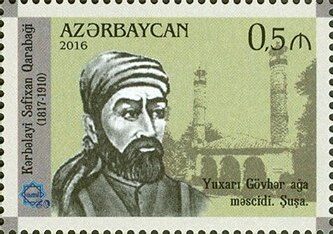
Karbalayi Safikhan Karabakhi
Karbalayi Safikhan Karabakhi was an Azerbaijani architect. Born 1817, in Shusha. Died June 25, 1910, in Shusha. Known for Yukhari Govhar Agha Mosque, Ashaghi Govhar Agha Mosque and Aghdam Mosque.
Facts
11 facts · 2 confirmed by two sources · 0 cited · 9 from one source
Where this comes from
Papalocal keeps its own record. It started from these sources; what each one said is kept here as it was copied, so a change on their side never changes this page by itself. Tap one to read its version.
What Wikidata says · copied November 18, 2026 · revision 2523815283
- Described as
- Azerbaijani architect (1817–1910)
- Born
- 1817
- Died
- June 25, 1910
- Born in
- Shusha
- Died in
- Shusha
- Buried in
- Mirza Hasan cemetery
- Citizen of
- Russian Empire · 1 reference
- Occupation
- architect; restorer
- Known for
- Yukhari Govhar Agha Mosque; Ashaghi Govhar Agha Mosque; Aghdam Mosque
- Wikipedias with a page
- 22
Wikidata item Q1825742 (wikidata.org/wiki/Q1825742), public domain (CC0). Copied November 18, 2026.
What Wikipedia says · copied November 18, 2026 · revision 1361473423
Karbalayi Safikhan Sultanhuseyn oghlu Karabakhi (Azerbaijani: Kərbəlayı Səfixan Sultanhüseyn oğlu Qarabaği; Arabic: کربلایی صفیخان سلطانحسین وغلی قاراباغی, c. 1817–1910) was an Azerbaijani architect. He was a practitioner of the Karabakh school of architecture, who incorporated traditional and romantic elements into his works. In Karabakhi's designs, such as the mosques at Aghdam and Barda, elements drawn from Azerbaijani architectural traditions are apparent.
- Born, in its opening lines
- 1817
- Died, in its opening lines
- 1910
From the Wikipedia article “Karbalayi Safikhan Karabakhi” (en.wikipedia.org/wiki/Karbalayi_Safikhan_Karabakhi), by its contributors, under CC BY-SA 4.0 (creativecommons.org/licenses/by-sa/4.0/). Copied November 18, 2026; not changed.
Confirmed Two sources agree. Cited One source, and it names where it got it. One source One source, without a reference of its own. Sources disagree The sources disagree. We show the best-supported value and keep theirs below.
