
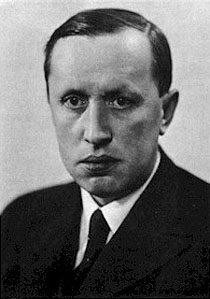
Karel Čapek
Karel Čapek was a Czech writer. Born January 9, 1890, in Malé Svatoňovice. Died December 25, 1938, in Vinohrady. Known for Zářivé hlubiny, Boží muka and Krakonošova zahrada. Educated at Faculty of Arts, Charles University in Prague and Humboldt-Universität zu Berlin. Awards include Order of Tomáš Garrigue Masaryk, 1st class, honorary citizen of Hradec Králové and honorary citizen of Prague 10.
Facts
46 facts · 2 confirmed by two sources · 20 cited · 24 from one source
Where this comes from
Papalocal keeps its own record. It started from these sources; what each one said is kept here as it was copied, so a change on their side never changes this page by itself. Tap one to read its version.
What Wikidata says · copied November 16, 2026 · revision 2565538714
- Described as
- Czech writer (1890–1938)
- Other names
- Karel Capek
- Born
- January 9, 1890 · 21 references
- Died
- December 25, 1938 · 24 references
- Born in
- Malé Svatoňovice · 8 references
- Died in
- Vinohrady · 1 reference
- Buried in
- Vyšehrad cemetery · 2 references
- Cause of death
- pneumonia · 2 references
- Citizen of
- Cisleithania (1890–1918); Czechoslovakia (1918–1938)
- Occupation
- translator · 2 references; novelist; director; photographer · 3 references; playwright · 2 references; journalist · 2 references; science fiction writer; children's writer
- Worked for
- Královské Vinohrady Municipal Theatre (1921); Prague Municipal Theaters (1922–1923)
- Education
- Faculty of Arts, Charles University in Prague · 1 reference; Humboldt-Universität zu Berlin · 1 reference
- Member of
- Brothers Čapek · 1 reference
- Genre
- science fiction
- Known for
- Zářivé hlubiny; Boží muka; Krakonošova zahrada; Boží muka; Továrna na absolutno; Krakatit; Povídky z jedné kapsy; The Gardener's Year; Hordubal; War with the Newts
- Awards
- Order of Tomáš Garrigue Masaryk, 1st class (1995); honorary citizen of Hradec Králové (2019) · 2 references; honorary citizen of Prague 10 (2021) · 1 reference
- Field
- young adult literature; creative and professional writing · 2 references; journalism · 2 references; translating activity · 2 references; children's literature · 2 references; play · 1 reference
- Spouse
- Olga Scheinpflugová (1935–1938) · 1 reference
- Father
- Antonín Čapek
- Siblings
- Helena Čapková · 1 reference; Josef Čapek · 1 reference
- Religion
- lapsed Catholic · 1 reference
- Wikipedias with a page
- 110
Wikidata item Q155855 (wikidata.org/wiki/Q155855), public domain (CC0). Copied November 16, 2026.
What Wikipedia says · copied November 16, 2026 · revision 1385395905
Karel Čapek (; Czech: [ˈkarɛl ˈtʃapɛk] ; 9 January 1890 – 25 December 1938) was a Czech writer, playwright, critic and journalist. He has become best known for his science fiction, including his novel War with the Newts (1936) and play R.U.R. (Rossum's Universal Robots, 1920), which introduced the word robot. He also wrote many politically charged works dealing with the social turmoil of his time. Influenced by American pragmatic liberalism, he campaigned in favor of free expression and strongly opposed the rise of both fascism and communism in Europe.
Though nominated for the Nobel Prize in Literature seven times, Čapek never received it. However, several awards commemorate his name, such as the Karel Čapek Prize, awarded every other year by the Czech PEN Club for literary work that contributes to reinforcing or maintaining democratic and humanist values in society. He also played a key role in establishing the Czechoslovak PEN Club as part of International PEN.
Čapek died on the brink of World War II as the result of a lifelong medical condition.
His legacy as a literary figure became well established after the war.
- Born, in its opening lines
- January 9, 1890
- Died, in its opening lines
- December 25, 1938
From the Wikipedia article “Karel Čapek” (en.wikipedia.org/wiki/Karel_Čapek), by its contributors, under CC BY-SA 4.0 (creativecommons.org/licenses/by-sa/4.0/). Copied November 16, 2026; not changed.
Confirmed Two sources agree. Cited One source, and it names where it got it. One source One source, without a reference of its own. Sources disagree The sources disagree. We show the best-supported value and keep theirs below.
