
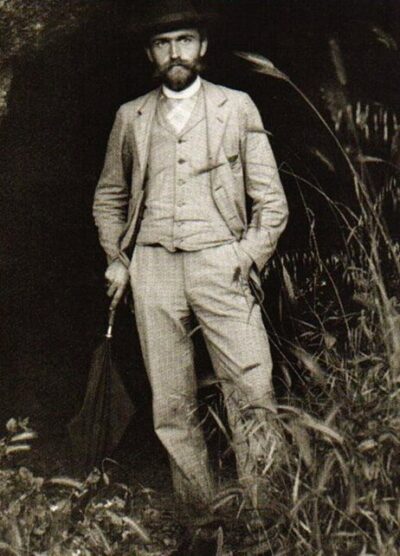
Karl Blosfeldt
Karl Blosfeldt was a Dutch photographer and sculptor. Born June 13, 1865, in Schielo. Died December 9, 1932, in Berlin. Known for Urformen der Kunst.
Facts
15 facts · 2 confirmed by two sources · 5 cited · 8 from one source
Where this comes from
Papalocal keeps its own record. It started from these sources; what each one said is kept here as it was copied, so a change on their side never changes this page by itself. Tap one to read its version.
What Wikidata says · copied November 18, 2026 · revision 2569134752
- Described as
- Dutch photographer and sculptor (1865–1933)
- Born
- June 13, 1865 · 8 references
- Died
- December 9, 1932 · 8 references
- Born in
- Schielo · 1 reference
- Died in
- Berlin · 1 reference
- Citizen of
- Duchy of Anhalt; Free State of Anhalt
- Occupation
- photographer · 4 references; sculptor · 4 references; professor · 1 reference; botanical illustrator; teacher · 2 references
- Worked for
- Kunstgewerbemuseum Berlin · 1 reference; United States Schools for Fine and Applied Arts
- Known for
- Urformen der Kunst
- Religion
- Protestant · 1 reference
- Wikipedias with a page
- 20
Wikidata item Q61848 (wikidata.org/wiki/Q61848), public domain (CC0). Copied November 18, 2026.
What Wikipedia says · copied November 18, 2026 · revision 1386417212
Karl Blossfeldt (13 June 1865 – 9 December 1932) was a German photographer and sculptor. He is best known for his close-up photographs of plants and living things, published in 1929 as Urformen der Kunst. He was inspired, as was his father, by nature and the ways in which plants grow.
- Born, in its opening lines
- June 13, 1865
- Died, in its opening lines
- December 9, 1932
From the Wikipedia article “Karl Blossfeldt” (en.wikipedia.org/wiki/Karl_Blossfeldt), by its contributors, under CC BY-SA 4.0 (creativecommons.org/licenses/by-sa/4.0/). Copied November 18, 2026; not changed.
Confirmed Two sources agree. Cited One source, and it names where it got it. One source One source, without a reference of its own. Sources disagree The sources disagree. We show the best-supported value and keep theirs below.
