
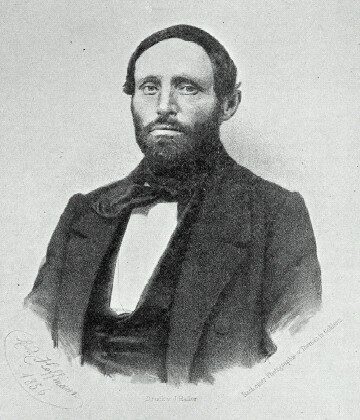
Karl Friedrich Mohr
Karl Friedrich Mohr was a German chemist. Born November 4, 1806, in Koblenz. Died September 28, 1879, in Bonn. Awards include honorary member of the Physics Association (Frankfurt am Main, Germany).
Facts
14 facts · 2 confirmed by two sources · 6 cited · 6 from one source
Where this comes from
Papalocal keeps its own record. It started from these sources; what each one said is kept here as it was copied, so a change on their side never changes this page by itself. Tap one to read its version.
What Wikidata says · copied November 17, 2026 · revision 2570932366
- Described as
- German chemist (1806-1879)
- Other names
- Friedrich Mohr
- Born
- November 4, 1806 · 2 references
- Died
- September 28, 1879 · 2 references
- Born in
- Koblenz · 1 reference
- Died in
- Bonn · 1 reference
- Buried in
- Alter Friedhof Bonn
- Citizen of
- Kingdom of Prussia
- Occupation
- chemist · 1 reference; pharmacologist · 1 reference; pharmacist; university teacher; physicist · 1 reference
- Worked for
- University of Bonn
- Awards
- honorary member of the Physics Association (Frankfurt am Main, Germany) (1839)
- Father
- Carl Mohr · 1 reference
- Wikipedias with a page
- 26
Wikidata item Q62540 (wikidata.org/wiki/Q62540), public domain (CC0). Copied November 17, 2026.
What Wikipedia says · copied November 17, 2026 · revision 1372269540
Karl Friedrich Mohr (November 4, 1806 – September 28, 1879) was a German chemist famous for his early statement of the principle of the conservation of energy. Ammonium iron(II) sulfate, (NH4)2Fe(SO4)2.6H2O, is named Mohr's salt after him.
- Born, in its opening lines
- November 4, 1806
- Died, in its opening lines
- September 28, 1879
From the Wikipedia article “Karl Friedrich Mohr” (en.wikipedia.org/wiki/Karl_Friedrich_Mohr), by its contributors, under CC BY-SA 4.0 (creativecommons.org/licenses/by-sa/4.0/). Copied November 17, 2026; not changed.
Confirmed Two sources agree. Cited One source, and it names where it got it. One source One source, without a reference of its own. Sources disagree The sources disagree. We show the best-supported value and keep theirs below.
