
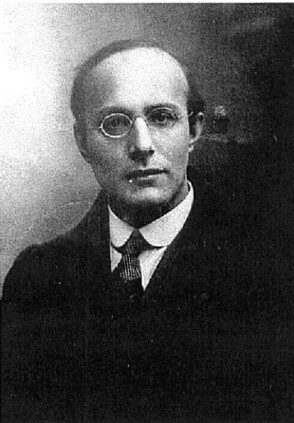
Karl Polanyi
Karl Polanyi was a Hungarian economist, philosopher and historian. Born October 25, 1886, in Vienna. Died April 23, 1964, in Pickering. Known for The Great Transformation. Educated at Eötvös Loránd University.
Facts
26 facts · 2 confirmed by two sources · 9 cited · 15 from one source
Where this comes from
Papalocal keeps its own record. It started from these sources; what each one said is kept here as it was copied, so a change on their side never changes this page by itself. Tap one to read its version.
What Wikidata says · copied November 16, 2026 · revision 2565547774
- Described as
- Hungarian economist, philosopher and historian
- Other names
- Károly Pollacsek, Karoly Pollacsek, Karl Paul Polanyi, Polanyi Karoly
- Born
- October 25, 1886 · 4 references
- Died
- April 23, 1964 · 4 references
- Born in
- Vienna · 2 references
- Died in
- Pickering
- Buried in
- Fiume Road Graveyard
- Citizen of
- Hungary
- Occupation
- economist · 1 reference; anthropologist; economic historian; historian; journalist; philosopher; writer; university teacher
- Worked for
- Columbia University
- Education
- Eötvös Loránd University
- Known for
- The Great Transformation · 1 reference
- Field
- sociology · 1 reference; economics · 1 reference; history of economic thought · 1 reference; economic anthropology · 1 reference
- Spouse
- Ilona Duczyńska · 2 references
- Children
- Kari Polanyi Levitt · 1 reference
- Mother
- Cecília Wohl
- Siblings
- Michael Polanyi · 1 reference; Laura Striker
- Wikipedias with a page
- 45
Wikidata item Q318029 (wikidata.org/wiki/Q318029), public domain (CC0). Copied November 16, 2026.
What Wikipedia says · copied November 16, 2026 · revision 1382106738
Karl Paul Polanyi (; Hungarian: Polányi Károly [ˈpolaːɲi ˈkaːroj]; 25 October 1886 – 23 April 1964) was an Austro-Hungarian economic historian, economic sociologist, and politician, best known for his book The Great Transformation, which questions the conceptual validity of self-regulating markets. In his writings, Polanyi advances the concept of the Double Movement, which refers to the dialectical process of marketization and push for social protection against that marketization. He argues that market-based societies in modern Europe were not inevitable but historically contingent. Polanyi is remembered best as the originator of substantivism, a cultural version of economics, which emphasizes the way economies are embedded in society and culture. This opinion is counter to mainstream economics but is popular in anthropology, economic history, economic sociology and political science.
Polanyi's approach to the ancient economies has been applied to a variety of cases, such as Pre-Columbian America and ancient Mesopotamia, although its utility to the study of ancient societies in general has been questioned. Polanyi's The Great Transformation became a model for historical sociology. His theories eventually became the foundation for the economic democracy movement.
Polanyi was active in politics, and helped found the National Citizens' Radical Party in 1914, serving as its secretary. He fled Hungary for Vienna in 1919 when the right-wing authoritarian regime of Admiral Horthy seized power. He fled Vienna for London in 1933 when Adolf Hitler came to power in Germany and fascism was ascendant in Austria. After years of unsuccessfully seeking employment at universities in the United Kingdom, he moved to the United States in 1940 where he joined the faculty at Bennington College and later taught at Columbia University.
- Born, in its opening lines
- October 25, 1886
- Died, in its opening lines
- April 23, 1964
From the Wikipedia article “Karl Polanyi” (en.wikipedia.org/wiki/Karl_Polanyi), by its contributors, under CC BY-SA 4.0 (creativecommons.org/licenses/by-sa/4.0/). Copied November 16, 2026; not changed.
Confirmed Two sources agree. Cited One source, and it names where it got it. One source One source, without a reference of its own. Sources disagree The sources disagree. We show the best-supported value and keep theirs below.
