
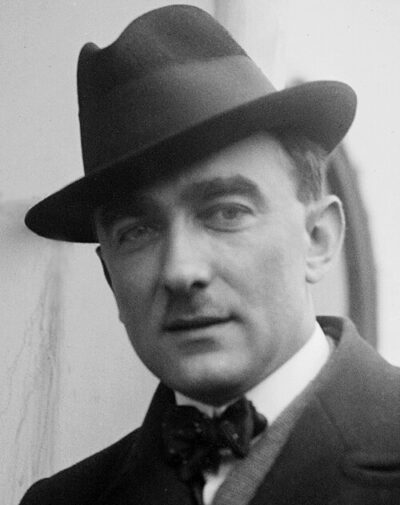
Karol Szymanowski
Karol Szymanowski was a Polish composer. Born October 3, 1882, in Tymoshivka. Died March 29, 1937, in Lausanne. Known for 3 Paganini Caprices and Symphony No. 3. Awards include Order of St. Sava, Golden Laurel of the Polish Academy of Literature and Gold Cross of Merit.
Facts
36 facts · 2 confirmed by two sources · 6 cited · 28 from one source
What’s different
- Born: we show October 3, 1882 (Confirmed). Wikidata also lists October 6, 1882 and September 21, 1882
Where this comes from
Papalocal keeps its own record. It started from these sources; what each one said is kept here as it was copied, so a change on their side never changes this page by itself. Tap one to read its version.
What Wikidata says · copied November 16, 2026 · revision 2566065540
- Described as
- Polish composer (1882–1937)
- Other names
- Karol Maciej Szymanowski, Karol Szymanovski
- Born
- October 3, 1882 · 1 reference; October 6, 1882; September 21, 1882
- Died
- March 29, 1937 · 8 references
- Born in
- Tymoshivka · 1 reference
- Died in
- Lausanne · 4 references
- Buried in
- Crypt of Merit at Skałka
- Cause of death
- tuberculosis
- Name at birth
- Карлъ Матвѣй Шимановскій · 1 reference
- Citizen of
- Russian Empire; Second Polish Republic · 1 reference
- Occupation
- composer · 2 references; music educator; university teacher; pianist · 1 reference; author · 1 reference
- Worked for
- Chopin University of Music
- Genre
- opera; symphony; classical music
- Instrument
- piano
- Known for
- 3 Paganini Caprices; Symphony No. 3
- Awards
- Order of St. Sava; Golden Laurel of the Polish Academy of Literature; Gold Cross of Merit · 1 reference; Officer of the Order of Polonia Restituta · 1 reference; Commander of the Order of Polonia Restituta · 1 reference; Grand Cross of the Order of Polonia Restituta · 1 reference; Order of the White Eagle; commander of the Order of the Crown of Italy; Officer of the Order of the Crown of Italy; Knight of the Legion of Honour; Honorary Member of the International Society for Contemporary Music
- Father
- Stanisław Bonawentura Marian Korwin-Szymanowski
- Mother
- Anna Dominika Teodora Taube
- Siblings
- Feliks Szymanowski; Zofia Szymanowska · 1 reference
- Wikipedias with a page
- 45
Wikidata item Q295400 (wikidata.org/wiki/Q295400), public domain (CC0). Copied November 16, 2026.
What Wikipedia says · copied November 16, 2026 · revision 1384753767
Karol Maciej Szymanowski (Polish pronunciation: [ˈkarɔl ˈmat͡ɕɛj ʂɨmaˈnɔfskʲi]; 3 October 1882 – 29 March 1937) was a Polish composer, pianist and writer. He was a member of the modernist Young Poland movement that flourished in the late 19th and early 20th century.
Szymanowski's early works show the influence of the late Romantic German school as well as the early works of Alexander Scriabin, as exemplified by his Étude Op. 4 No. 3 and his first two symphonies. Later, he developed an impressionistic and partially atonal style, represented by such works as the Third Symphony and his Violin Concerto No. 1. His third period was influenced by the folk music of the Polish Górale people; works from this period include the ballet Harnasie, the Fourth Symphony, and his sets of Mazurkas for piano. King Roger, composed between 1918 and 1924, remains Szymanowski's most popular opera. His other significant works include Hagith, Symphony No. 2, The Love Songs of Hafiz, and Stabat Mater.
Szymanowski was awarded the highest national honors, including the Officer's Cross of the Order of Polonia Restituta, the Order of Merit of the Republic of Poland and other distinctions, both Polish and foreign.
- Born, in its opening lines
- October 3, 1882
- Died, in its opening lines
- March 29, 1937
From the Wikipedia article “Karol Szymanowski” (en.wikipedia.org/wiki/Karol_Szymanowski), by its contributors, under CC BY-SA 4.0 (creativecommons.org/licenses/by-sa/4.0/). Copied November 16, 2026; not changed.
Confirmed Two sources agree. Cited One source, and it names where it got it. One source One source, without a reference of its own. Sources disagree The sources disagree. We show the best-supported value and keep theirs below.
