
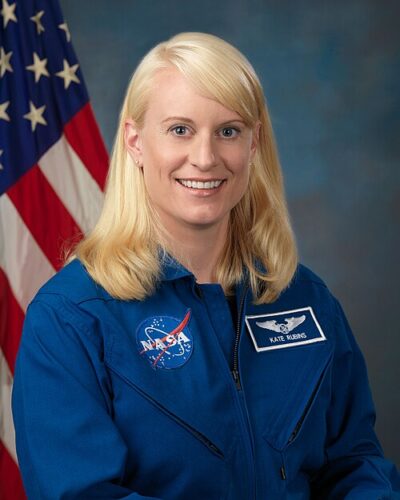
Kathleen Rubins is a NASA astronaut selected in July 2009. Born October 14, 1978, in Farmington. Educated at Stanford University and Vintage High School.
Facts
10 facts · 1 confirmed by two sources · 0 cited · 9 from one source
Where this comes from
Papalocal keeps its own record. It started from these sources; what each one said is kept here as it was copied, so a change on their side never changes this page by itself. Tap one to read its version.
What Wikidata says · copied November 15, 2026 · revision 2543775353
- Described as
- NASA astronaut selected in July 2009
- Other names
- Kathleen Hallisey Rubins, Kate Rubins, Kathleen Hallisey "Kate" Rubins
- Born
- October 14, 1978
- Born in
- Farmington
- Citizen of
- United States
- Occupation
- astronaut; biologist
- Worked for
- National Aeronautics and Space Administration
- Education
- Stanford University; Vintage High School; University of California, San Diego
- Field
- molecular biology
- Wikipedias with a page
- 32
Wikidata item Q3194085 (wikidata.org/wiki/Q3194085), public domain (CC0). Copied November 15, 2026.
What Wikipedia says · copied November 15, 2026 · revision 1378501202
Kathleen Hallisey Rubins (born October 14, 1978) is an American microbiologist, the inaugural director of the Trivedi Institute for Space and Global Biomedicine at the University of Pittsburgh, and retired NASA astronaut. She became the 60th woman to fly in space when she launched on a Russian Soyuz spacecraft to the International Space Station (ISS) on July 7, 2016. She returned to Earth in Kazakhstan on October 30, 2016, aboard a Soyuz. She was a crew member of Expedition 48/49 and Expedition 63/64 of the ISS. Rubins has spent a total of 300 days, 1 hour, and 31 minutes in space, which is the fourth most days in space by a U.S female astronaut.
- Born, in its opening lines
- October 14, 1978
From the Wikipedia article “Kathleen Rubins” (en.wikipedia.org/wiki/Kathleen_Rubins), by its contributors, under CC BY-SA 4.0 (creativecommons.org/licenses/by-sa/4.0/). Copied November 15, 2026; not changed.
Confirmed Two sources agree. Cited One source, and it names where it got it. One source One source, without a reference of its own. Sources disagree The sources disagree. We show the best-supported value and keep theirs below.
