
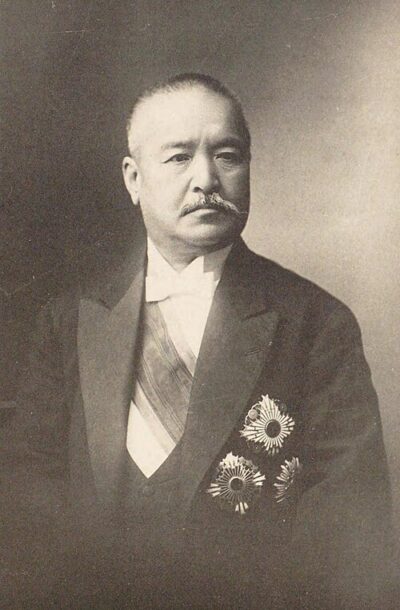
Katsura Tarō
Katsura Tarō was a Japanese general and politician. Born January 4, 1848, in Hagi. Died October 10, 1913, in Mita. Positions held include Governor-General of Taiwan (1896), Prime Minister of Japan (2 times) (1901–1913) and member of the House of Peers. Awards include Grand Officer of the Legion of Honour, Knight Grand Cross of the Order of the Bath and Knight Grand Cross of the Order of St Michael and St George.
Facts
37 facts · 2 confirmed by two sources · 2 cited · 33 from one source
Where this comes from
Papalocal keeps its own record. It started from these sources; what each one said is kept here as it was copied, so a change on their side never changes this page by itself. Tap one to read its version.
What Wikidata says · copied November 16, 2026 · revision 2562946543
- Described as
- Japanese general and politician (1848–1913)
- Other names
- Katsura Taro, Katsura Tarou
- Born
- January 4, 1848 · 1 reference
- Died
- October 10, 1913 · 2 references
- Born in
- Hagi · 1 reference
- Died in
- Mita
- Cause of death
- stomach cancer
- Citizen of
- Japan
- Occupation
- politician; military personnel
- Positions held
- Governor-General of Taiwan (1896); Prime Minister of Japan (2 times) (1901–1913) · 2 references; member of the House of Peers; Lord Keeper of the Privy Seal of Japan (1912); Minister of Finance (1908–1911); Minister of Home Affairs (1903–1904); Ministry of the Army (1898–1900); Minister of Education (1905–1906); Minister for Foreign Affairs (1903–1904)
- Political party
- Rikken Dōshikai
- Worked for
- Takushoku University
- Awards
- Grand Officer of the Legion of Honour (1901); Knight Grand Cross of the Order of the Bath (1905); Knight Grand Cross of the Order of St Michael and St George; Order of the Black Eagle; Commander's Cross of the Order of Franz Joseph; Grand Cordon of the Supreme Order of the Chrysanthemum; Order of Saint Anna, 2nd class; Order of the White Eagle (1899); Collar of the Supreme Order of the Chrysanthemum; Order of the Rising Sun with Paulownia Flowers, 1st class · 1 reference; Order of the Paulownia Flowers · 1 reference; Imperial Constitution Promulgation Medal · 1 reference; Crown Prince's Voyage to Korea Commemorative Medal · 1 reference; Order of the Sacred Treasure, 1st Class (1895); Order of the Red Eagle 1st Class (1900)
- Children
- Inoue Saburō
- Military branch
- Imperial Japanese Army · 1 reference
- Military rank
- general
- Wikipedias with a page
- 52
Wikidata item Q159048 (wikidata.org/wiki/Q159048), public domain (CC0). Copied November 16, 2026.
What Wikipedia says · copied November 16, 2026 · revision 1381867305
Prince Katsura Tarō (桂 太郎; 4 January 1848 – 10 October 1913) was a Japanese statesman and general who served as prime minister of Japan from 1901 to 1906, from 1908 to 1911, and from 1912 to 1913. He was a genrō, or senior statesman who helped dictate policy during the Meiji era, and is the second-longest serving Japanese prime minister after Shinzo Abe, serving for a combined total of 7 years and 330 days.
Born in the Choshu Domain to a samurai family, Katsura participated in the Boshin War that led to the Meiji Restoration in 1868. He spent several years studying military science in Germany, and became a protégé of Yamagata Aritomo. He distinguished himself in the First Sino-Japanese War, then served as governor-general of Taiwan and later as minister of war from 1898 to 1901, when he was appointed prime minister. Katsura's relatively stable tenure saw Japan's victory in the Russo-Japanese War before he was forced to resign in 1906 amid public outrage at the government's failure to secure an indemnity from Russia. He returned as premier in 1908, and showed authoritarian tendencies in the crackdown on the High Treason Incident of 1910, which saw the mass arrest of leftists and which was followed by the establishment of the Special Higher Police in 1911. In 1910, Korea was annexed by Japan. After Emperor Meiji's death in 1912, Katsura became prime minister again, which triggered the Taisho Political Crisis. He resigned three months later after a vote of no confidence.
- Born, in its opening lines
- January 4, 1848
- Died, in its opening lines
- October 10, 1913
From the Wikipedia article “Katsura Tarō” (en.wikipedia.org/wiki/Katsura_Tarō), by its contributors, under CC BY-SA 4.0 (creativecommons.org/licenses/by-sa/4.0/). Copied November 16, 2026; not changed.
Confirmed Two sources agree. Cited One source, and it names where it got it. One source One source, without a reference of its own. Sources disagree The sources disagree. We show the best-supported value and keep theirs below.
