
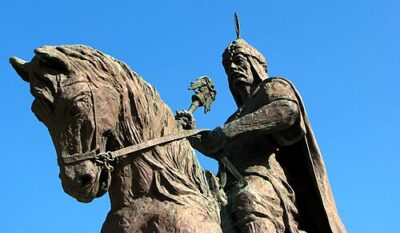
Kayqubad baraa I
Kayqubad baraa I was a Sultan of Rum. Born 1190. Died 1237. Positions held include Sultan of Rum (1220–1237).
Facts
9 facts · 1 confirmed by two sources · 2 cited · 5 from one source · 1 where the sources disagree
What’s different
- Born: we show 1190 (Sources disagree). Wikidata also lists 1188
Where this comes from
Papalocal keeps its own record. It started from these sources; what each one said is kept here as it was copied, so a change on their side never changes this page by itself. Tap one to read its version.
What Wikidata says · copied November 16, 2026 · revision 2569208390
- Described as
- Sultan of Rum
- Other names
- Alâeddîn Keykubad, ʻAlāʼ ad-Dīn Kay-Qubādh
- Born
- 1190 · 1 reference; 1188 · 1 reference
- Died
- 1237 · 2 references; 1237 · 1 reference
- Occupation
- monarch · 1 reference; sultan · 1 reference
- Positions held
- Sultan of Rum (1220–1237)
- Spouse
- Mahpari Hunat Hatun
- Children
- Kaykhusraw II
- Father
- Kaykhusraw I
- Siblings
- Kaykaus I
- Wikipedias with a page
- 35
Wikidata item Q61964 (wikidata.org/wiki/Q61964), public domain (CC0). Copied November 16, 2026.
What Wikipedia says · copied November 16, 2026 · revision 1383904683
Alā ad-Dīn Kayqubād I (Turkish: I. Alâeddin Keykûbad; Turkish pronunciation: [kejkuːbad], Persian: علاء الدین کیقباد ابن کیخسرو; c. 1192 - 1237), also known as Kayqubad I, was the Seljuq Turkish Sultan of Rûm who reigned from 1220 to 1237. He expanded the borders of the sultanate at the expense of his neighbors, particularly the Mengujek Beylik and the Ayyubids, and established a Seljuq presence on the Mediterranean with his acquisition of the port of Kalon Oros, later renamed Ala'iyya in his honor. The sultan, sometimes styled Kayqubad the Great, is remembered today for his rich architectural legacy and the brilliant court culture that flourished under his reign.
Kayqubad's reign represented the apogee of Seljuq power and influence in Anatolia, and Kayqubad himself was considered the most illustrious prince of the dynasty. In the period following the mid-13th century Mongol invasion, inhabitants of Anatolia frequently looked back on his reign as a golden age, while the new rulers of the Anatolian beyliks sought to justify their own authority through pedigrees traced to him.
- Born, in its opening lines
- 1192
- Died, in its opening lines
- 1237
From the Wikipedia article “Kayqubad I” (en.wikipedia.org/wiki/Kayqubad_I), by its contributors, under CC BY-SA 4.0 (creativecommons.org/licenses/by-sa/4.0/). Copied November 16, 2026; not changed.
Confirmed Two sources agree. Cited One source, and it names where it got it. One source One source, without a reference of its own. Sources disagree The sources disagree. We show the best-supported value and keep theirs below.
