
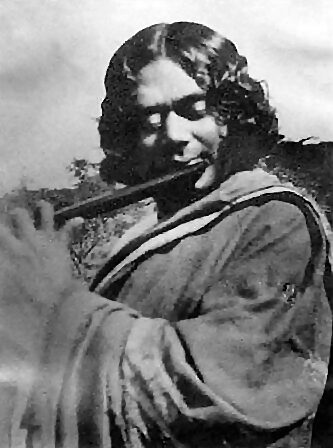
Kazi Nazrul Islam
Kazi Nazrul Islam was a National poet of Bangladesh. Born May 24, 1899, in Churulia. Died August 29, 1976, in Dhaka. Known for Notuner Gaan, Mrityukshuda and Agniveena. Awards include Ekushey Padak, Independence Award in Literature and Padma Bhushan in Literature & Education.
Facts
31 facts · 2 confirmed by two sources · 5 cited · 24 from one source
Where this comes from
Papalocal keeps its own record. It started from these sources; what each one said is kept here as it was copied, so a change on their side never changes this page by itself. Tap one to read its version.
What Wikidata says · copied November 16, 2026 · revision 2566616398
- Described as
- National poet of Bangladesh
- Other names
- Nazrul, Dukhu Mia, Nazrul Islam
- Born
- May 24, 1899 · 2 references
- Died
- August 29, 1976 · 2 references
- Born in
- Churulia
- Died in
- Dhaka · 1 reference
- Buried in
- Mausoleum of Kazi Nazrul Islam
- Cause of death
- Pick disease
- Citizen of
- British Raj; India; Dominion of India; Bangladesh (1976–) · 1 reference
- Occupation
- poet; translator; writer · 1 reference; singer · 1 reference; soldier; short story writer
- Known for
- Notuner Gaan; Mrityukshuda; Agniveena; Bandhan Hara; Bisher Bashi; Sanchita; Dolan-chanpa; Chhayanat
- Awards
- Ekushey Padak (1976); Independence Award in Literature (1977) · 1 reference; Padma Bhushan in Literature & Education (1960)
- Spouse
- Pramīla Najarula Isalāma · 1 reference
- Children
- Kazi Sabyasachi
- Religion
- Sunni Islam
- Military rank
- havaldar · 1 reference
- Wikipedias with a page
- 56
Wikidata item Q334818 (wikidata.org/wiki/Q334818), public domain (CC0). Copied November 16, 2026.
What Wikipedia says · copied November 16, 2026 · revision 1381275146
Kazi Nazrul Islam (Bengali: [kad͡ʒi nod͡ʒɾul islam] ; 24 May 1899 – 29 August 1976) was a Bengali poet, short story writer, journalist, lyricist, and musician. He was later honoured with the title of national poet of Bangladesh, on consideration of his liberal attitudes and patriotic zeal."[1] Nazrul produced a large body of poetry, music, messages, novels, and stories with themes that included equality, justice, anti-imperialism, humanity, rebellion against oppression and religious devotion. Nazrul Islam's activism for political and social justice as well as writing a poem titled "Bidrohī", meaning "the rebel" in Bengali, earned him the title of "Bidrohī Kôbi" (Rebel Poet). His compositions form the avant-garde music genre of Nazrul Gīti (Music of Nazrul).
Born in the British Raj period into a Bengali Muslim Kazi family from Churulia in Asansol, then in the Burdwan district in the Bengal Presidency (now in West Bengal, India), Nazrul Islam received religious education and as a young man worked as a muezzin at a local mosque. He learned about poetry, drama, and literature while working with the rural theatrical group Leṭor Dôl, Leṭo being a folk song genre of West Bengal usually performed by the people from the Muslim community of the region. He joined the British Indian Army in 1917 and was posted in Karachi. Nazrul Islam established himself as a journalist in Calcutta after the war ended. He criticised the British Raj and called for revolution through his famous poetic works, such as "Bidrohī" ('The Rebel') and "Bhangar Gan" ('The Song of Destruction'), as well as in his publication Dhūmketu ('The Comet'). His nationalist activism in the Indian independence movement led to his frequent imprisonment by the colonial British authorities. While in prison, Nazrul Islam wrote the "Rajbôndīr Jôbanbôndī" ('Deposition of a Political Prisoner'). His writings greatly inspired Bengalis of East Pakistan during the Bangladesh Liberation War.
Nazrul Islam's writings explored themes such as freedom, humanity, love, and revolution. He opposed all forms of bigotry and fundamentalism, including religious, caste-based and gender-based. Nazrul wrote short stories, novels, and essays but is best known for his songs and poems. He introduced the ghazal songs in the Bengali language and is also known for his extensive use of Arabic- and Persian-influenced Bengali words in his works.
Nazrul Islam wrote and composed nearly 4,000 songs—many recorded by the Gramophone Company of India—collectively known as 'Nazrul Gīti'. In 1942, at the age of 43, he began to be affected by an unknown disease, losing his voice and memory. A medical team in Vienna diagnosed the disease as Pick's disease, a rare incurable neurodegenerative disease.
The ailing poet was taken to Bangladesh with the consent of the government of India on 24 May 1972, at the invitation of the government of Bangladesh. His family accompanied him and relocated to Dhaka. Later, on 18 February 1976, the citizenship of Bangladesh was conferred upon him. He died on 29 August 1976.
- Born, in its opening lines
- May 24, 1899
- Died, in its opening lines
- August 29, 1976
From the Wikipedia article “Kazi Nazrul Islam” (en.wikipedia.org/wiki/Kazi_Nazrul_Islam), by its contributors, under CC BY-SA 4.0 (creativecommons.org/licenses/by-sa/4.0/). Copied November 16, 2026; not changed.
Confirmed Two sources agree. Cited One source, and it names where it got it. One source One source, without a reference of its own. Sources disagree The sources disagree. We show the best-supported value and keep theirs below.
