
Khufu
Khufu was a Fourth Dynasty ancient Egyptian pharaoh. Born 27th century BC. Died 2566 BC. Positions held include pharaoh, pharaohs of Fourth Dynasty of Egypt and pharaohs of old Kingdown of Egypt.
Facts
36 facts · 0 confirmed by two sources · 0 cited · 36 from one source
Where this comes from
Papalocal keeps its own record. It started from these sources; what each one said is kept here as it was copied, so a change on their side never changes this page by itself. Tap one to read its version.
What Wikidata says · copied November 16, 2026 · revision 2553917118
- Described as
- Fourth Dynasty ancient Egyptian pharaoh
- Other names
- Khnum-Khufu, Khêops, Cheops, Súphis, Sofe, Saurid, Salhuk, Kheops, Suphis
- Born
- 27th century BC · 1 reference
- Died
- 2566 BC
- Buried in
- Great Pyramid of Giza
- Citizen of
- Ancient Egypt; Old Kingdom of Egypt
- Occupation
- statesperson; pharaoh · 1 reference
- Positions held
- pharaoh; pharaohs of Fourth Dynasty of Egypt; pharaohs of old Kingdown of Egypt
- Spouse
- Khamerernebty I; Henutsen · 1 reference; Meritites I · 1 reference
- Children
- Djedefhor; Hetepheres II; Djedefre; Khafra; Horbaef; Meresankh II; Nefermaat II; Iynefer II; Nefertiabet; Kawab; Khamerernebty I; Minkhaf I · 1 reference
- Father
- Sneferu
- Mother
- Hetepheres I
- Siblings
- Hetepheres; Henutsen; Nefertkau I; Ankhhaf; Ranefer; Kanefer; Nefermaat; Prince Rahotep; Iynefer I · 1 reference
- Wikipedias with a page
- 83
Wikidata item Q161904 (wikidata.org/wiki/Q161904), public domain (CC0). Copied November 16, 2026.
What Wikipedia says · copied November 16, 2026 · revision 1383594570
Khufu, or Cheops, was the second pharaoh of the Fourth Dynasty of Egypt, reigning during the 26th century BC in the early Old Kingdom period. Khufu succeeded his father, Sneferu, as king. He is generally accepted as having commissioned the Great Pyramid of Giza, one of the Seven Wonders of the Ancient World, but many other aspects of his reign are poorly documented. Khufu is also the main character noted in the Westcar Papyrus from the 13th dynasty.
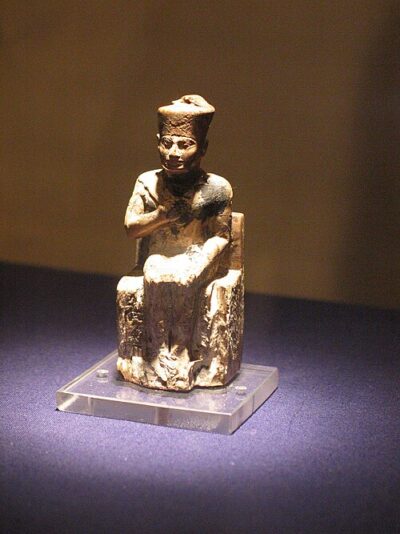
The only completely preserved portrait of the king is a small ivory figurine found in a temple ruin of a later period at Abydos in 1903. All other reliefs and statues were found in fragments, and many buildings of Khufu are lost. Khufu has a conflicting legacy: while the king enjoyed a long-lasting cultural heritage preservation during the period of the Old Kingdom and the New Kingdom, the ancient historians Manetho, Diodorus and Herodotus hand down a very negative depiction of Khufu's character. As a result, an obscure and critical picture of Khufu's personality persists.
From the Wikipedia article “Khufu” (en.wikipedia.org/wiki/Khufu), by its contributors, under CC BY-SA 4.0 (creativecommons.org/licenses/by-sa/4.0/). Copied November 16, 2026; not changed.
Confirmed Two sources agree. Cited One source, and it names where it got it. One source One source, without a reference of its own. Sources disagree The sources disagree. We show the best-supported value and keep theirs below.
