

pharaoh
Pharaoh is a ruler of Ancient Egypt.
- Office of
- Ancient Egypt
- Country
- Ancient Egypt
All 4 facts, and where they come from
Facts
4 facts · 0 confirmed by two sources · 0 cited · 4 from one source
Where this comes from
Papalocal keeps its own record. It started from these sources; what each one said is kept here as it was copied, so a change on their side never changes this page by itself. Tap one to read its version.
What Wikidata says · copied November 17, 2026 · revision 2556191346
- Described as
- ruler of Ancient Egypt
- What it is
- noble title; historical position
- Country
- Ancient Egypt · 1 reference
- Office of
- Ancient Egypt
- Wikipedias with a page
- 134
Wikidata item Q37110 (wikidata.org/wiki/Q37110), public domain (CC0). Copied 2026-11-17.
What Wikipedia says · copied November 17, 2026 · revision 1382146411
The Pharaoh was the monarch of ancient Egypt. The title came into use from the Eighteenth Dynasty onwards and was subsequently attributed to all the previous kings of Egypt. Before this Pharaoh was a term that referred more specifically to "king's administration" rather than the king. The earliest confirmed instance of the title used contemporaneously for a ruler is a letter to Akhenaten (reigned c. 1353–1336 BCE), possibly preceded by an inscription referring to Thutmose III (c. 1479–1425 BCE). Although the title only came into use in the Eighteenth Dynasty during the New Kingdom, scholars today use it for all the rulers of Egypt from the First Dynasty (c. 3150 BCE) until the annexation of Egypt by the Roman Republic in 30 BCE.
In the early dynasties, ancient Egyptian kings had as many as three titles: the Horus, the Sedge and Bee (nswt-bjtj), and the Two Ladies or Nebty (nbtj) name. The Golden Horus and the nomen titles were added later.
In Egyptian society, religion was central to everyday life. One of the roles of the king was as an intermediary between the deities and the people. The king thus was deputised for the deities in a role that was both as civil and religious administrator. The king owned all of the land in Egypt, enacted laws, collected taxes, and served as commander-in-chief of the military. Religiously, the king officiated over religious ceremonies and chose the sites of new temples. The king was responsible for maintaining Maat (mꜣꜥt), or cosmic order, balance, and justice, and part of this included going to war when necessary to defend the country or attacking others when it was believed that this would contribute to Maat, such as to obtain resources.
During the early days prior to the unification of Upper and Lower Egypt, the Deshret or the "Red Crown", was a representation of the kingdom of Lower Egypt, while the Hedjet, the "White Crown", was worn by the kings of Upper Egypt. After the unification of both kingdoms, the Pschent, the combination of both the red and white crowns became the official crown of the pharaoh. With time new headdresses were introduced during different dynasties such as the Khat, Nemes, Atef, Hemhem crown, and Khepresh. At times, a combination of these headdresses or crowns worn together was depicted.
From the Wikipedia article “Pharaoh” (en.wikipedia.org/wiki/Pharaoh), by its contributors, under CC BY-SA 4.0 (creativecommons.org/licenses/by-sa/4.0/). Copied 2026-11-17; not changed.
Confirmed Two sources agree. Cited One source, and it names where it got it. One source One source, without a reference of its own. Sources disagree The sources disagree. We show the best-supported value and keep theirs below.
Picture: Wikimedia Commons: Pharaoh.svg · See Commons file page
People connected 217
Held this office 217
 Kamose (–-1545)king of the Theban Seventeenth Dynasty
 Bakenranef (-718–-712)2nd Egyptian pharaoh of the 24th dynasty
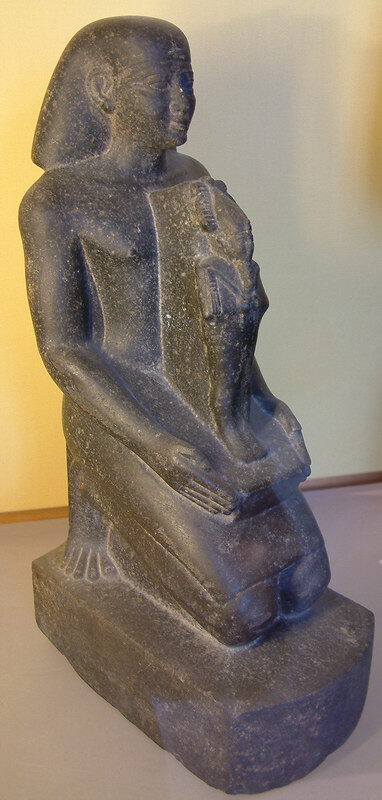 Psamtik I (-664–-610)first egyptian pharaoh of the 26th dynasty
 Necho II (-610–-595)2nd Egyptian pharaoh of the 26th dynasty
 Psamtik II (-595–-589)3rd Egyptian pharaoh of the 26th dynasty
 Apries (-589–-570)4th Egyptian pharaoh of the 26th dynasty
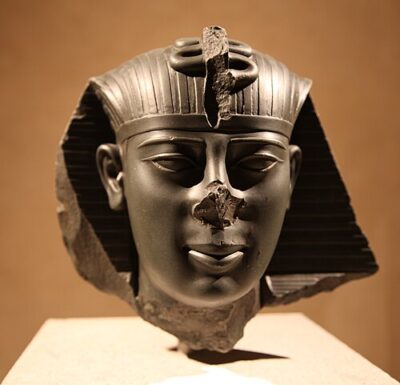 Amasis II (-570–-526)Egyptian pharaoh from 570 to 526 BC
Psamtik III (-526–-525)Egyptian pharaoh from 526 BC to 525 BC
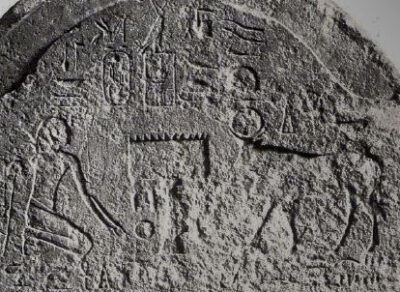 Cambyses II (-525–-522)The second Achaemenid emperor (530–522 BC)
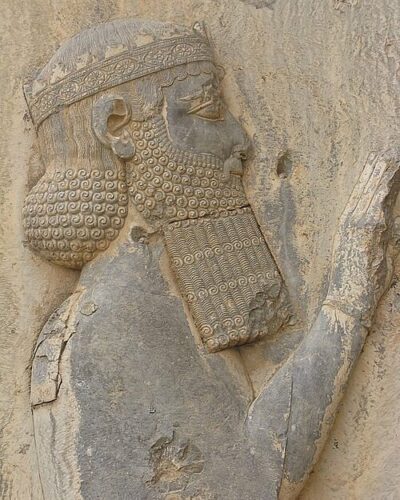 Darius I (-522–-486)The fourth and greatest Achaemenid emperor (522–486 BC)
 Bardiya (-522)Son of Cyrus the Great (died c. 522 BC)
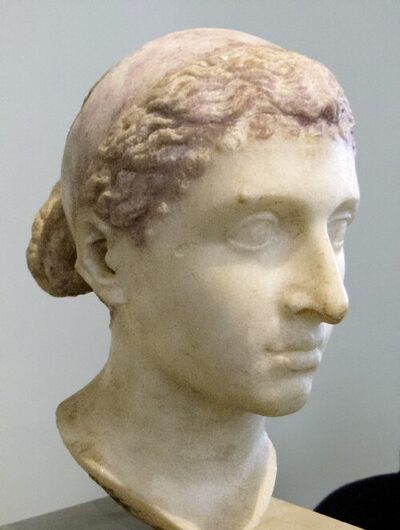 Cleopatra (-51–-30)Queen of Ptolemaic Kingdom of Egypt from 51 to 30 BCE
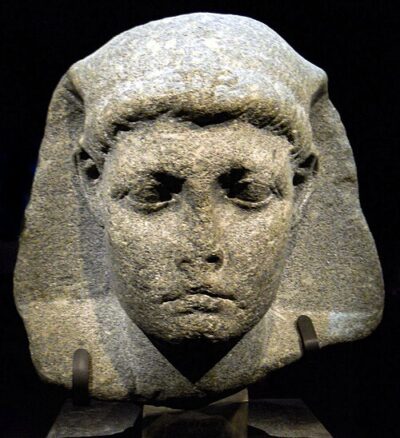 Caesarion (-44–-30)last pharaoh of Ptolemaic Egypt from 44 to 30 BC
- AAmyrtaeus (-404–-399)Egyptian Pharaoh from 404 to 399 BC
 Hakor (-391–-379)29th Dynasty Egyptian Pharaoh
 Teos of Egypt (-361–-359)2nd Egyptian Pharaoh of the 30th dynasty
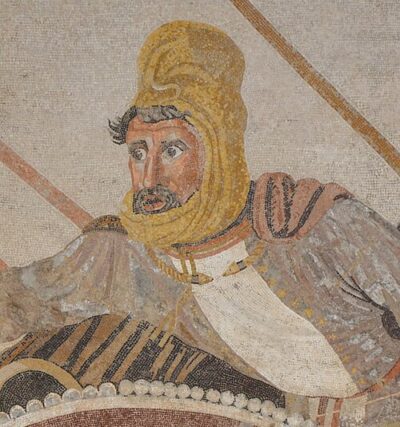 Darius III (-336–-332)last king of the Achaemenid Empire (r. 336–330 BC)
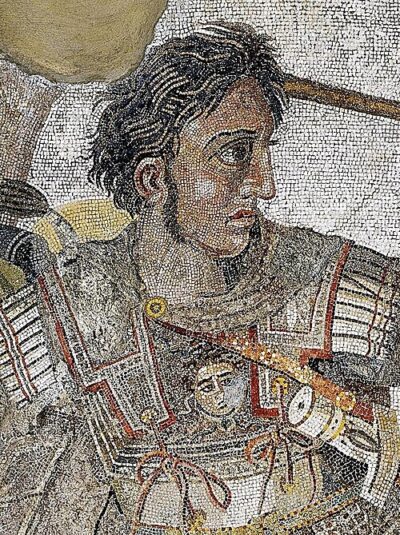 Alexander the Great (-330–-323)king of Macedonia and conqueror of Achaemenid Persia (356–323 BC)
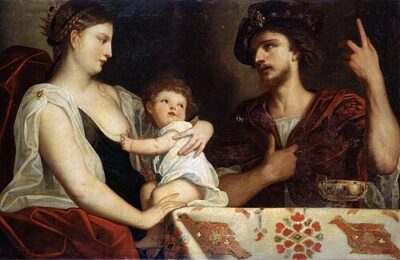 Alexandros IV of Macedon (-322–-309)King of Macedonia from 323/2 to 309 BC
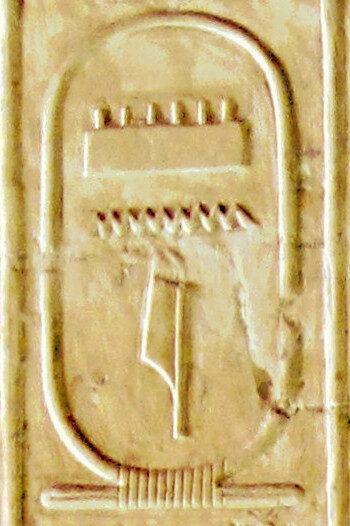 Menes (-3200–-3125)Founder of Manetho's 1st dynasty and unifier of Egypt
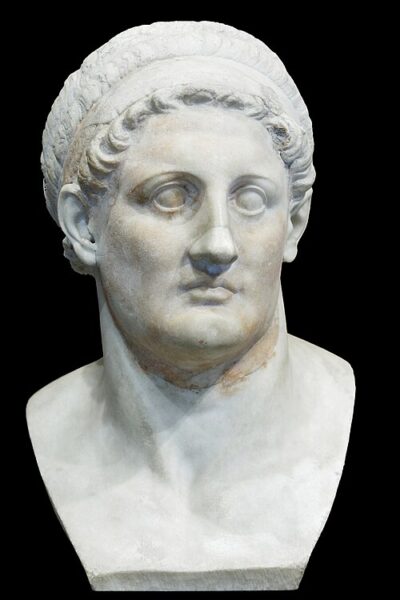 Ptolemy I Soter (-305–-283)Macedonian general, ruler of Egypt
 Anedjib (-2930–-2920)Egyptian pharaoh
 Neferkara I (-2750–-2719)ancient Egyptian ruler
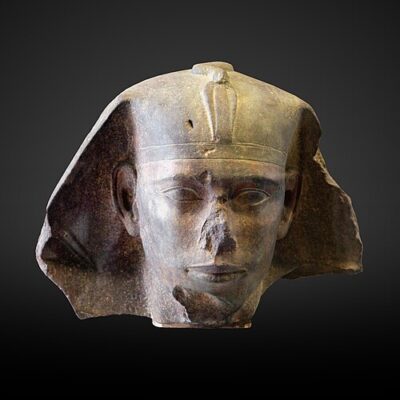 Djedefre (-2580–-2570)Egyptian Pharaoh
and 193 more
Occupation
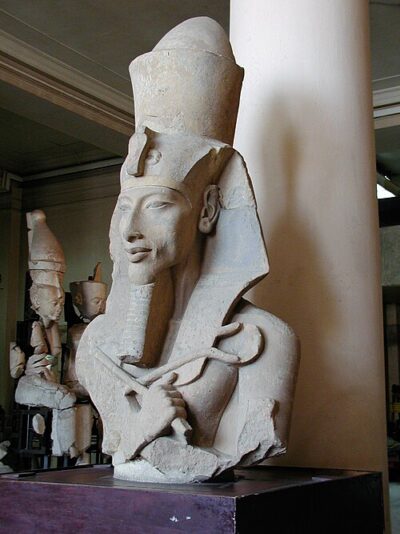 AkhenatenEgyptian pharaoh in 18th Dynasty
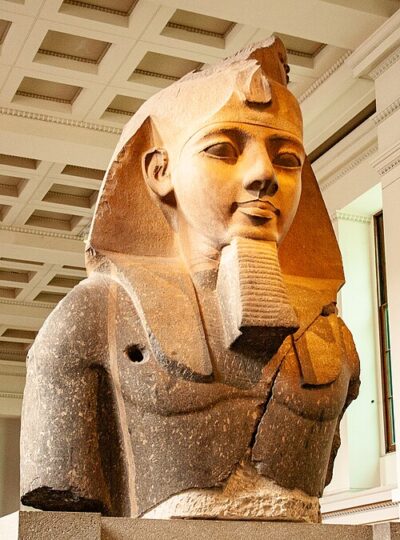 Ramesses IIEgyptian third pharaoh of the Nineteenth Dynasty
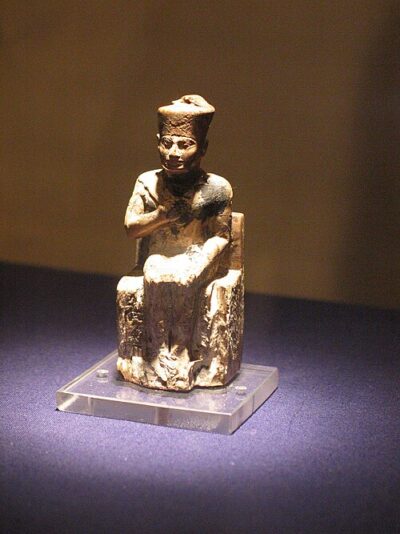 KhufuFourth Dynasty ancient Egyptian pharaoh
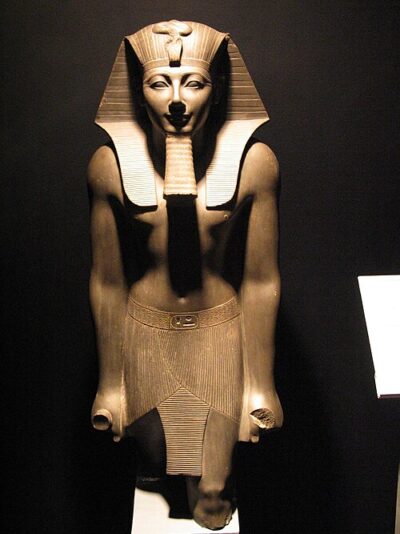 Thutmose IIIsixth Egyptian Pharaoh of the Eighteenth Dynasty
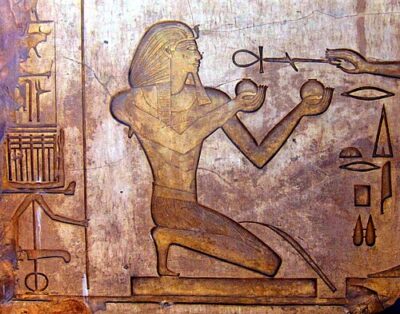 Thutmose IIFourth Egyptian Pharaoh of the 18th Dynasty (c. 1493/1482 – 1479 BC)
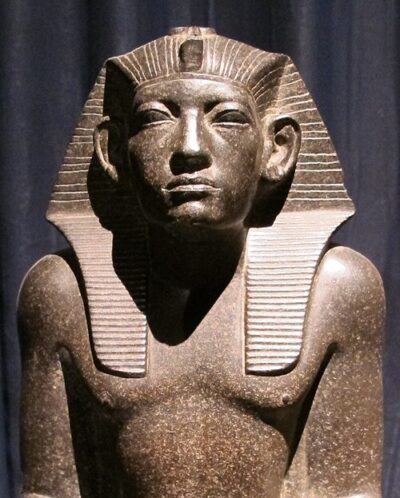 Amenemhat IIIpharaoh of the Twelfth Dynasty of Egypt
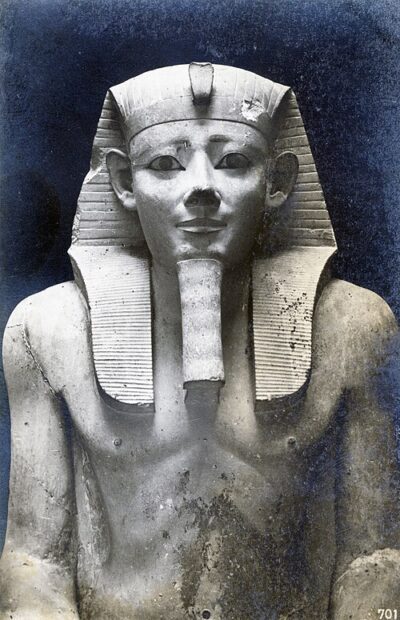 Senusret Ipharaoh of Egypt
 AmenmesseEgyptian pharaoh of the 19th dynasty
 KhyanEgyptian pharaoh of the 15th dynasty
