
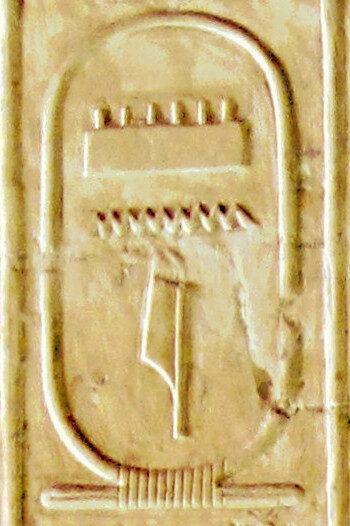
Menes
Menes was a Founder of Manetho's 1st dynasty and unifier of Egypt. Born 3200s BC. Died 3125 BC. Positions held include pharaoh (-3200–-3125).
Facts
6 facts · 0 confirmed by two sources · 0 cited · 4 from one source · 2 where the sources disagree
What’s different
- Born: we show 3200s BC (Sources disagree). Wikipedia says 3200
- Died: we show 3125 BC (Sources disagree). Wikipedia says 3000
Where this comes from
Papalocal keeps its own record. It started from these sources; what each one said is kept here as it was copied, so a change on their side never changes this page by itself. Tap one to read its version.
What Wikidata says · copied November 16, 2026 · revision 2554032377
- Described as
- Founder of Manetho's 1st dynasty and unifier of Egypt
- Born
- 3200s BC
- Died
- 3125 BC
- Cause of death
- animal attack
- Citizen of
- Ancient Egypt
- Occupation
- monarch
- Positions held
- pharaoh (-3200–-3125)
- Wikipedias with a page
- 63
Wikidata item Q189574 (wikidata.org/wiki/Q189574), public domain (CC0). Copied November 16, 2026.
What Wikipedia says · copied November 16, 2026 · revision 1372501796
Menes (fl. c. 3200–3000 BC; ; Ancient Egyptian: mnj, probably pronounced */maˈnij/; Ancient Greek: Μήνης and Μήν) was a pharaoh of the Early Dynastic Period of ancient Egypt, credited by classical tradition with having united Upper and Lower Egypt, and as the founder of the First Dynasty.
The identity of Menes is the subject of ongoing debate, although mainstream Egyptological consensus inconclusively identifies Menes with the Naqada III ruler Narmer or his successor, the First Dynasty pharaoh Hor-Aha.
- Born, in its opening lines
- 3200
- Died, in its opening lines
- 3000
From the Wikipedia article “Menes” (en.wikipedia.org/wiki/Menes), by its contributors, under CC BY-SA 4.0 (creativecommons.org/licenses/by-sa/4.0/). Copied November 16, 2026; not changed.
Confirmed Two sources agree. Cited One source, and it names where it got it. One source One source, without a reference of its own. Sources disagree The sources disagree. We show the best-supported value and keep theirs below.
