
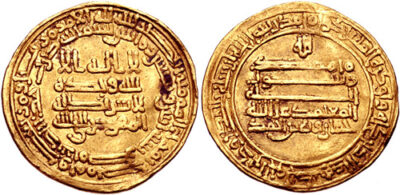
Khumarawayh ibn Ahmad ibn Tulun
Khumarawayh ibn Ahmad ibn Tulun was an Emir of Egypt from 884 to 896. Born 864, in Samarra. Died January 18, 896, in Al-Qatta'i. Positions held include Amir (884–896).
Facts
14 facts · 2 confirmed by two sources · 0 cited · 12 from one source
Where this comes from
Papalocal keeps its own record. It started from these sources; what each one said is kept here as it was copied, so a change on their side never changes this page by itself. Tap one to read its version.
What Wikidata says · copied November 18, 2026 · revision 2553924887
- Described as
- Emir of Egypt from 884 to 896
- Other names
- Abū al-‘Asākir, Abu al-Jaysh
- Born
- 864 · 1 reference
- Died
- January 18, 896 · 1 reference
- Born in
- Samarra · 1 reference
- Died in
- Al-Qatta'i · 1 reference
- Citizen of
- Medieval Egypt
- Occupation
- military leader; ruler
- Positions held
- Amir (884–896) · 1 reference
- Children
- Qatr al-Nada · 1 reference; Abu 'l-Asakir Jaysh ibn Khumarawayh · 1 reference; Harun ibn Khumarawayh · 1 reference
- Father
- Ahmad ibn Tulun · 1 reference
- Siblings
- Shayban ibn Ahmad ibn Tulun
- Religion
- Sunni Islam
- Wikipedias with a page
- 21
Wikidata item Q1039329 (wikidata.org/wiki/Q1039329), public domain (CC0). Copied November 18, 2026.
What Wikipedia says · copied November 18, 2026 · revision 1362939672
Abu 'l-Jaysh Khumārawayh ibn Aḥmad ibn Ṭūlūn (Arabic: أبو الجيش خمارويه بن أحمد بن طولون; 864 – 18 January 896) was Emir of Egypt. He is the son of the founder of the Tulunid dynasty, Ahmad ibn Tulun. His father, the autonomous ruler of Egypt and Syria, designated him as his successor. When Ibn Tulun died in May 884, Khumarawayh succeeded him. After defeating an attempt to depose him, in 886 he managed to gain recognition of his rule over Egypt and Syria as a hereditary governor from the Abbasid Caliphate. In 893 the agreement was renewed with the new Abbasid Caliph, al-Mu'tadid, and sealed with the marriage of his daughter Qatr al-Nada to the Caliph.
At the height of his power, Khumarawayh's authority expanded from the Byzantine frontier in Cilicia and the Jazira to Nubia. Domestically, his reign was marked by a prodigal squandering of funds on extravagant displays of wealth, construction of palaces, and the patronage of artists and poets. In combination with the need to maintain a sizeable professional army and guarantee its loyalty through rich gifts, this emptied the treasury by the end of his reign. Khumarawayh was murdered by a palace servant in 896, and was succeeded by his son Jaysh, who was deposed after a few months in favour of another son, Harun ibn Khumarawayh. The Tulunid state entered a period of turmoil and weakness, which culminated in its reconquest by the Abbasids in 904–905.
- Born, in its opening lines
- 864
- Died, in its opening lines
- January 18, 896
From the Wikipedia article “Khumarawayh ibn Ahmad ibn Tulun” (en.wikipedia.org/wiki/Khumarawayh_ibn_Ahmad_ibn_Tulun), by its contributors, under CC BY-SA 4.0 (creativecommons.org/licenses/by-sa/4.0/). Copied November 18, 2026; not changed.
Confirmed Two sources agree. Cited One source, and it names where it got it. One source One source, without a reference of its own. Sources disagree The sources disagree. We show the best-supported value and keep theirs below.
