
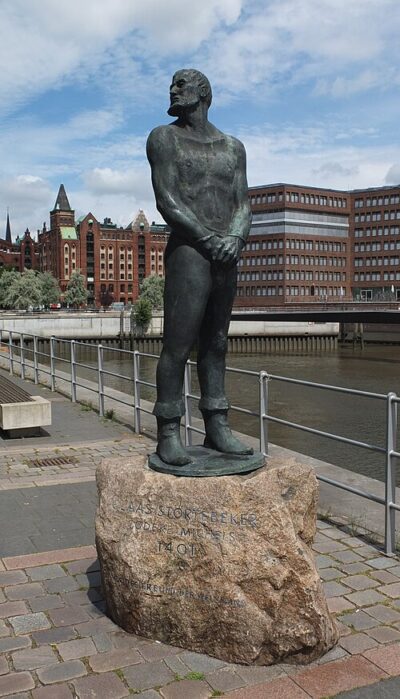
Klaus Störtebeker was a leader of privateers. Born 1360, in Wismar. Died October 20, 1401, in Hamburg.
Facts
8 facts · 0 confirmed by two sources · 4 cited · 4 from one source
Where this comes from
Papalocal keeps its own record. It started from these sources; what each one said is kept here as it was copied, so a change on their side never changes this page by itself. Tap one to read its version.
What Wikidata says · copied November 17, 2026 · revision 2568843351
- Described as
- leader of privateers
- Other names
- Nikolaus Storzenbecher, Störtebeker
- Born
- 1360 · 1 reference
- Died
- October 20, 1401 · 1 reference
- Born in
- Wismar
- Died in
- Hamburg · 1 reference
- Cause of death
- decapitation
- Citizen of
- Holy Roman Empire
- Occupation
- privateer; pirate · 1 reference
- Wikipedias with a page
- 27
Wikidata item Q6473 (wikidata.org/wiki/Q6473), public domain (CC0). Copied November 17, 2026.
What Wikipedia says · copied November 17, 2026 · revision 1386067583
Klaus Störtebeker (also known as Klaas Störtebecker, Johann Störtebecker or Nikolaus Storzenbecher) (circa 1360 – supposed 20 October 1401) was a German pirate. He was reputed to be the leader of the Victual Brothers (German: Vitalienbrüder), his group was hired to assist in a war between Sweden and Denmark and continued to capture merchant vessels mainly in the Baltic Sea and North Sea. Sharing their spoils equally, they named themselves "Likedeelers" (lit. 'equal sharers').
Within German folklore, Störtebecker is a legendary figure similar to Robin Hood, stealing from the rich to help the poor, and amassing and hiding great treasure. His reputed feats border the supernatural, such as allegedly walking past his crew after being beheaded.
From the Wikipedia article “Klaus Störtebeker” (en.wikipedia.org/wiki/Klaus_Störtebeker), by its contributors, under CC BY-SA 4.0 (creativecommons.org/licenses/by-sa/4.0/). Copied November 17, 2026; not changed.
Confirmed Two sources agree. Cited One source, and it names where it got it. One source One source, without a reference of its own. Sources disagree The sources disagree. We show the best-supported value and keep theirs below.
