
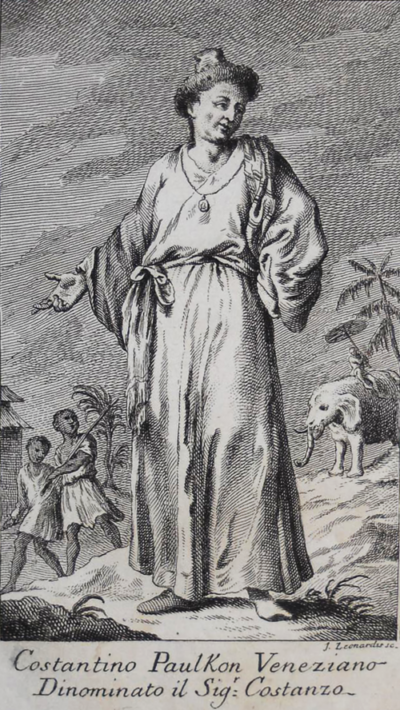
Konstantinos Phaulkon
Konstantinos Phaulkon was a Greek adventurer. Born 1647, in Assos Castle. Died June 5, 1688, in Lopburi. Positions held include Samuhanayok (1685–1688).
Facts
20 facts · 2 confirmed by two sources · 0 cited · 18 from one source
Where this comes from
Papalocal keeps its own record. It started from these sources; what each one said is kept here as it was copied, so a change on their side never changes this page by itself. Tap one to read its version.
What Wikidata says · copied November 18, 2026 · revision 2553821224
- Described as
- Greek adventurer (1647-1688)
- Other names
- Constantine Phaulkon
- Born
- 1647 · 2 references
- Died
- June 5, 1688 · 1 reference
- Born in
- Assos Castle
- Died in
- Lopburi
- Cause of death
- decapitation
- Citizen of
- Republic of Venice; Kingdom of England; Ayutthaya Kingdom
- Occupation
- politician; translator; merchant; adventurer; clerk; military personnel
- Positions held
- Samuhanayok (1685–1688)
- Worked for
- East India Company
- Spouse
- Maria Guyomar de Pinha (1682–1688)
- Children
- George Phaulkon
- Religion
- Catholicism
- Lived in
- Ban Wichayen
- Wikipedias with a page
- 21
Wikidata item Q933657 (wikidata.org/wiki/Q933657), public domain (CC0). Copied November 18, 2026.
What Wikipedia says · copied November 18, 2026 · revision 1371449169
Constantine Phaulkon (1647 – 5 June 1688), also Kastan, was a Greek adventurer who became chief minister to King Narai of the Ayutthaya Kingdom and assumed the Siamese noble title Chao Phraya Wichayen (Thai: เจ้าพระยาวิไชเยนทร์). In this role, he wielded immense influence over Ayutthaya's foreign affairs and trade, playing a crucial part in establishing close diplomatic ties with the court of King Louis XIV of France.
- Born, in its opening lines
- 1647
- Died, in its opening lines
- June 5, 1688
From the Wikipedia article “Constantine Phaulkon” (en.wikipedia.org/wiki/Constantine_Phaulkon), by its contributors, under CC BY-SA 4.0 (creativecommons.org/licenses/by-sa/4.0/). Copied November 18, 2026; not changed.
Confirmed Two sources agree. Cited One source, and it names where it got it. One source One source, without a reference of its own. Sources disagree The sources disagree. We show the best-supported value and keep theirs below.
