
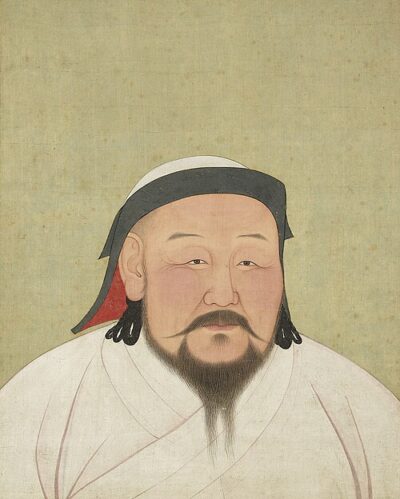
Kublai Khan
Kublai Khan was a founding emperor of the Yuan dynasty, grandson of Genghis Khan. Born September 23, 1215, in Mongol Empire. Died February 18, 1294, in Khanbaliq. Positions held include khan, khagan (1260–1294) and Emperor of China (1271–1294).
Facts
42 facts · 2 confirmed by two sources · 12 cited · 28 from one source
Where this comes from
Papalocal keeps its own record. It started from these sources; what each one said is kept here as it was copied, so a change on their side never changes this page by itself. Tap one to read its version.
What Wikidata says · copied November 16, 2026 · revision 2558083055
- Described as
- founding emperor of the Yuan dynasty, grandson of Genghis Khan (1215–1294)
- Other names
- Sé Chen Gyalpo, Yuán Shìzǔ, Kubla Khan, Hubilie, Khubilai, Shi Zu, Kublai, Khubilai Khan, Pouyuandaizhudi, Kublai khan, Qubilai
- Born
- September 23, 1215 · 4 references
- Died
- February 18, 1294 · 4 references
- Born in
- Mongol Empire
- Died in
- Khanbaliq · 1 reference
- Buried in
- Burkhan Khaldun
- Citizen of
- Yuan dynasty
- Occupation
- military leader
- Positions held
- khan; khagan (1260–1294); Emperor of China (1271–1294)
- Spouse
- Tëgülun; Chabi (1239–1294); Nambui; Talahai khatun; Nuhan; Bayaujin Khatun
- Children
- Dorji Khan; Chinkim · 1 reference; Mangala · 1 reference; Nomugan · 1 reference; Khökhechi · 1 reference; Ayachi · 1 reference; Kuokuochu · 1 reference; Togoon · 1 reference; Hutulu Temür · 1 reference; Tamachi; Princess Jeguk · 1 reference; Yuelie · 1 reference
- Father
- Tolui · 1 reference
- Mother
- Sorghaghtani Beki
- Siblings
- Dumugan; Yesubuhua; Möngke Khan; Hulegu Khan; Xuebietai; Suigedu; Moge; Bochuo; Qutuqtu; Ariq Böke
- Religion
- Tibetan Buddhism · 1 reference
- Military rank
- army general
- Wikipedias with a page
- 110
Wikidata item Q7523 (wikidata.org/wiki/Q7523), public domain (CC0). Copied November 16, 2026.
What Wikipedia says · copied November 16, 2026 · revision 1380829269
Kublai Khan (23 September 1215 – 18 February 1294), also known by his temple name as the Emperor Shizu of Yuan and his regnal name Setsen Khan, was the founder and first emperor of the Mongol-led Yuan dynasty of China. He proclaimed the dynastic name "Great Yuan" in 1271, and ruled Yuan China until his death in 1294.
Kublai was the second son of Tolui by his chief wife Sorghaghtani Beki, and a grandson of Genghis Khan. He was almost 12 when Genghis Khan died in 1227. He had succeeded his older brother Möngke as Khagan in 1260, but had to defeat his younger brother Ariq Böke in the Toluid Civil War lasting until 1264. This episode marked the beginning of the division of the Mongol Empire. Kublai's real power was limited to the Yuan Empire, even though as Khagan he still influenced the Ilkhanate and, to a significantly lesser degree, the Golden Horde.
In 1271, Kublai established the Yuan dynasty and formally claimed orthodox succession from prior Chinese dynasties. The Yuan dynasty came to rule over most of present-day China, Mongolia, Korea, southern Siberia, and other adjacent areas. He also amassed influence in the Middle East and Europe as Khagan. By 1279, the Yuan conquest of the Song dynasty was completed and Kublai became the first non-Han emperor to rule all of China proper. As emperor, he ordered invasions of Japan, Vietnam, Burma, and Java.
- Born, in its opening lines
- September 23, 1215
- Died, in its opening lines
- February 18, 1294
From the Wikipedia article “Kublai Khan” (en.wikipedia.org/wiki/Kublai_Khan), by its contributors, under CC BY-SA 4.0 (creativecommons.org/licenses/by-sa/4.0/). Copied November 16, 2026; not changed.
Confirmed Two sources agree. Cited One source, and it names where it got it. One source One source, without a reference of its own. Sources disagree The sources disagree. We show the best-supported value and keep theirs below.
