
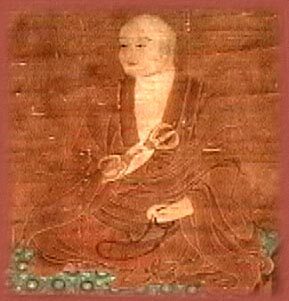
Kūkai
Kūkai was a Japanese Buddhist monk and calligrapher, the founder of the Shingon school. Born July 27, 774, in Zentsū-ji Temple. Died April 22, 835, in Mount Kōya. Known for Bunkyō Hifuron, Tenrei Banshō Meigi and Treatise on the Ten Stages of the Development of Mind.
Facts
28 facts · 2 confirmed by two sources · 1 cited · 25 from one source
Where this comes from
Papalocal keeps its own record. It started from these sources; what each one said is kept here as it was copied, so a change on their side never changes this page by itself. Tap one to read its version.
What Wikidata says · copied November 16, 2026 · revision 2559073732
- Described as
- Japanese Buddhist monk and calligrapher, the founder of the Shingon school (774–835)
- Other names
- Kukai, Kōbō Daishi, Kobo Daishi, Kuukai, Shi Konghai, Bianzhaojingang, Hongfa dashi, Konghai
- Born
- July 27, 774
- Died
- April 22, 835
- Born in
- Zentsū-ji Temple · 1 reference
- Died in
- Mount Kōya
- Buried in
- Okuno-in Temple
- Name at birth
- 佐伯眞魚
- Citizen of
- Japan
- Occupation
- lexicographer; linguist; poet; calligrapher; Buddhist monk; philosopher · 1 reference
- Known for
- Bunkyō Hifuron; Tenrei Banshō Meigi; Treatise on the Ten Stages of the Development of Mind; Sangō Shiiki; Fūshinjō; Secret Key to the Heart Sutra; Shōryōshū; 3D Mandala, Toji; On the Title of the Brahma Net Sūtra; On the Title of the Lotus Sūtra
- Father
- Saeki no Tagimi
- Mother
- Tamayorigozen
- Siblings
- Shinga; Saeki no Suzukimaro
- Religion
- Buddhism
- Wikipedias with a page
- 49
Wikidata item Q222227 (wikidata.org/wiki/Q222227), public domain (CC0). Copied November 16, 2026.
What Wikipedia says · copied November 16, 2026 · revision 1380333306
Kūkai (空海; Japanese pronunciation: [kɯꜜː.kai], 27 July 774 – 22 April 835), born Saeki no Mao (佐伯 眞魚) posthumously called Kōbō Daishi (弘法 大師; [koː.boː daꜜi.ɕi], lit. 'the Grand Master Who Propagated the Dharma'), was a Japanese Buddhist monk, calligrapher, and poet who founded the esoteric Shingon school of Buddhism. He travelled to China, where he studied Tangmi (Chinese Vajrayana Buddhism) under the monk Huiguo. Upon returning to Japan, he founded Shingon—the Japanese branch of Vajrayana Buddhism. With the blessing of several Emperors, Kūkai was able to preach Shingon teachings and found Shingon temples. Like other influential monks, Kūkai oversaw public works and constructions. Mount Kōya was chosen by him as a holy site, and he spent his later years there until his death in 835 CE.
Because of his importance in Japanese Buddhism, Kūkai is associated with many stories and legends. One such legend attributes the invention of the kana syllabary to Kūkai, with which the Japanese language is written to this day (in combination with kanji), as well as the Iroha poem, which helped to standardise and popularise kana.Shingon followers usually refer to Kūkai by the honorific title of Odaishi-sama (お大師様; "The Grand Master"), and the religious name of Henjō Kongō (遍照金剛; "Vajra Shining in All Directions").
- Born, in its opening lines
- July 27, 774
- Died, in its opening lines
- April 22, 835
From the Wikipedia article “Kūkai” (en.wikipedia.org/wiki/Kūkai), by its contributors, under CC BY-SA 4.0 (creativecommons.org/licenses/by-sa/4.0/). Copied November 16, 2026; not changed.
Confirmed Two sources agree. Cited One source, and it names where it got it. One source One source, without a reference of its own. Sources disagree The sources disagree. We show the best-supported value and keep theirs below.
