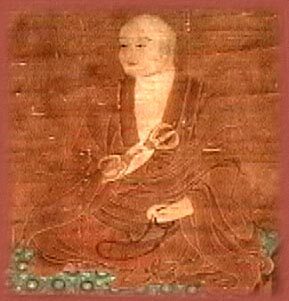
Tenrei Banshō Meigi
Tenrei Banshō Meigi is the oldest extant Japanese dictionary of Chinese characters. It was written by Kūkai. It is based on Yupian.
- Came out
- 9th century
- Written by
- Kūkai
All 6 facts, and where they come from
Facts
6 facts · 0 confirmed by two sources · 0 cited · 6 from one source
Where this comes from
Papalocal keeps its own record. It started from these sources; what each one said is kept here as it was copied, so a change on their side never changes this page by itself. Tap one to read its version.
What Wikidata says · copied November 17, 2026 · revision 2291724858
- Described as
- oldest extant Japanese dictionary of Chinese characters
- What it is
- Han dictionary
- Written by
- Kūkai
- Language
- Classical Chinese
- Based on
- Yupian
- Came out
- 9th century
- Owned by
- Kōzan-ji Temple
- Wikipedias with a page
- 5
Wikidata item Q3518144 (wikidata.org/wiki/Q3518144), public domain (CC0). Copied 2026-11-17.
What Wikipedia says · copied November 17, 2026 · revision 1328925522
The Tenrei banshō meigi or Tenrei banshō myōgi (Kyujitai: 篆隷萬象名義, Shinjitai: 篆隷万象名義; "The myriad things [of the universe], pronounced, defined, in seal script and clerical script") is the oldest extant Japanese dictionary of Chinese characters.
The prominent Heian period monk and scholar Kūkai, founder of the Shingon Buddhism, edited his Tenrei banshō meigi around 830–835 CE, and based it upon the (circa 543 CE) Chinese Yupian dictionary. Among the Tang dynasty Chinese books that Kūkai brought back to Japan in 806 CE was an original edition Yupian and a copy of the (121 CE) Shuowen Jiezi. One of the National Treasures of Japan held at the Kōzan-ji temple is an 1114 copy of the Tenrei banshō meigi.
The Chinese Yupian dictionary defines 12,158 characters under a system of 542 radicals (bùshǒu 部首), which slightly modified the original 540 in the Shuowen jiezi. The Japanese Tenrei banshō meigi defines approximately 1,000 kanji (Chinese characters), under 534 radicals (bu 部), with a total of over 16,000 characters. Each entry gives the Chinese character in ancient seal script, Chinese pronunciation in fanqie, and definition, all copied from the Yupian. The American Japanologist Don Bailey writes:At the time of its compilation, calligraphic style and the Chinese readings and meanings of the characters were probably about all that was demanded of a dictionary, so that the Tenrei banshō meigi suited the scholarly needs of the times. It was compiled in Japan by a Japanese but is in no sense a Japanese dictionary, for it contains not one Wakun (Japanese reading).
In modern terms, this dictionary gives borrowed on'yomi "Sino-Japanese readings" but not native kun'yomi "Japanese readings". A later Heian dictionary, the (898–901 CE) Shinsen Jikyō was the first to include Japanese readings.
Ikeda Shoju has studied the conversion of JIS encoding to Unicode in order to create an online Tenrei banshō meigi.
From the Wikipedia article “Tenrei Banshō Meigi” (en.wikipedia.org/wiki/Tenrei_Banshō_Meigi), by its contributors, under CC BY-SA 4.0 (creativecommons.org/licenses/by-sa/4.0/). Copied 2026-11-17; not changed.
Confirmed Two sources agree. Cited One source, and it names where it got it. One source One source, without a reference of its own. Sources disagree The sources disagree. We show the best-supported value and keep theirs below.
Picture: Wikimedia Commons: Tenrei Bansho Meigi.jpg · See Commons file page