
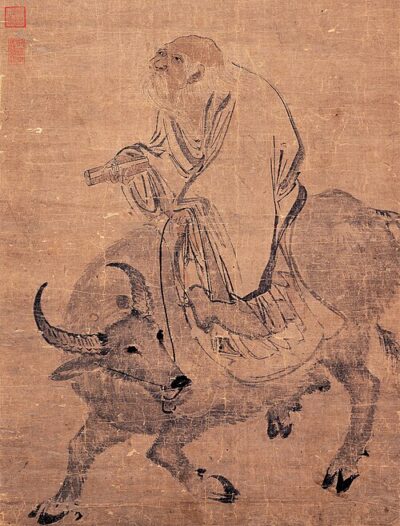
Laozi
Laozi was the 6th-century BC semi-legendary Chinese philosopher, founder of Taoism. Born 6th century BC, in Chu. Died 500 BC. Known for Tao Te Ching.
Facts
14 facts · 0 confirmed by two sources · 5 cited · 8 from one source · 1 where the sources disagree
What’s different
- Born in: we show Chu (Sources disagree). Wikidata also lists Zhoukou
Where this comes from
Papalocal keeps its own record. It started from these sources; what each one said is kept here as it was copied, so a change on their side never changes this page by itself. Tap one to read its version.
What Wikidata says · copied November 16, 2026 · revision 2567865301
- Described as
- 6th-century BC semi-legendary Chinese philosopher, founder of Taoism
- Other names
- Old Boy, Old Lord, Old Master, Sage Ancestor, Venerable Master, Ancient Boy, Ancient Master, Sheng-tsu, Laotan, Lao Tzu, Hsuan-yuan Huang-ti, T'ai Shang Hsüen Yüan Huang Ti
- Born
- 6th century BC · 1 reference
- Died
- 500 BC
- Born in
- Chu; Zhoukou
- Citizen of
- Zhou dynasty
- Occupation
- philosopher · 3 references; archivist · 1 reference; writer · 1 reference; Taoist
- Known for
- Tao Te Ching
- Field
- philosophy; Chinese philosophy
- Children
- Li Zong · 1 reference
- Father
- Li Jing
- Religion
- Taoism
- Wikipedias with a page
- 216
Wikidata item Q9333 (wikidata.org/wiki/Q9333), public domain (CC0). Copied November 16, 2026.
What Wikipedia says · copied November 16, 2026 · revision 1381774871
Laozi (variously spelled; , low-TSUH; Chinese: 老子; pinyin: Lǎozǐ) is the name traditionally given to an ancient Chinese philosopher, also identified as Li Er or Lao Dan, who is regarded as the author or originating teacher associated with the Tao Te Ching (Pinyin: Dào Dé Jīng), one of the foundational texts of Taoism. Traditional accounts place him in the 6th century BC state of Chu during China's Spring and Autumn period (c. 770 – c. 481 BC), describe him as a keeper of archival records at the Zhou court, and remember him as an elder contemporary of Confucius (c. 551 – c. 479 BC). Modern scholars remain divided over his identity, dates, and precise relationship to the received text: some regard the traditional Laozi as largely or wholly legendary, while others consider a historical Lao Dan plausible and accept the tradition that he was a senior contemporary of Confucius.
A central figure in Chinese culture, Laozi is generally regarded as a founder of Taoism. He was claimed and revered as an ancestor of the Tang dynasty (618–907) and has long been honored as a progenitor of the widespread surname Li. In religious Taoist traditions he was increasingly deified and came to be identified with Laojun, a divine manifestation of the Tao. The Dào Dé Jīng profoundly influenced subsequent Chinese philosophy, religion, literature, and political thought.
From the Wikipedia article “Laozi” (en.wikipedia.org/wiki/Laozi), by its contributors, under CC BY-SA 4.0 (creativecommons.org/licenses/by-sa/4.0/). Copied November 16, 2026; not changed.
Confirmed Two sources agree. Cited One source, and it names where it got it. One source One source, without a reference of its own. Sources disagree The sources disagree. We show the best-supported value and keep theirs below.
